
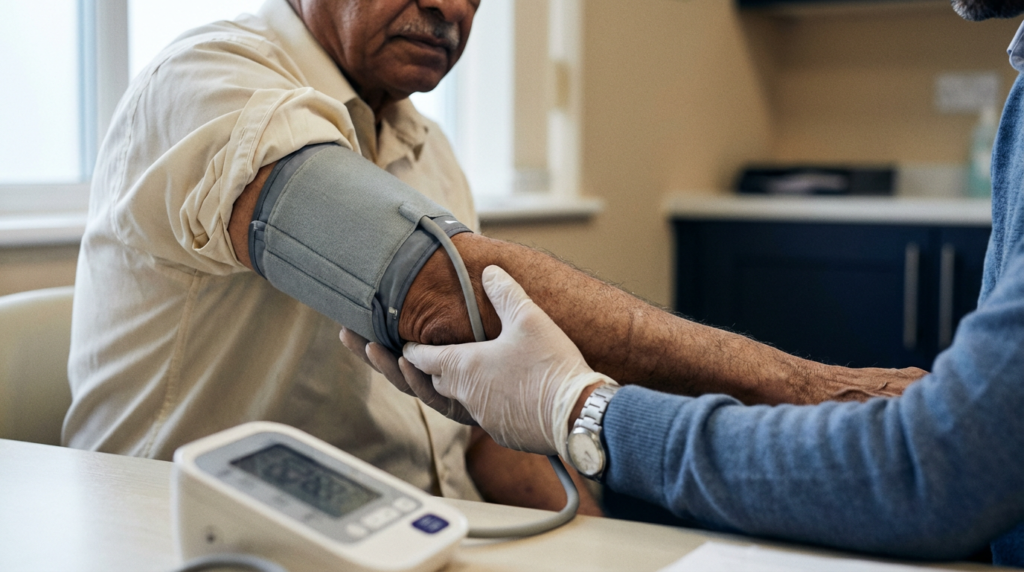
When 14 medications and a 10 minute appointment do not add up
An older woman walks into clinic with her daughter holding her arm. The problem list takes a full page. Twelve active diagnoses. Fourteen medications. Chest pain on 20 metres of walking. Bladder leakage. Knee pain bad enough to need help getting dressed. New, unsettling perceptual symptoms. Her daughter has been taking time off work to manage every single one of these moving parts. The patient looks tired in a way that no single appointment can fix.

Why a 10 minute slot is the wrong shape of care here
NHS GP appointments are often 10 minutes long, by design. That works perfectly well when the agenda is single. It does not work when the agenda is everything. A patient with stable angina, type 2 diabetes drifting on five glucose lowering agents, knee osteoarthritis, slip disc, untreated overactive bladder, and a long standing depression that has recently changed pattern, cannot be safely reviewed in a single 10 minute slot. Pieces get missed. Side effects accumulate. Adherence becomes a guessing game.
What this case actually needed was a 60 minute review with full medication audit, live record access, and a calm conversation that could move between the angina, the bladder, the bloods, and the mood without rushing any of it. That is what same day private GP care delivers in practice.
The medication list is the diagnostic field
In a fourteen medication list, the most useful examination is often the medication review itself. This patient was on a long acting nitrate, a beta blocker, a calcium channel blocker, a statin, an angiotensin receptor blocker, three glucose lowering agents, a low dose antiplatelet, a proton pump inhibitor, a reflux antacid, and a long term antidepressant. Looking at that list together, a few things become obvious. There is no analgesia at all on the script for chronic musculoskeletal pain. There is no bladder antimuscarinic for documented overactive bladder. The HbA1c has crept from 58 to 60 mmol per mol, which prompts a discussion about adherence rather than a knee jerk addition of a sixth glucose lowering agent.
The bladder is the most missed problem in this kind of review
Untreated overactive bladder is common in older patients with multi morbidity and is repeatedly missed in 10 minute appointments because there is simply no time to ask. Bladder symptoms hide. They are not the headline complaint. They lower the dignity of every other problem the patient is trying to manage. Adding a bladder antimuscarinic, in the right patient, at the right dose, with the right counselling about dry mouth and constipation risk, can change daily life within a fortnight. It is not a glamorous prescription. It is one of the most useful.
Why we did not start an antipsychotic today
The patient described some new perceptual symptoms in the context of long standing depression that has recently worsened. The temptation in primary care can be to start an antipsychotic and refer onward. That is the wrong move in this scenario. New psychotic features in the context of severe depression need a psychiatric review, not a primary care initiation. The right pathway is a referral back to the mental health team with a clear letter laying out the timeline, the existing antidepressant, and the request for review. Holding the line on this is part of safe primary care.
What we actually did in the visit
Stronger pain relief category was added at the lowest effective dose for the chronic musculoskeletal pain. An antimuscarinic was started for the overactive bladder. A pharmacy supplied dosette tray was ordered to consolidate the medication list into a daily routine the daughter and patient can both check. Smoking cessation was framed against the angina pattern, not as a generic lifestyle nudge, with the cardiovascular benefit spelled out plainly. A psychiatric review was requested. A home access review was logged: shower seat, grab rails, perching stool. The cardiology medications were continued without change pending the next outpatient review.
When to come in sooner
Some symptoms in this patient population should not wait for the next routine review. Chest pain at rest. Severe sudden headache. Sudden visual loss. Slurred speech or arm weakness. Vomiting. Inability to pass urine for more than 8 hours. Any of these warrants 999 or A&E attendance, not a same day appointment. For everything else, including the slow drift of energy, mood, sugar, and pain that defines so much of older adult care, same day access is the right tool.
What Clinique Alpa offers
Same day access. Live NHS record review when permitted. A 60 minute appointment shape that allows the medication list, the lifestyle, the bloods, and the mood to be reviewed in one calm conversation. Generic category prescribing where appropriate, with clear counselling on side effects and adherence. Onward referral letters that name the question, the timeline, and the existing treatment.
Multi morbidity is not solved in a single visit. It is managed across a year of structured reviews. Same day access is not a one off rescue, it is the infrastructure that makes the year of reviews possible.
Clinique Alpa. Same day private GP, Palmers Green, North London.