

When the Antibiotic Was Never Going to Be Enough
After 21 years of seeing patients in North London, the pattern is always the same: the diagnosis you nearly miss is the one that teaches you the most. This case did not need a different antibiotic. It needed a hospital, today. An adult on active cancer treatment, in the second week of a hormone-blocking injection that had replaced a previous immunotherapy after a severe reaction, walked in with an abscess on the back that was getting larger, darker, and was now bleeding from the surrounding skin. The right plan was urgent incision and drainage. The wrong plan was a second antibiotic course.
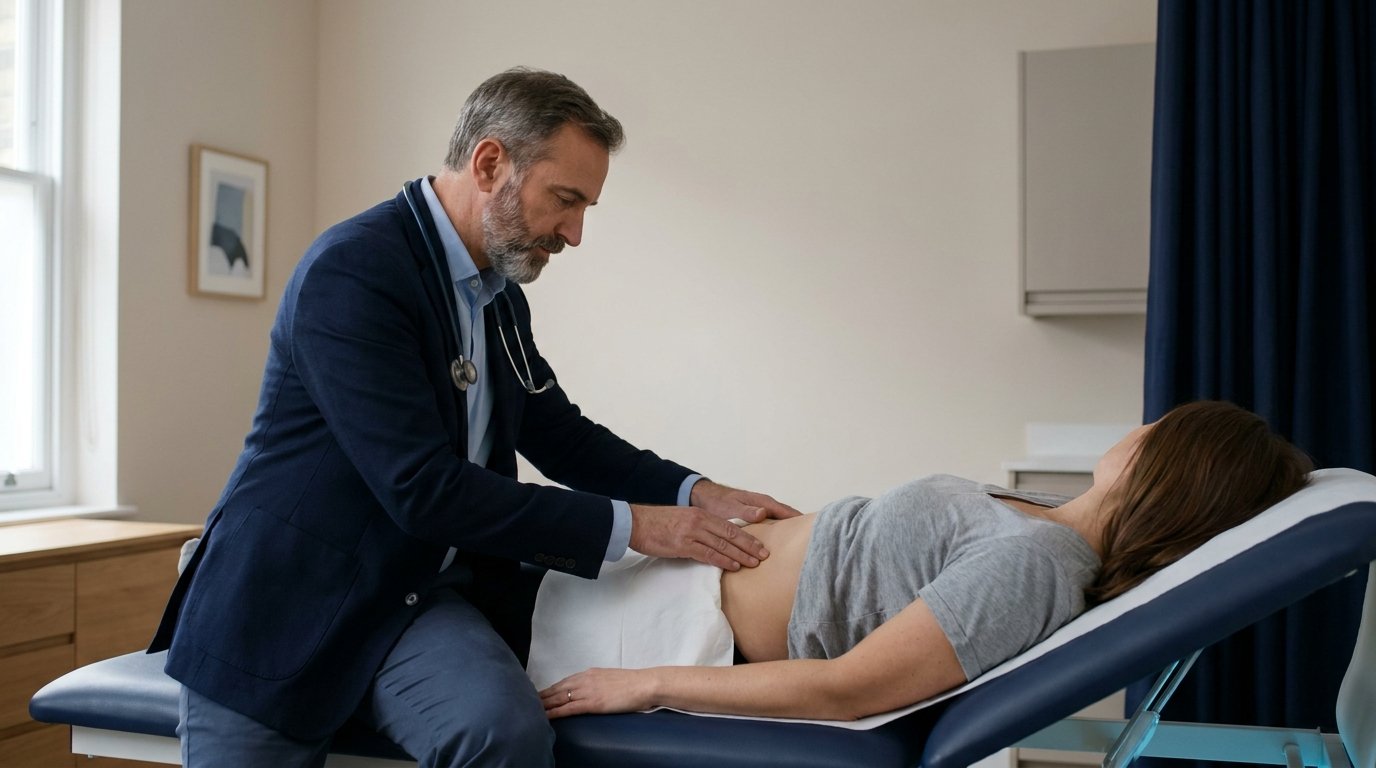
The presentation, and what it was telling us
A “gland on the back” had become infected, on the patient’s account. Five days earlier, a GP at another practice had started a first-line oral antibiotic course. The course had been completed. By yesterday the lesion had begun to enlarge again. Today it was darker. Multiple small heads were now visible on the surface. While washing in the morning, the surrounding skin had bled, not from the head but from the area around it, suggesting the dermis was thinning under pressure from the cavity beneath. There was no temperature today.
The patient was understandably worried, and was equally worried about going to A&E. The wait, on a busy day, would feel impossible on someone who was already weak from cancer treatment. The reluctance was understandable. The clinical answer was still the same. An abscess that has formed pus, on the skin of someone who is immunocompromised, is not a problem an oral antibiotic will solve. It is a mechanical problem with a mechanical solution: the cavity has to be opened, the pus has to come out, and the wound has to be packed. That happens in a hospital, under local anaesthetic, today.
Clinical anomaly: what was almost missed
First, what was almost missed. The temptation, in a busy primary care slot on a Monday morning, is to extend the antibiotic, swap to a stronger antibiotic, or arrange a community surgical review for “later this week”. None of those is the right answer. An abscess that has formed pus, with multiple heads and skin thinning over the surface, in a patient on active cancer treatment, will not be cured by another oral antibiotic course. The skin is the barrier to bacteraemia. When that barrier is breached, in someone whose immune defences are already compromised, the trajectory is sepsis, and that trajectory does not announce itself politely. It also does not always begin with a fever.
Second, where the standard NHS pathway would have gone. A standard 8 to 10 minute primary care appointment on a busy day might well have ended with a longer antibiotic course or a routine surgical referral letter. Same day private GP access here meant the time to make the surgical decision properly, the time to talk through the patient’s reluctance about A&E, and the time to direct the patient to the right hospital. Walking centres do not perform incision and drainage. The distinction matters. Sending the patient to a walking centre to be told “we cannot help, please go to A&E” wastes hours that the immunocompromise does not have. Naming the right hospital and how to brief the triage nurse on arrival is part of the consultation, not an aside. NICE NG141 frames the sepsis conversation; the words used in the safety net are the words the patient will use when they call 999, if they need to.
Third, what differentials were ruled out. Simple cellulitis was reduced by the multi-headed surface morphology and the size; the picture is abscess, not cellulitis alone. Furunculosis was considered, but the size and the immunocompromise made formal incision and drainage the right plan rather than expectant management with warm compresses. Necrotising soft tissue infection was kept on the differential and named explicitly because of the immunocompromise and the darkening colour, even with a normal temperature today. The threshold for hospital review is therefore deliberately low. Bacteraemia and evolving sepsis kept open, and the safety net set accordingly: any new fever, rigors, rapid spread of redness, confusion, or breathlessness, call 999.
Why “if there is pus, let it out” is not just a saying
The principle is old, and it is right. An antibiotic is a medicine that works in tissue with intact blood supply. An abscess is, by definition, a cavity walled off by the body’s own response, with limited blood supply to the centre. The antibiotic cannot get in to act on the bacteria in the cavity in any meaningful concentration. Increasing the dose, lengthening the course, or switching the class will not change that fundamental geometry. The cavity has to be opened. Once it is opened, the pus drains, the cavity collapses, and the antibiotic finishes the job on the surrounding tissue.
That is not just clinical aphorism. It is why the right answer in this case was urgent A&E attendance, not a longer course of tablets. The procedure itself, in the emergency setting, is straightforward. Local anaesthetic, a small incision over the most fluctuant point, drainage, irrigation, packing if needed. Relief is rapid. The patient leaves the hospital with a wound dressing, a clear plan for redressing, and instructions for follow-up.
The patient who does not want to go to A&E
This is a clinical issue, not a logistical one. A patient who is reluctant to attend A&E needs a conversation, not a leaflet. The reluctance is usually rational. Long waits, exposure to other infections, the discomfort of being unwell in a bright noisy environment for hours. The antidote is to take it seriously, to address the specific concerns, and to offer practical help: which hospital is more appropriate today, what to say at triage to ensure the urgency is recognised, what to bring, who can come with them, when to expect the procedure.
Same day private GP access does not bypass the NHS surgical pathway. It works alongside it. It can prepare the patient to use the right NHS pathway in the right setting, which is, in the end, what good triage looks like.
Sepsis safety netting in plain language
The words the patient will use when they call 999 are the words you give them in clinic. So the words have to be plain. Rigors, the kind of shaking chill that makes you bite the blanket. A new fever above 38 degrees, especially in someone who has just been afebrile. A rapid spreading redness, hot to the touch, growing visibly hour by hour. Confusion or unusual sleepiness. New breathlessness at rest. New blue or pale skin. Reduced urine output. Any of these in a patient with an active abscess, particularly on cancer treatment, is a 999 call, not a return to clinic. The escalation matters more than the medication.
When to see a same day private GP for skin and soft tissue infection
Several thresholds should move someone towards a same day private GP appointment for a skin or soft tissue infection rather than waiting at home. Any spreading redness or warmth around a wound, abscess, or cyst. Pain that is increasing despite a course of antibiotic that should be working. Pus, with or without multiple heads, that is enlarging. Any infection in a patient who is immunocompromised, on cancer treatment, on long-term steroids, or with poorly controlled diabetes. Any new fever, rigors, or systemic feature in the context of a skin infection. The point of the same day appointment is not to cure these in the room. It is to triage them to the right setting, on the right timeline, with the right safety net.
What Clinique Alpa offers
Same day access. Live record review. Time to make the surgical decision properly, even if the surgery itself happens elsewhere. Time to address the patient’s reluctance about A&E with practical advice rather than a leaflet. Time to set the safety net in plain language for sepsis features, so that the patient or their family knows exactly when to escalate to 999. No medicine names in our public writing, by the rule. The plan in the room today is a triage plan; the procedure happens in the right setting, on the right timeline, with the right safety net.

Read more on this theme on our pillar page: Same Day Private GP, Palmers Green.
Clinique Alpa. Same day private GP, Palmers Green, North London.