
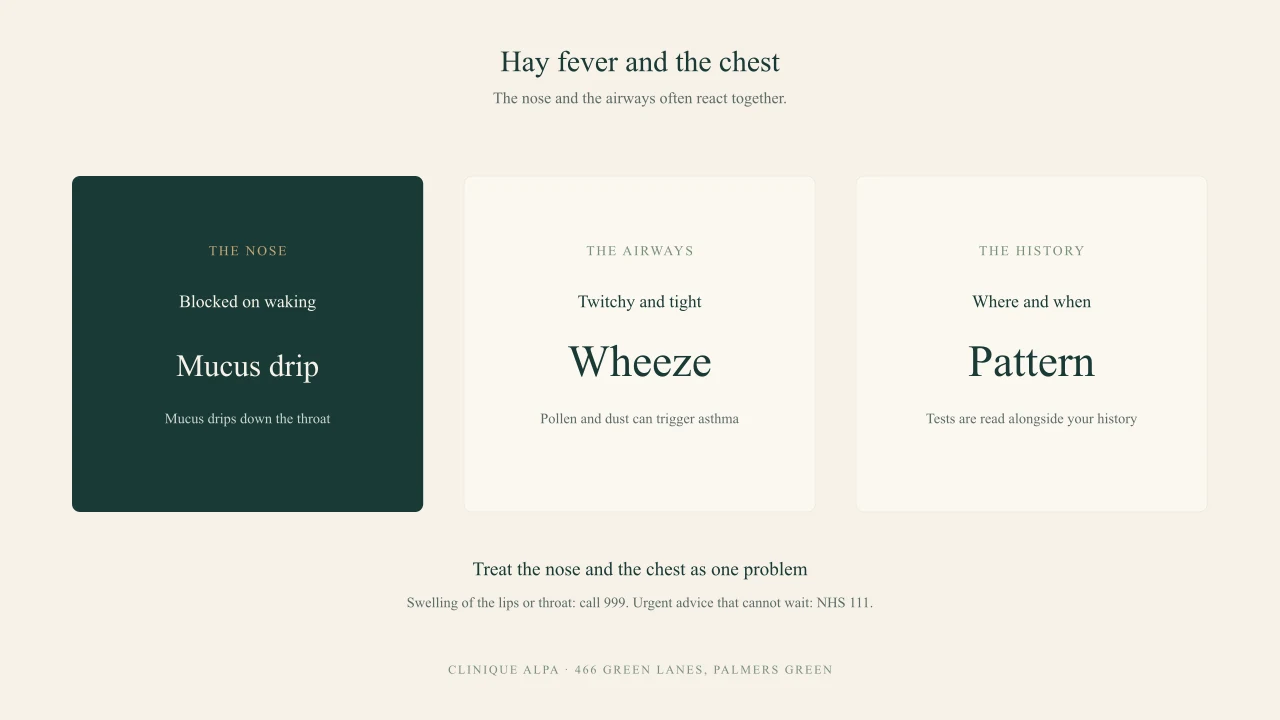
The nose is blocked on waking and clears by mid morning. Outdoors, in an air conditioned shop or in a room with an old rug, the eyes itch and the throat tickles. Then, over weeks, a cough joins in, mostly at night, and eventually a whistle on a brisk walk. Nobody connected the two until the cough would not go.
That is the usual way hay fever wheeze cough comes to the surgery: the nose was the first complaint, the chest is the one that brought the person in. This article is about how an allergy to pollen or dust spills into the chest, and what controls it.
Chest pain, signs of a stroke, severe breathlessness, heavy bleeding, a severe allergic reaction or symptoms of sepsis need 999 or A&E immediately. For urgent advice that cannot wait, call NHS 111.
Can hay fever cause coughing and wheezing?
It can contribute. The NHS lists coughing among the symptoms of hay fever, alongside sneezing, a runny or blocked nose, itchy eyes and throat, and loss of smell. Hay fever symptoms can last weeks or months, unlike a cold. The NHS hay fever page does not discuss wheeze, and says that if you wheeze or have asthma you should speak to a GP or pharmacist.
NHS advice on asthma names pollen, dust, mould and animals among its triggers, with symptoms that can be worse at night. So the same allergens that inflame the nose can irritate the airways, and the nose and chest often react together. Two routes make the cough: mucus from an inflamed nose dripping down the throat, and the airways themselves becoming twitchy.
What does the pattern look like?
When this comes up in consultation, I am looking for a pattern more than a single symptom. It tends to look like this.
- A blocked nose on waking that eases later in the day, with worse days in particular places or weather.
- A cough that is mostly at night but can spill into the morning, with no fever and little or no coloured mucus.
- Itchy eyes, nose or throat, sneezing runs, or a feeling of pressure across the face.
- A tendency to eczema or hay fever in the person or in close relatives.
- A wheeze or tightness after exercise, at night or around dust and animals.
The absence of a fever and the lack of green mucus matter. An infection would usually have a start, a middle and an end. An allergic cough comes and goes with exposure, and may be present for months before anyone asks about it.
What I look at in clinic
I begin with where and when. Which rooms, which seasons, which weather? Is it better on holiday and worse at home? Does it follow time spent outdoors, cleaning, dusting, bed linen, pets, air conditioning? People often have a theory, and it is usually worth taking seriously, though it is not always right. I ask what has been tried, because antihistamines that were taken only on bad days, or nasal sprays used for two days and abandoned, tell me something different from medicines that were used properly and did not work.
Then the chest. I ask about night waking, breathlessness, a tight chest after exercise or around triggers, and whether a reliever inhaler has ever been tried and how well it helped. I ask about family history of asthma, eczema and hay fever, about smoking and vaping, about work, and about the home itself: carpets, soft furnishings, damp, older buildings with a lot of dust, pets in the bedroom.
The examination covers the nose, throat and eyes as well as the chest. Swollen, pale lining inside the nose, a throat with a cobblestone look from postnasal drip, and watery eyes support the allergic picture. I listen to the chest on quiet and on forced breathing, because a wheeze may only show on a forced breath out. I check the oxygen level with a finger probe, which we have on site.
Sometimes a blood test is useful. A blood count can show a raised level of the white cells linked to allergy, and an allergen panel can show which triggers a person is sensitised to. Finding antibodies shows sensitisation, which is not quite the same as an allergy, so I read the result alongside the history rather than on its own. Our allergy blood test article explains what a 300 allergen panel shows.
The aim of the plan is to treat the nose and the chest as one problem: reduce what you are exposed to, treat the nasal inflammation properly, and decide whether the airways need their own treatment. I set a date to review, usually a few weeks away, so we can see whether the cough follows the nose.
From Dr Mitesh Parmar
Does the wheeze appear only in the pollen season? That points to allergic asthma. I listen to the chest and may arrange a breathing test. The nose needs proper treatment too, as the two are linked. If you are struggling to speak or your reliever is not working, call 999.
What helps, day to day?
The NHS suggests small practical steps. Shower and change clothes after being outside. Keep windows and doors shut when pollen is high, and avoid drying washing outdoors. Do not keep fresh flowers indoors. Vacuum regularly and dust with a damp cloth, and keep pets out of the bedroom if you can. Wraparound sunglasses and a little petroleum jelly around the nostrils help on high pollen days. A pharmacist can recommend antihistamines or nasal sprays; ask for a non drowsy one if sleepiness is a problem.
See a GP if symptoms are getting worse or do not improve with pharmacy medicines. If hay fever is not controlled, there are further options a doctor can discuss, including a referral for immunotherapy in some cases. The health library has a guide to hay fever and one to asthma and COPD.
When should you come in sooner?
See a GP if you wheeze, if the cough wakes you at night, if you need a reliever more often, or if symptoms stop you doing normal things. Get urgent help from NHS 111 or an urgent appointment for difficulty breathing or chest pain, or a cough that is very bad or worsening quickly. During an asthma attack, call 999 if symptoms get worse at any time, if they do not improve after the maximum dose of a reliever inhaler, or if you have no inhaler to hand, and do not drive yourself to A&E. Call 999 or go to A&E too for swelling of the lips or throat, or any sign of a severe allergic reaction.
How do we approach this at Clinique Alpa?
You will see a named doctor at 466 Green Lanes for 30 minutes, and a clinic consultation is £100. We work through the history, examine the nose and chest, and decide together whether a blood test would change the plan. With your consent, a summary goes to your NHS GP. If your cough is mainly worse after a cold rather than around allergens, see wheezy cough after a cold.
Common questions
Can hay fever asthma cause a cough?
Yes. Allergens that cause hay fever can also trigger asthma, and cough is one of its main symptoms. A doctor can tell the two apart by the pattern and by listening to the chest.
Can seasonal allergies cause coughing and wheezing?
They can contribute, through mucus dripping from the nose and through irritated airways. NHS advice is to speak to a GP or pharmacist if you wheeze or have asthma.
Is a night cough from hay fever different from a chest infection?
Usually there is no fever and little coloured mucus, and the cough comes and goes with exposure rather than following one illness. A doctor can check which fits.
Sources: NHS: hay fever and NHS: asthma symptoms.
More in this series: cough that will not settle
- Cough keeping me awake at night: what to know
- Wheezy cough after a cold
- What makes a cough worse smoke vapour and heat
- Cough lasting a week: what a doctor checks
Drafted with AI assistance, clinically reviewed by Dr Mitesh Parmar, MBBS MRCGP, Principal GP and Clinical Director at Clinique Alpa, 466 Green Lanes, Palmers Green, London N13 5PA. This article is general information, not personal medical advice. In an emergency call 999. For NHS advice call 111 or visit nhs.uk.