
The nights are the hardest part. The house is quiet, the day is finally over, and the mind picks up the thing it has been holding at arm's length since morning. People wake at the same hour, lie there rehearsing, and get up exhausted to a day with no appetite in it.
Grief and sleep problems go together so commonly that most people expect them. The useful questions are how long it is reasonable to wait, what helps in the meantime, and when a doctor should be involved.
If you are at immediate risk of harming yourself or someone else, call 999 or go to A&E. For urgent mental health help, call NHS 111 and choose the mental health option, or call Samaritans free on 116 123, any hour.
Why do grief and sleep problems go together?
Grief is not only sadness. The NHS page on grief, bereavement and loss lists shock and numbness as common early reactions, and tiredness and exhaustion among the physical symptoms. It says grief can feel chaotic at first, and that strong feelings can return unexpectedly. A body in that state does not settle easily at night.
There is also a practical side. Sleep is usually shared with someone. When that person has died, the bed, the hour and the routine have all changed. The NHS page on insomnia lists stress, anxiety and depression as the most common causes of poor sleep, and it gives noise, temperature, alcohol and caffeine as other triggers. Bereavement can bring several of these together.
Does grief affect sleep for long?
For most people the intensity eases gradually, and sleep follows. The NHS says grief usually lessens over time, although for some it lasts many months or years, which is called prolonged grief disorder. The signs it gives are intense sadness or guilt that does not ease, difficulty accepting the death and being unable to return to everyday activities.
I cannot give you a date by which the sleep should come back, and I would be wary of anyone who did. What I can do is look at the pattern. A night here and there is one thing. A run of weeks in which each night is the same is another, and that is where support is worth having.
What short term support helps with sleeplessness and poor appetite?
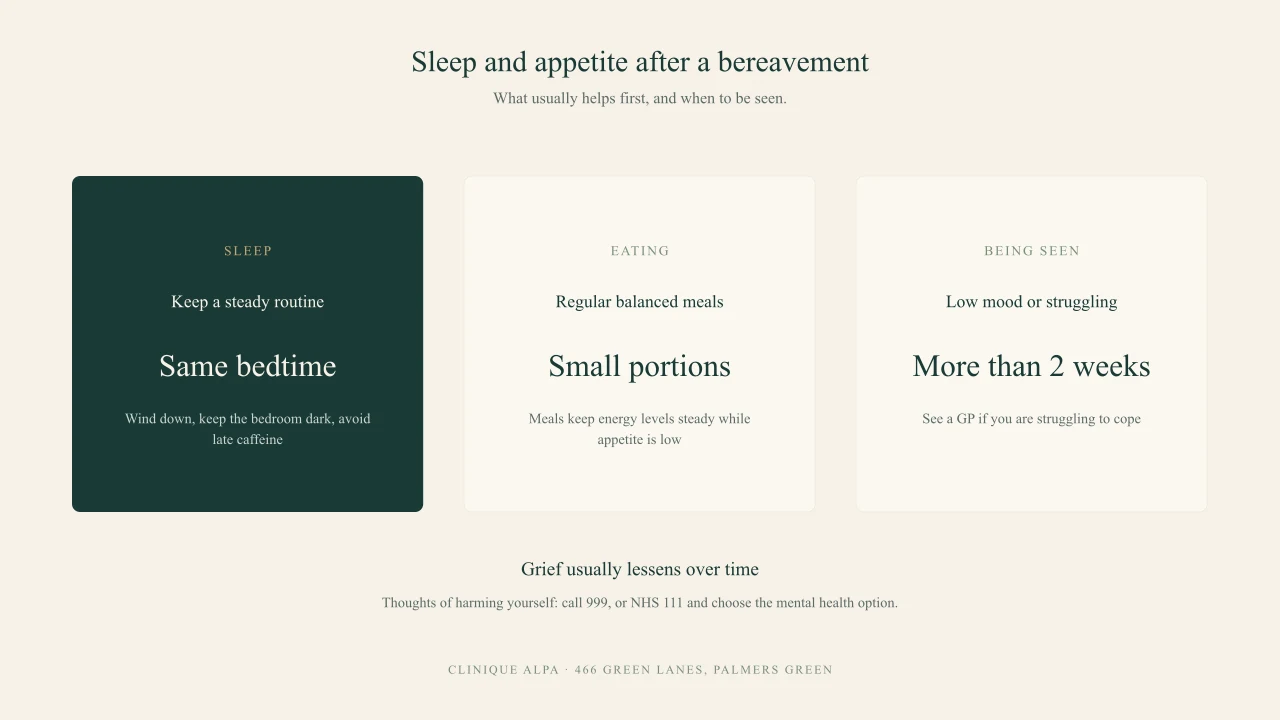
Start with the basics, because they work more often than people expect. The NHS advises a consistent sleep schedule, going to bed when you feel sleepy, winding down for at least an hour, and keeping the bedroom dark and quiet. It suggests avoiding caffeine, alcohol and nicotine in the hours before bed, and avoiding daytime naps. Regular exercise helps, but not within 4 hours of bedtime.
For appetite, the aim is modest. The NHS recommends regular balanced meals to keep energy levels steady. When the idea of a plate of food is unbearable, small portions, soup, a drink with some energy in it and eating with someone else are all reasonable. Missing meals for a day is not an emergency. Weeks of it is something to tell a doctor about.
Pharmacy sleep aids are mentioned by the NHS as helpful for 1 to 2 weeks, with the advice to check with a doctor first because they can cause drowsiness. I would add that they do not address why sleep is lost, and that alcohol, though it feels as if it helps, usually makes sleep worse.
What I look at in clinic
I start by listening to what has happened and what the weeks since have been like. I do not hurry this. Then I ask about the pattern of sleep: getting to sleep, waking in the night, waking early, and what the mind is doing at those times. I ask about appetite and weight, because a bereaved person can lose a surprising amount in a short time.
Next, mood. The NHS gives the point at which to see a GP for depression as symptoms most of the day, every day, for more than 2 weeks, and its list of depression symptoms includes low mood, loss of interest, guilt and disturbed sleep. Grief and depression overlap, so I listen for the features that separate them: feeling worthless rather than missing someone, hopelessness about everything, or no moments of relief at all. I also ask the direct questions about thoughts of harming yourself or not wanting to be here, as I would with anyone.
Then the rest of the picture. Medicines and alcohol, caffeine, any other illness that makes nights worse, pain, and whether there are other pressures: money, a house, paperwork, children, a death that happened suddenly or in difficult circumstances. I examine where it helps and check blood tests if tiredness seems out of proportion.
The plan is short term and specific. A routine to try, a review in a couple of weeks, practical help with the load that has fallen on you, and information about bereavement support and talking therapy. The NHS notes that adults can refer themselves to NHS talking therapies without seeing a GP, and it lists Cruse Bereavement Support among the services for grief. If something more is needed, we talk about what.
From Dr Mitesh Parmar
Poor sleep after bereavement is usually part of grief, not a fault in you. I ask how much you sleep, whether you are eating, and whether alcohol is helping you through the night. Short-term support is often enough, and I review you again. If you feel life is not worth living, call 999 or NHS 111.
When should I get help sooner?
- Thoughts of harming yourself or ending your life: call 999 or go to A&E if you are in immediate danger, otherwise call NHS 111 and choose the mental health option, or Samaritans free on 116 123, any hour.
- Low mood lasting more than 2 weeks, or finding you are struggling to cope.
- Trouble sleeping for several months, or sleep so poor that daily life is hard to manage.
- Intense sadness or guilt that is not easing, or being unable to go back to everyday activities.
- Not eating or drinking enough, or losing weight without trying.
Our health library page on bereavement covers grief itself in more detail, and stress and insomnia looks at sleep that has not recovered.
How do we approach this at Clinique Alpa?
A clinic consultation is 30 minutes with a doctor at 466 Green Lanes for £100. If going out is too much at the moment, a video consultation is £79.99 for 30 minutes for problems that do not need an examination, and a home visit lasts 60 minutes and is from £250 on a weekday, from £325 at weekends and bank holidays and from £450 for an evening start, with travel priced by postcode. With your consent, a summary goes to your NHS GP.
Common questions
Can grief cause insomnia?
Yes. Shock, anxiety and low mood all disturb sleep, and the changes to the home after a death can too. It usually eases gradually, but seek help if it lasts for months.
How long does grief insomnia last?
There is no fixed time. Most people find sleep improves as the intensity of grief eases. If you are still struggling after several months, it is worth being seen.
Why can't I sleep while grieving?
A mind and body in shock stay alert, and the old routine of the bed and the hour has changed. A steady routine and less caffeine and alcohol usually help first.
Drafted with AI assistance, clinically reviewed by Dr Mitesh Parmar, MBBS MRCGP, Principal GP and Clinical Director at Clinique Alpa, 466 Green Lanes, Palmers Green, London N13 5PA. This article is general information, not personal medical advice. In an emergency call 999. For NHS advice call 111 or visit nhs.uk.