
Most people who type caregiver burnout symptoms into a search box are not searching from a rest. They are between tasks. Someone needs a drink, a wash, a lift, a phone call to the pharmacy, and the night has been broken once again by listening for a sound from the next room.
The question underneath is rarely about the person being cared for. It is whether this level of tiredness is normal, or whether something has tipped. This article is for the carer, and it covers how the load shows up as low mood, poor sleep or old distress coming back, what a doctor checks, and what support exists.
If you are at immediate risk of harming yourself or someone else, call 999 or go to A&E. For urgent mental health help, call NHS 111 and choose the mental health option, or call Samaritans free on 116 123, any hour.
What are the caregiver burnout symptoms?
Burnout is a plain word for what happens when demands stay high and recovery stays low for too long. It is not a diagnosis in itself. What matters is what it looks like and whether it has become something that needs treatment, such as depression or an anxiety problem.
The NHS list of depression symptoms is a useful yardstick, because many carers recognise themselves in it. The psychological signs include low mood, guilt, irritability, loss of motivation and trouble making decisions. The physical signs include low energy, changes in appetite, unexplained aches and disturbed sleep. The social signs include pulling away from friends and dropping hobbies.
Carers add a few of their own. Snapping at the person they look after and then feeling dreadful about it. Dreading the next task before the last one is finished. A feeling of being switched on all the time, even when someone else is in the house. None of this means you are failing. It usually means the arrangement has outgrown the number of people sharing it.
Why does caring show up as low mood and poor sleep?
Because the two feed each other. Stress, anxiety and depression are among the most common causes of poor sleep, according to the NHS page on insomnia. Poor sleep in turn lowers mood and patience the next day. Add the broken nights that come with caring, where part of the mind stays on watch, and the cycle becomes hard to interrupt by willpower alone.
The useful sign is whether you can sleep when the chance arrives. A carer who is tired and falls asleep the moment the house is quiet is usually in one situation. A carer who lies awake with the house quiet and the day replaying is in another, and that second pattern deserves a proper conversation.
Can caring make old trauma symptoms worse?
It can. The NHS page on PTSD describes flashbacks, vivid dreams or nightmares, irritability, feeling constantly on alert and avoiding reminders, and says symptoms can appear straight after an event or many months or even years later. Caring brings reminders with it: hospitals, emergencies, personal care, a decline in someone you love, being needed at night.
When older distress comes back during a period of caring, people often assume it is simply tiredness. It is worth saying out loud, because it changes what help is appropriate. If treatment you had before is no longer enough, the NHS advises seeing a GP.
What I look at in clinic
I begin with an ordinary day, not a diagnosis. Who helps, who does not, how many nights are broken, and for how long this has been going on. The length of time matters more than the intensity. A hard month is one thing. A year of it is another.
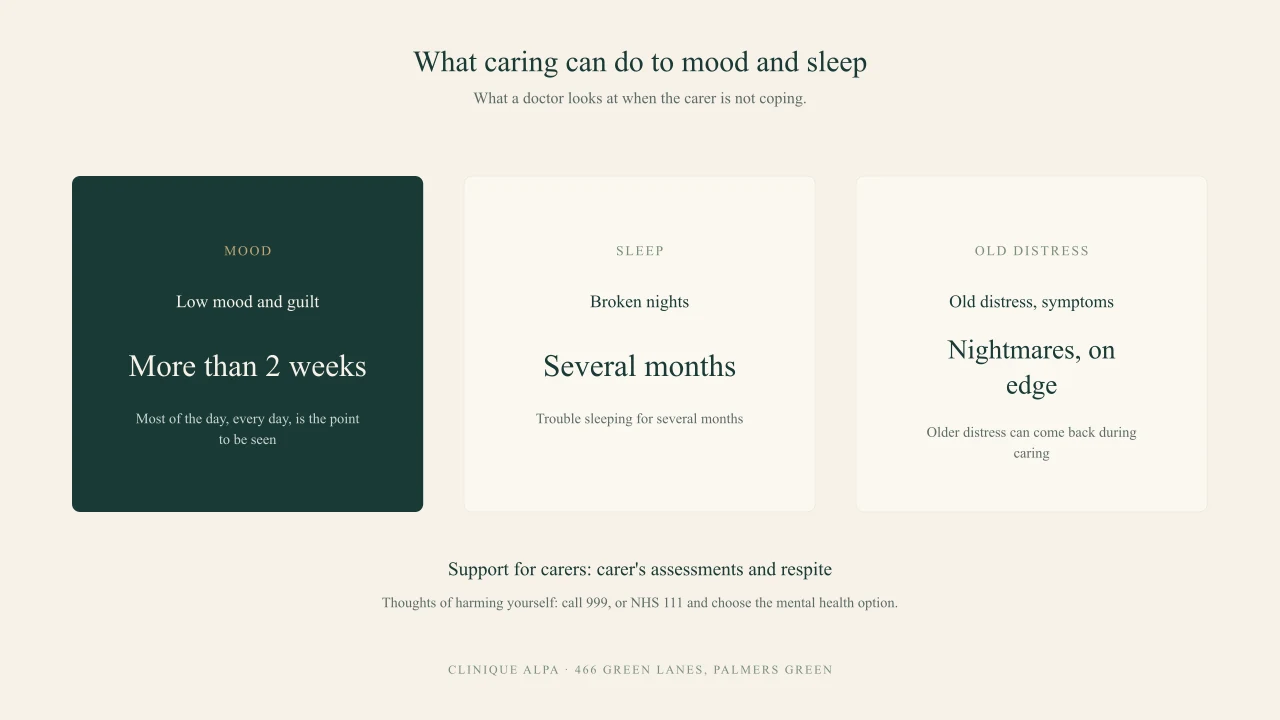
Then mood, asked directly. Has it been low most of the day, every day, for more than 2 weeks? The NHS gives that as the point at which to see a GP. I ask about interest, appetite, concentration and guilt. I also ask, as I ask everyone, whether things have felt so hard that you have thought about harming yourself or not wanting to be here. Carers are often relieved to be asked and rarely volunteer it.
Sleep comes next: when it breaks, what wakes you, whether you can drop off if given the chance, and what you rely on to get through the day. Caffeine, alcohol and snacking on sugar are common and understandable ways of coping, and I ask about them without judgement.
Then the second layer. Are there nightmares, flashbacks, jumpiness or avoidance that were not there before? Is something from earlier in life being stirred up? Is the tiredness out of proportion, so that I should look for a physical cause such as a blood count or thyroid problem? I examine where it helps, check blood pressure and pulse, and arrange blood tests when the story suggests them.
Finally the practical question that decides most outcomes: what can be taken off you? A plan that only asks the carer to cope better is a poor plan. We look at carer breaks, who else can share a night, a protected hour that belongs to you, and whether talking therapy or other treatment would help. I agree a review date, and I explain what would make me want to see you sooner.
From Dr Mitesh Parmar
I ask carers how they are sleeping and eating, and whether they have seen their own GP lately, because carers tend to put themselves last. Exhaustion can hide physical illness or depression. You do not need to be at breaking point to ask for help. If you feel you cannot go on, call 999 or NHS 111.
When should I get help sooner?
- Thoughts of harming yourself or ending your life: call 999 or go to A&E if you are in immediate danger. Otherwise call NHS 111 and choose the mental health option, or call Samaritans free on 116 123, any hour.
- Low mood most of the day, every day, for more than 2 weeks.
- Trouble sleeping that has lasted for several months or is making daily life hard to manage.
- Nightmares, flashbacks or feeling constantly on edge.
- Relying on alcohol to switch off, or losing patience in a way that frightens you.
- Worry that the person you care for is no longer safe with the support you can give.
What support exists for carers?
The NHS carers guide lists carer's assessments, support from local councils and respite care. A carer's assessment looks at your needs rather than theirs, and it is worth asking your local council about it. Respite is not a reward for reaching a breaking point. It is part of keeping the arrangement going.
If you are low in mood, our page on burnout or depression explains how a doctor tells them apart, and stress and insomnia looks at the sleep side of this.
How do we approach this at Clinique Alpa?
A clinic consultation is 30 minutes with a doctor at 466 Green Lanes for £100. Dr Mitesh Parmar has a special interest in psychological medicine. If you cannot leave the person you care for, a video consultation is £79.99 for 30 minutes for problems that do not need an examination, and a home visit lasts 60 minutes and is from £250 on a weekday, from £325 at weekends and bank holidays and from £450 for an evening start, with travel priced by postcode. With your consent, a summary goes to your NHS GP. Our psychiatry services page explains which questions are for a GP and which need a consultant psychiatrist.
Common questions
What are caregiver burnout symptoms and treatment?
Symptoms include exhaustion, low mood, irritability, guilt and poor sleep. Treatment starts with reducing the load, then treating any depression or anxiety that has developed.
What is the difference between caregiver fatigue and caregiver stress symptoms?
Fatigue is the tiredness itself, and stress is the strain behind it. A doctor looks at both together, because they usually arrive together.
Is caretaker burnout the same as depression?
No, but one can lead to the other. If low mood lasts most of the day, every day, for more than 2 weeks, it is worth being seen.
Drafted with AI assistance, clinically reviewed by Dr Mitesh Parmar, MBBS MRCGP, Principal GP and Clinical Director at Clinique Alpa, 466 Green Lanes, Palmers Green, London N13 5PA. This article is general information, not personal medical advice. In an emergency call 999. For NHS advice call 111 or visit nhs.uk.