
The swab came back clear. So did the urine test, and the screen for infections passed on by sex. The course of antibiotics is finished and the cream is nearly used up. The skin, though, is still sore, and the reassuring result has not made it feel any better.
Genital irritation without an infection is more common than most people expect, and it is a frustrating place to be because the usual next step has already been tried. The answer is rarely another course of the same treatment. This page explains why the soreness can carry on after a clear result, what is often behind it and what a doctor does differently the second time round.
Chest pain, signs of a stroke, severe breathlessness, heavy bleeding, a severe allergic reaction or symptoms of sepsis need 999 or A&E immediately. For urgent advice that cannot wait, call NHS 111.
Why does genital irritation continue when there is no infection?
A swab can only answer the question it is asked. A negative result tells you that the infections tested for were not found. It does not say the skin is healthy. Skin that has been inflamed for a while can stay tender and red for weeks after whatever started it has gone, and a few things can keep it going.
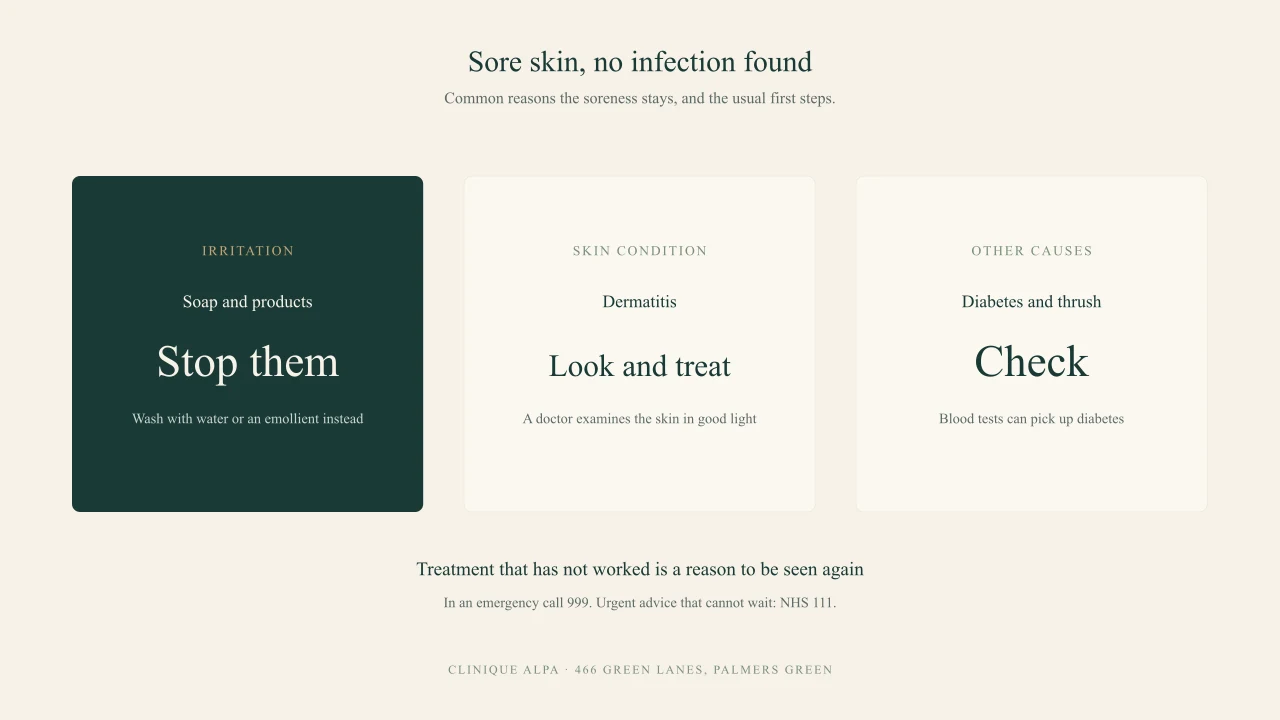
The most common is irritation from what touches the skin. The NHS says irritant contact dermatitis is the most common type of contact dermatitis, caused by substances such as soaps and detergents that damage the outer layer of the skin. The NHS page on balanitis says soap, shower gels or condoms may irritate the skin of the penis. The same logic applies to skin in women around the vulva. The more the area is washed to feel clean, the more it is stripped, and the more it stings.
What are the common causes of genital irritation?
- Soap, shower gel, wipes and perfumed products, including washing straight after sex.
- Contact with a particular product, such as a condom material, a lubricant or a laundry detergent.
- Dermatitis or eczema, a skin condition that can affect the genital area as well as the hands and face.
- Thrush, which the NHS says can be triggered by irritated or damaged skin, antibiotics and poorly controlled diabetes.
- Diabetes itself. The NHS notes that high sugar levels in urine can cause thrush, and lists diabetes among the causes of balanitis.
Notice that antibiotics appear on that list as a trigger, not only as a treatment. A course given for a presumed infection can change the balance of organisms on the skin. This is one reason I am cautious about adding another course when tests are clear.
Can diabetes cause genital irritation?
It can contribute, and it is worth testing for. The NHS lists diabetes as a trigger for thrush and a cause of balanitis. For severe symptoms, it says a doctor may suggest a blood test to check for conditions such as diabetes. A fasting sample or an HbA1c is a quick answer to a question that otherwise lingers.
What does a doctor look at with genital irritation?
What I look at in clinic starts with the skin, not the swab. I want to see it in good light, with a chaperone present if you would like one, and with an explanation of each step first. Is the redness patchy or even, dry or moist, thickened or broken? Is it at the surface or the edge, or does it spread to folds and the groin? The distribution often tells me more than the symptom does.
Then I ask about everything that touches the area. How often do you wash, and with what? Which soap, wash or wipe, and does anything perfumed go near the skin? Which underwear fabric, which laundry product, which condom or lubricant? Most people have never been asked these questions, and it is surprising how often one answer changes the plan. I also ask what has already been used and for how long, because creams and courses that were stopped early or run on too long both matter.
The history includes what the tests have already shown. I do not repeat a swab for the sake of it, but I will review what was tested, and where a second sample would add something, I explain why. I also ask about thirst, weight change and passing urine more often, because those are reasons to check blood sugar. Blood tests, where they are needed, are listed on the blood test prices page.
If the picture fits irritation or dermatitis, the first step is often to take things away. The NHS advises wearing cotton underwear, using water and an emollient in place of soap, and drying the area thoroughly. For dermatitis it describes avoiding the trigger and using emollients, with a topical steroid for severe symptoms. I would add that any such treatment needs a clear plan: which product, how much, for how long and when to stop. If it is thrush, treatment is different again. If it does not fit any of these, a referral to a dermatologist or gynaecologist is appropriate after assessment.
I also explain what a good response looks like. We agree a date to review. If the skin has not improved by then, we change the plan instead of repeating it.
From Dr Mitesh Parmar
When swabs are clear, I look at the skin itself and ask about soaps, wipes, washing powder, shaving and tight clothing, because irritants are very common. Skin conditions such as eczema or lichen can look like infection. I examine only with your consent. Bring a list of the products you use.
Is genital irritation in women different?
The causes overlap, and the area affected is the vulva and the skin around it. The NHS describes itching and irritation around the vulva and vagina, and soreness or stinging with sex or when passing urine, as symptoms of thrush in women. Dryness from hormone changes can look similar, so the history of periods, pregnancy, breastfeeding and menopause is part of the assessment. The routes through are the same: look, remove irritants, test where it helps and treat the cause.
When should you not wait?
See a doctor soon if the skin is blistered, ulcerated or bleeding, if there is a new lump, or if you feel unwell or have a temperature. The NHS says to see a GP for skin symptoms that are persistent, recurrent or severe. For itch that carries on, see persistent genital itch, and for the bumps that follow hair removal, see folliculitis after hair removal.
Common questions
Can genital irritation happen without an infection?
Yes. Soaps, products, dermatitis and diabetes related thrush can all irritate the skin even when swabs are negative.
Should I keep washing the area to keep it clean?
The NHS advises water and an emollient in place of soap for thrush and balanitis. Over washing is a common reason the skin stays sore.
Do I need another antibiotic if tests are clear?
Often not. Antibiotics can themselves be a trigger for thrush, so a doctor will weigh up the evidence before adding another course.
How do we help at Clinique Alpa?
You can book online or call 020 8882 8088. A clinic consultation at 466 Green Lanes is 30 minutes with a doctor and costs £100. Screening for infections is also available through our private sexual health service. With your consent a summary goes to your NHS GP. Fees are listed on appointments and fees.
More in this series: genital skin problems
- Persistent genital itch that has not settled
- Genital tingling or dryness with negative swabs
- Folliculitis after hair removal
Drafted with AI assistance, clinically reviewed by Dr Mitesh Parmar, MBBS MRCGP, Principal GP and Clinical Director at Clinique Alpa, 466 Green Lanes, Palmers Green, London N13 5PA. This article is general information, not personal medical advice. In an emergency call 999. For NHS advice call 111 or visit nhs.uk.