
The appointment for hair removal was meant to be the last step, and the skin was meant to be calm within a day or two. Instead there are small red bumps, some with a white head, that appear in crops and refuse to leave. Every cream has helped for a few days and then the bumps come back.
Folliculitis after hair removal is an inflammation of the hair follicles, and in the groin and pubic area it can be sore and slow to clear. This page explains why it lingers, what you can do that helps, what makes it worse, and what a doctor does so that treatment is careful and not repetitive.
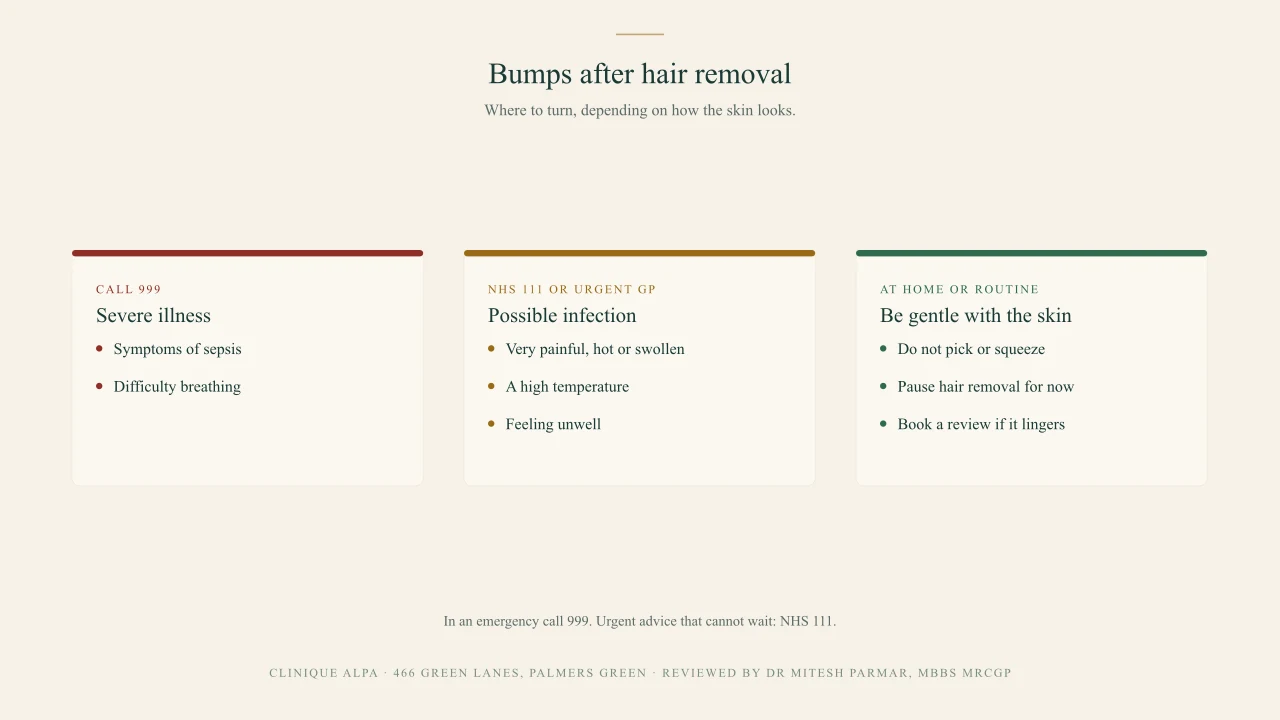
Chest pain, signs of a stroke, severe breathlessness, heavy bleeding, a severe allergic reaction or symptoms of sepsis need 999 or A&E immediately. For urgent advice that cannot wait, call NHS 111.
Why does folliculitis after hair removal linger?
Each hair removal method injures the follicle a little. The NHS page on ingrown hairs links them to shaving, waxing, plucking and threading, and says coarse or curly hair makes them more likely. A hair that grows back into the skin sets up inflammation, and if the area is then rubbed, shaved again or squeezed, the cycle starts again. The skin of the groin is also warm and often rubbed by clothing, which keeps it irritated.
Other factors keep the bumps going. Products used to calm the skin may themselves irritate it. The NHS describes irritant contact dermatitis as the most common type, caused by substances such as soaps and detergents. A tendency to eczema can make the skin react more strongly. And repeated treatment of the same bumps can change the balance of the skin: the NHS lists antibiotics among the triggers for thrush, which can then add its own itch to the picture.
Can folliculitis after laser or IPL hair removal be the same problem?
The pattern can look the same, with red bumps around the follicles in the treated area. I would not assume a cause from the method. Tell the doctor which method you used, how many sessions you have had and how long after each one the bumps appeared. That detail helps separate a reaction to the treatment from ingrown hairs, irritation from products or a skin condition that was already there.
What helps folliculitis from hair removal at home?
The NHS advice for ingrown hairs is a good starting point, and I give the same:
- Do not pick, scratch or squeeze the bumps, as this can cause infection.
- Gently exfoliate to free trapped hairs, and apply a cool, wet cloth to settle the skin.
- The surest way to prevent ingrown hairs, the NHS says, is not to shave. If you do, use warm water and shaving gel, shave in the direction of hair growth with a sharp razor and as few strokes as possible, and leave about 1mm of stubble.
- Consider an electric razor or a different method of hair removal.
- Avoid perfumed soaps and products on the area. The NHS suggests emollients in place of soap for skin that is irritated.
In practice, the most useful step is to pause. Removing hair from skin that is already inflamed adds new injury to old, and the bumps cannot settle while that continues. A pharmacist can suggest itch relieving creams and mild antiseptics, the NHS says.
What does a doctor look at with folliculitis after hair removal?
What I look at in clinic starts with the timeline. When did the bumps start in relation to the first removal, and which method was used each time? Have they ever fully cleared, or do they come in crops? What has been tried, for how long, and did it help while it was being used? I ask what has been put on the skin, including products from beauty treatments, because these are an easily forgotten source of irritation.
Then I look at the skin in good light, with a chaperone if you want one and with an explanation of each step first. Are the bumps centred on hairs? Are some pus filled and others dry and red? Is there scarring or darkening, thickened skin or signs of dermatitis? Is there any sign the problem is spreading, or any heat or swelling around it? I look at the surrounding skin, since eczema or a fungal infection can sit alongside.
A swab of a pus filled spot can show what is growing and which treatment would work. That is more precise than guessing, and it helps avoid adding a course that does not match the cause. Where a persistent or recurrent pattern suggests something else, such as a general skin or sugar problem, a blood test may be sensible, and prices are on the blood test prices page.
The plan is usually careful and staged. Stop removing hair from the area for now, change what touches the skin, treat any infection that the swab confirms, and treat dermatitis or thrush if either is present. I explain the treatment by purpose and duration, so you know when to stop, and I avoid repeating a treatment that has already failed. If the bumps keep returning, we talk about the longer term plan for hair removal, including whether to choose a different method or to stop, and a referral to a dermatologist is appropriate after assessment if the diagnosis is still unclear.
From Dr Mitesh Parmar
Hair removal opens the skin to bacteria, but shaving, tight clothing and warm damp conditions often keep it going. I look at where the bumps sit and how deep they go, and sometimes take a swab. Pause shaving the area. Spreading redness, pain or fever needs prompt review.
When should you see a doctor sooner?
The NHS says most ingrown hairs do not need medical help, and to see a GP if the area is very painful, hot or swollen, or you have a high temperature or feel unwell. Call NHS 111 for urgent advice if you have those signs. If you have symptoms of sepsis or difficulty breathing, call 999. For irritation that persists without bumps, see genital irritation that is not an infection, and for itching see persistent genital itch.
Common questions
Is folliculitis after hair removal an infection?
It can be inflammation from irritation or ingrown hairs, or it can become infected. A doctor can tell by looking, and a swab can confirm.
Should I keep removing hair while the bumps clear?
The NHS suggests shaving less often or using a different method. When the skin is inflamed, pausing is usually kinder to it.
When do I need a doctor?
Seek advice if the area is very painful, hot or swollen, or if you have a high temperature or feel unwell, and for bumps that keep returning.
How do we help at Clinique Alpa?
You can book online or call 020 8882 8088. A clinic consultation at 466 Green Lanes is 30 minutes with a doctor and costs £100. With your consent a summary goes to your NHS GP. Fees are listed on appointments and fees.
More in this series: genital skin problems
- Genital irritation that is not an infection
- Persistent genital itch that has not settled
- Genital tingling or dryness with negative swabs
Drafted with AI assistance, clinically reviewed by Dr Mitesh Parmar, MBBS MRCGP, Principal GP and Clinical Director at Clinique Alpa, 466 Green Lanes, Palmers Green, London N13 5PA. This article is general information, not personal medical advice. In an emergency call 999. For NHS advice call 111 or visit nhs.uk.