

When a Child Has Three Things at Once, Treat the Picture, Not the Loudest Symptom
When a child has been seen three times in a fortnight for the same problem, the question is not which symptom to treat next. The question is what is the unifying picture. A child attended with their parent, after a hospital course of antibiotic for ear pain and a GP visit last week that ended with a nasal spray, with the same ear pain, a chesty cough, a fever, and now a red eye. On examination, there were three things at once. The treatment was for the unifying diagnosis underneath, not for the loudest single symptom on top.

The presentation
The parent’s history was direct. The child had bilateral ear pain. The cough was chesty and noisy, particularly during coughing fits. There was a fever. Appetite and fluid intake were down. A red eye had been noticed yesterday, with no discharge. Urinary and bowel functions were normal. The child had completed an antibiotic course at the hospital several days earlier, and a nasal spray started at a GP visit last week had not relieved the ear pain.
The pattern, on the parent’s account, was that the family had been told one thing each time they presented. Antibiotic for the ear. Spray for the nose. Each separate from the others. The question now is whether the symptoms are separate problems, or whether they are the same problem at three sites.
What the examination found
Vital signs were measured first, as they always should be in a febrile child. Temperature 37.1 degrees, which is at the upper end of normal but not fever today. Saturations 99 percent on room air. Heart rate 115 beats per minute, which is within range for a child with mild fever and active infection.
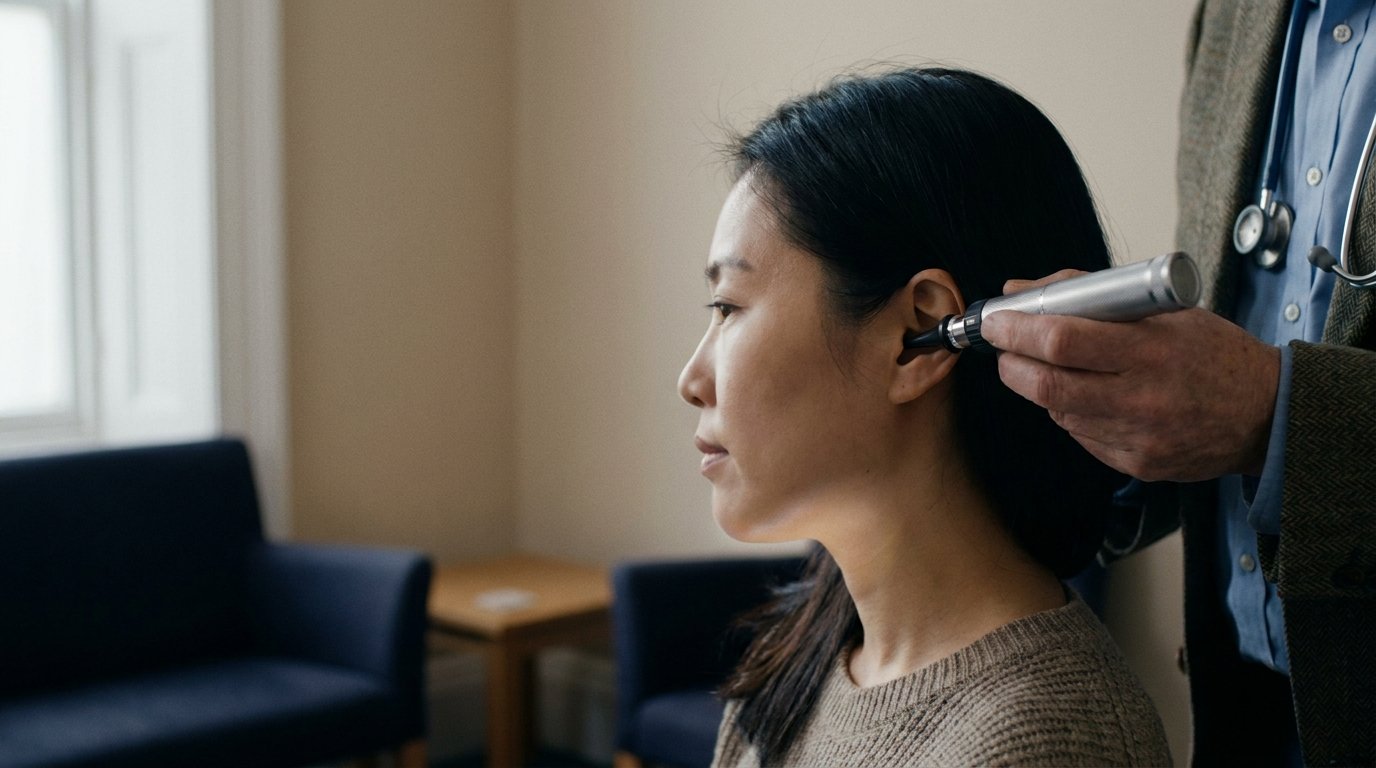
Otoscopy of both ears showed significant tympanic membrane swelling, bilateral, consistent with bilateral middle ear inflammation. Throat examination showed swollen tonsils with exudates, and a strawberry tongue, the classic appearance of streptococcal involvement of the tonsillar surface. Eye examination showed conjunctival injection without discharge, unilateral. Chest examination was clear, no crackles, no wheeze. The chest was the most reassuring finding of the day, because it ruled out a fourth site that would have changed the management entirely.
Clinical anomaly: what was almost missed
First, what was almost missed. The trap is treating a single site. A child with ear pain who has already had antibiotics, then a nasal spray, then comes back with worsening symptoms, can easily get a third intervention pinned to the most prominent site. The actual picture is multi-site. The strawberry tongue and the tonsillar exudates make the streptococcal pattern leading. The unifying diagnosis directs the antibiotic class choice. Missing the unifying picture means treating the loudest symptom and missing the right treatment for the underlying picture.
Second, where the standard NHS pathway would have gone. A standard 8 to 10 minute primary care slot, on a busy day, might have ended at the ear examination. Same day private GP access here meant the time to examine all three sites in turn, document the strawberry tongue and the conjunctival injection, take temperature and saturations, listen to the chest properly, and counsel the parent on the safety net. The deviation is the time to make a unifying diagnosis rather than treating the most obvious individual problem. NICE NG84 frames sore throat antimicrobial treatment in primary care; the constellation here, with strawberry tongue, tonsillar exudates, and bilateral middle ear inflammation, comfortably crosses the threshold for empirical antibiotic treatment without waiting for swabs.
Third, what differentials were ruled out. Adenoviral conjunctivitis was reduced by the unilateral, non-discharging eye; adenoviral involvement is usually bilateral and watery. A simple viral upper respiratory infection was reduced by the strawberry tongue and the tonsillar exudates, both of which point to a streptococcal pattern. Chest involvement was excluded by clear auscultation. Scarlet fever was kept on the differential and the parent was counselled explicitly: any new sandpapery rash, particularly on the trunk, return urgently. The follow-up plan is the safety net; the safety net is what catches the diagnosis if it evolves.
Why a sugar-free white antibiotic syrup matters
Compliance is part of the treatment. A child who will not take their medicine because of the colour, the taste, or the texture, has effectively been given nothing. White, sugar-free preparations of common paediatric antibiotic syrups exist and are routinely available. Asking the parent which preparation the child has taken before, which the child accepted, and which the child refused, is part of the consultation. Choosing the preparation accordingly is part of doing the job properly. A teaspoon refused at home for five days has the same clinical effect as no antibiotic at all.
Dosing was calibrated for the child’s age and weight, three times daily for five days.
Eye care without an extra medicine
The conjunctivitis in this child does not need a separate topical antibiotic. The systemic antibiotic class chosen for the streptococcal picture covers the likely organism behind the eye involvement as well. Eye care therefore consists of gentle cleaning with cooled boiled water, with a clean cotton pad, wiping from the inner corner outward, using a fresh pad each time. The eye should improve in parallel with the systemic infection over the next 48 to 72 hours.
If the eye does not improve, if discharge develops, if the redness intensifies, or if photophobia or visual disturbance appears, the threshold to return is low. That is the safety net.
Safety netting in plain language for parents
The words the parent will use when they call 111 or attend A&E are the words they are given in clinic. So the words have to be plain. A high or rising fever above 39 degrees not settling with paracetamol or ibuprofen at age-appropriate doses. Worsening cough, particularly with new fast breathing or recession of the ribs on each breath. Persistent vomiting that prevents the child from keeping fluids down. New rash, especially a sandpapery rash on the trunk, which can mean scarlet fever. New drowsiness, floppiness, or unusual quietness in a child who is normally alert. Any of these is a return to hospital, today, not a wait for the next antibiotic dose.
Re-review at 48 to 72 hours is the standard checkpoint. If the child is improving, the course is completed and a follow-up review is offered. If the child is not improving, the antibiotic class is reviewed, the chest is re-examined, and any of the safety net features moves the trajectory immediately to hospital. NICE NG84 and NG91 frame the treatment logic; the safety net frames the parental decision-making.
When to see a same day private GP for a febrile child
Several thresholds should move a parent towards a same day private GP appointment rather than waiting at home. Persistent fever beyond 48 hours that has not responded to age-appropriate paracetamol or ibuprofen. Bilateral ear pain or persistent ear pain on a single side beyond 72 hours. A red eye with or without discharge. Any rash. Any noticeable change in the child’s level of activity or alertness, even if subtle. Any combination of two or more sites of infection at once. A previous treatment that has not worked. The point of the same day appointment is the time to examine all the sites that need examining, in one visit, and to make a unifying diagnosis where one is available.
What Clinique Alpa offers
Same day access for paediatric presentations. Live record review of any previous hospital or GP attendances, so that the previous antibiotic, the spray, the assessment, are all visible at the start of the consultation rather than re-discovered halfway through. Time to examine all the sites that need examining. Time to brief the parent on the safety net in plain language. Sugar-free preparations, white-coloured if needed, chosen where they exist, because compliance is part of the treatment. No medicine names in our public writing, by the rule. What the parent leaves with is a clear plan, a written safety net, and a re-review appointment booked at 48 to 72 hours.

Read more on this theme on our pillar page: Children’s Health, Same Day.
Clinique Alpa. Same day private GP, Palmers Green, North London.