
When a Teenager Cannot Sleep Before GCSEs, Where Does a GP Actually Help?
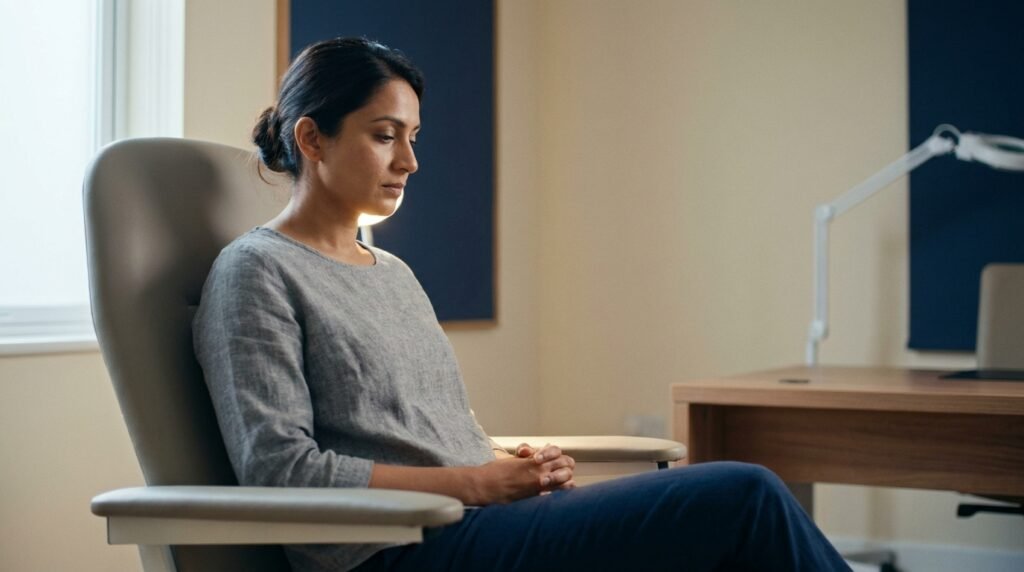
The unfair advantage of same day private GP access is not speed for its own sake. It is the room to think when something does not quite add up. This case is exactly that. An adolescent presents alone, with months of difficulty falling asleep, school performance falling, GCSEs sitting on the calendar, and a sense of “something is wrong but no one has had the time to look properly”. The right answer is not a sleep hygiene leaflet. It is a structured screen, an honest conversation, and a referral on a timeline that matches the patient’s life.
The presentation
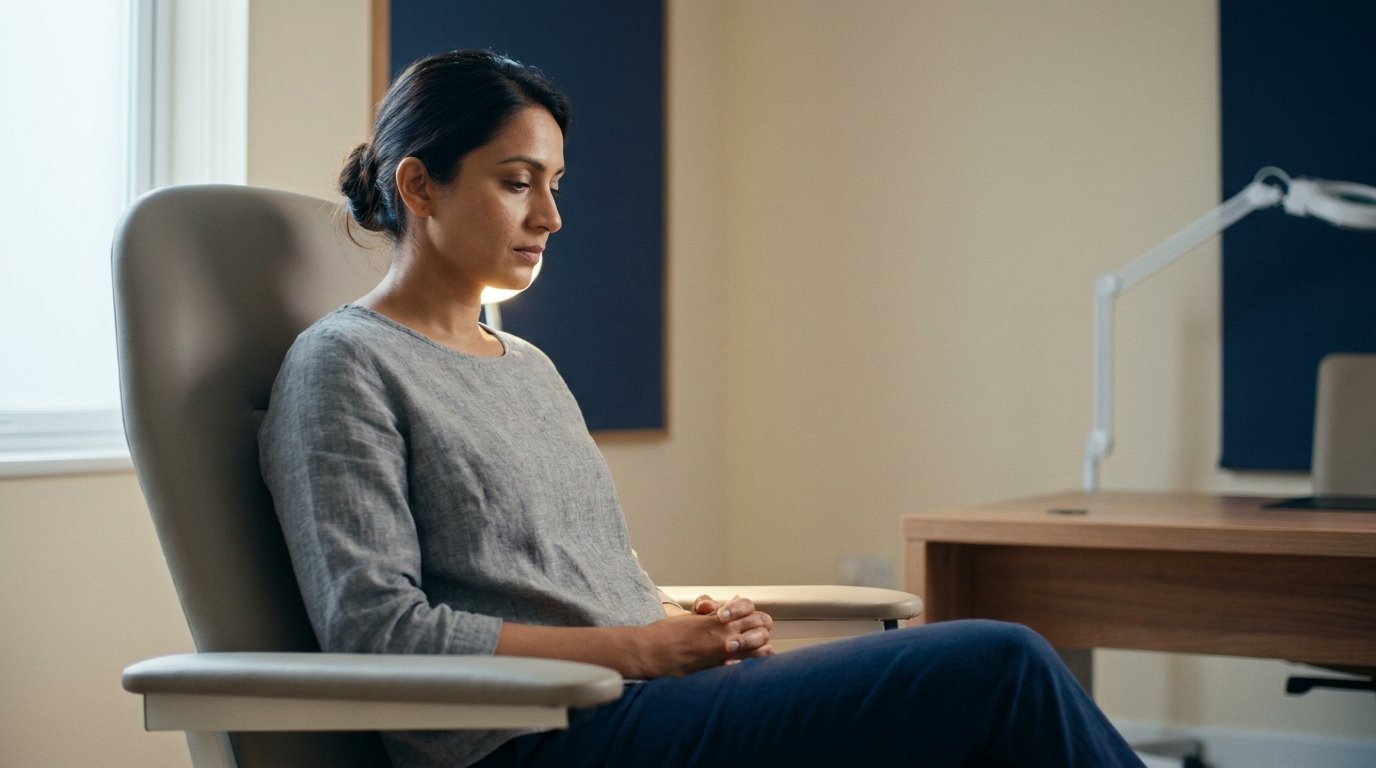
Six to nine months of difficulty falling asleep and poor sleep quality, worsening recently, with exams imminent. Cannot focus in lessons. Too tired to do anything after school. Some anxiety in school related to the difficulty focusing, but no specific worries at home. Teachers are aware and allow time-outs. No previous ADHD assessment. No previous medication. No social worker involvement. No self-harm, no head banging, no suicidal ideation, asked directly. Family recently moved to the practice. Father consenting to whatever pathway is most useful, here in the room.
The opening question for any adolescent in this picture is whether the sleep difficulty is the headline or the symptom. In a busy 10 minute slot, the easy response is to call it exam stress, hand over a sleep hygiene leaflet, and reassure. None of that is wrong. None of it is enough.
What an in-clinic ADHD screen actually looks like
The screening tool was applied in the room, item by item, with the patient and the parent’s consent. Positive features included difficulty staying focused on lessons and homework, distractibility by background noise, occasional restlessness in seat, talking too much in some contexts, and answering questions before the question is finished when excited. Negative features included no careless mistakes, no difficulty listening when spoken to directly, no difficulty organising tasks, no avoidance of mental effort, no frequent loss of belongings, no forgetfulness in daily routines, no leaving seat in lessons, no constant on-the-go feeling, no difficulty waiting turn.
The pattern is mixed, weighted towards inattentive features rather than hyperactive features. That is not a diagnosis. A positive screen is a flag, not a label. The decision in the room is whether the picture is consistent enough with possible ADHD to justify a specialist assessment. In this case, with falling school performance, with exams imminent, with sleep disturbance pulling cognitive function down further, the answer is yes.
Clinical anomaly: what was almost missed
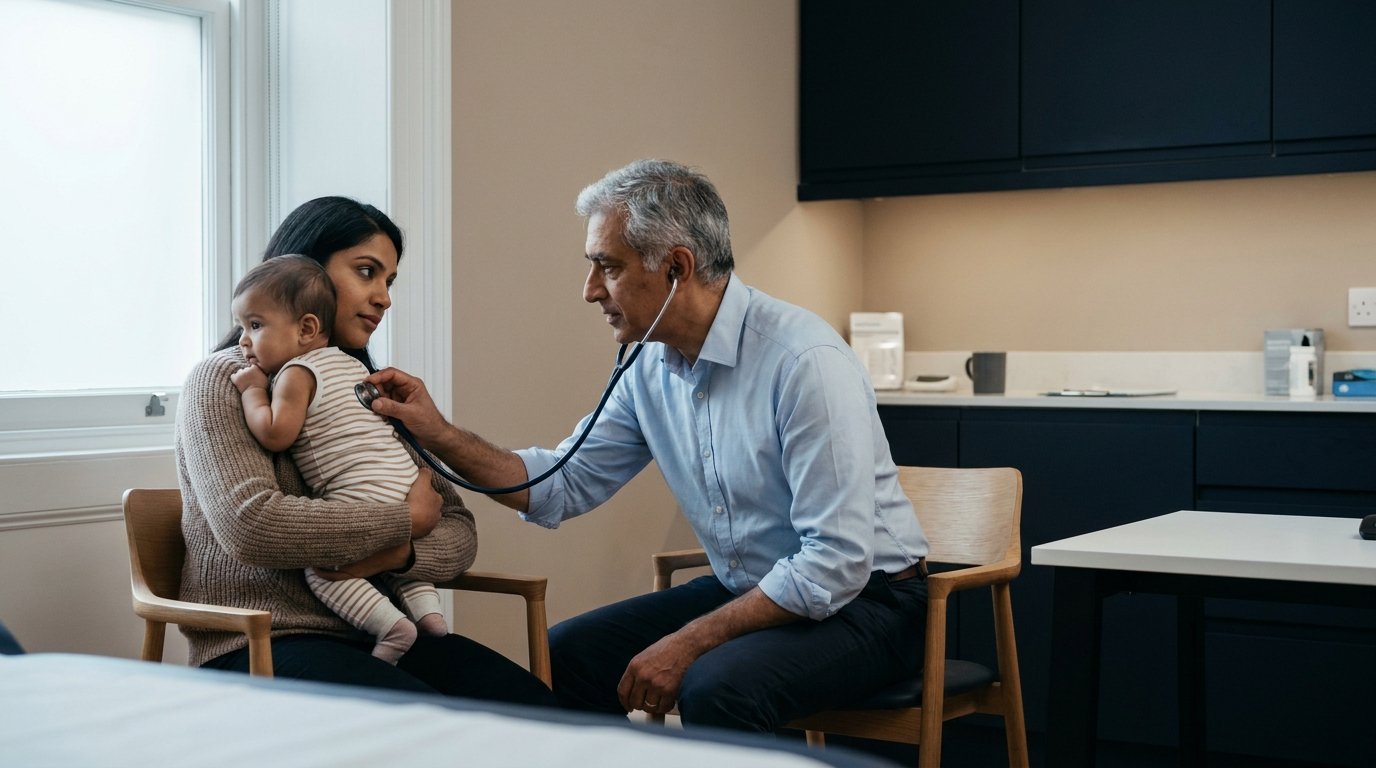
First, what was almost missed. The easy answer is exam stress, a sleep hygiene leaflet, a wave goodbye, and a re-presentation in 6 months when results come back lower than expected. The diagnosis underneath is a possible ADHD, predominantly inattentive presentation, in an adolescent who has been quietly compensating for years until the cognitive load of exam season exceeded compensation. Without a formal screen and a referral now, the assessment window closes before the exams that are the most reasonable measure of where the adolescent actually stands academically.
Second, where the standard NHS pathway would have gone. Standard NHS Children and Adolescent Mental Health Services or community paediatric ADHD pathways currently run waiting times that comfortably exceed the months until the exams in many parts of England. The Right to Choose pathway is a legitimate route under NHS commissioning that allows patients in England to choose a different specialist provider, often with a substantially shorter wait. The deviation is procedural, not clinical: the question being asked is the same. The advantage is timing. Where melatonin is indicated for sleep, it can only be initiated by a specialist; the referral is therefore the gating step. NICE NG87 sets out the assessment pathway for ADHD, and the standard of care is a specialist assessment for diagnosis, not a primary care label.
Third, what differentials were ruled out. Depression was reduced by the absence of pervasive low mood, the absence of anhedonia, and the absence of suicidal ideation, all asked directly. Acute anxiety disorder was reduced by the absence of free-floating worry outside the academic setting and by the chronology, with focusing difficulty preceding the anxiety symptoms. A primary sleep phase disorder was considered and reduced; the pattern is consistent with onset insomnia secondary to cognitive load rather than a circadian shift. Substance misuse was screened directly and denied, with no collateral concern.
What Right to Choose actually unlocks
It is worth being concrete. Right to Choose is the legal right under the NHS Choice Framework for adult and, in many areas, paediatric and adolescent mental health pathways, to choose any provider in England that holds an NHS contract for that service. For ADHD assessment specifically, several private providers hold NHS contracts and accept referrals through this route. The wait, in many areas, is months rather than years. The assessment is conducted by a psychiatrist, often virtually. The diagnostic outcome is an NHS diagnosis, not a private one, and the medication, if indicated, is initiated by the specialist and then continued in primary care under shared care arrangements.
That is what the parent in the room needs to understand. The referral does not commit the family to private fees. It commits the family to a different provider, on a faster timeline, for the same NHS-funded assessment they would otherwise wait considerably longer for. The decision in the room is informed consent, recorded properly.
The plan agreed in clinic
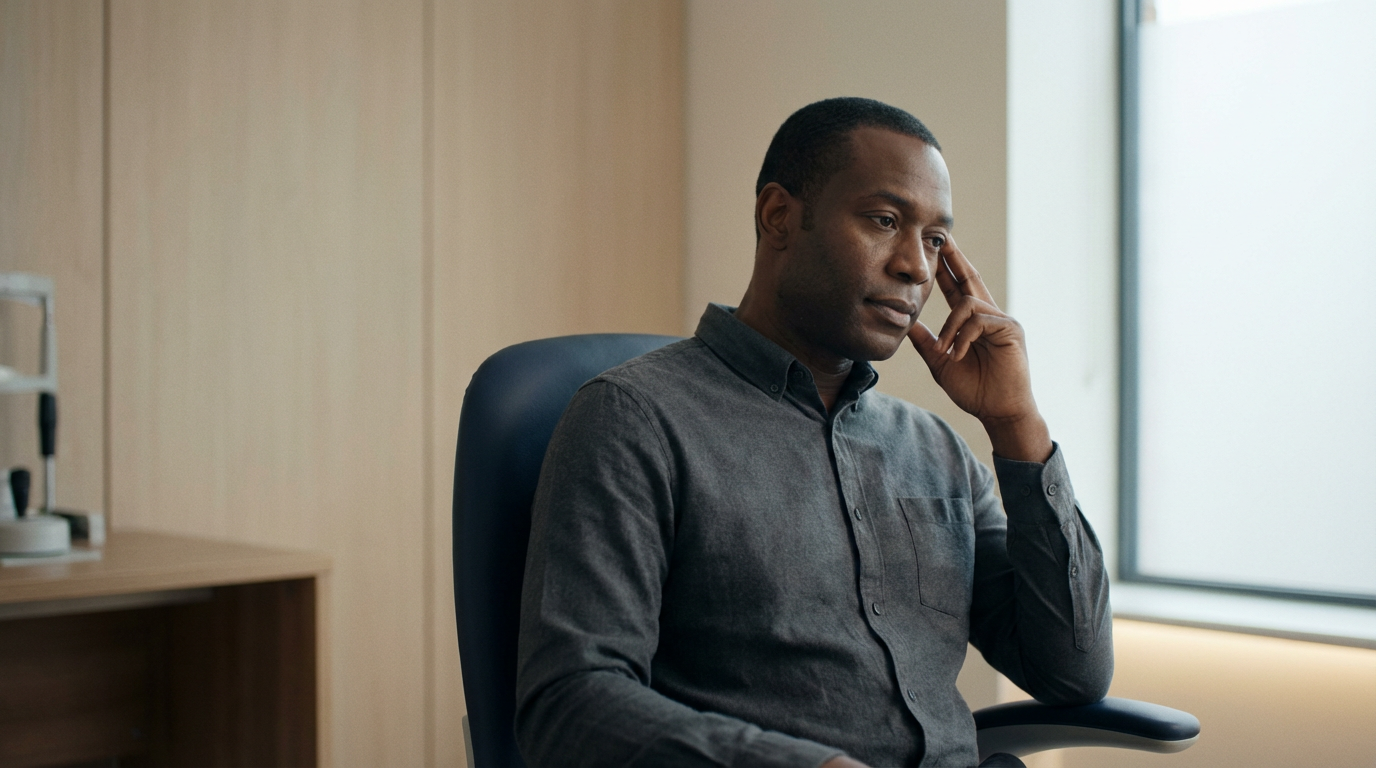
The ADHD screen, completed in clinic, was positive enough to warrant specialist assessment. A Right to Choose referral was made, with the father’s verbal consent recorded against the patient record. The patient and the father were counselled that melatonin, if indicated, can only be initiated by the specialist. Sleep hygiene measures were discussed alongside the referral, not as a substitute for it, including consistent wake times, screen curfew before bed, exposure to morning light, and a clear pre-bed wind-down. The patient was advised that if no contact is made by the specialist provider within 1 to 2 weeks, the surgery should be contacted directly to chase. Father’s contact details were recorded for the referral letter, because referrals stall at the receiving end most often when intake details are missing.
What we asked, and why we asked it
Adolescent presentations of this kind benefit from explicit safeguarding questions. Asked directly. Self-harm, head banging, suicidal ideation. The reason for asking is not because the picture suggests it. The reason is because, on the rare day when it is present, the only way to know is to ask. Negative answers are evidence. Positive answers redirect the consultation entirely. Either way, the question being asked is part of doing the job properly.
When to see a same day private GP for an adolescent in this picture
Several thresholds should move a parent towards a same day private GP appointment for an adolescent rather than waiting for the standard NHS slot. Months of falling school performance with no clear cause. Sleep difficulty that has not responded to common-sense sleep hygiene measures. Reports from teachers of focusing difficulty. A family history of ADHD or related diagnoses. Increasing anxiety in school settings. Any indication of low mood or self-harm. The point is not to label every adolescent who finds GCSEs hard. The point is to do a proper screen when the picture warrants one and to use the right pathway, on the right timeline, when a specialist assessment is the next step.
What Clinique Alpa offers
Same day access. Live record review. Time to do an in-clinic screen properly. Time to explain Right to Choose to a parent who has not heard of it before. Time to record the consent and the referral details accurately. The medicines decision is the specialist’s; our job in primary care is to identify the gate and to open it, on the right timeline, with the right paperwork. No prescription only medicine names in our public writing, because the rule is the right rule. The plan in the room today is the plan; the diagnosis is the specialist’s to make.
Read more on this theme on our pillar page: Children’s Health, Same Day.
Clinique Alpa. Same day private GP, Palmers Green, North London.