
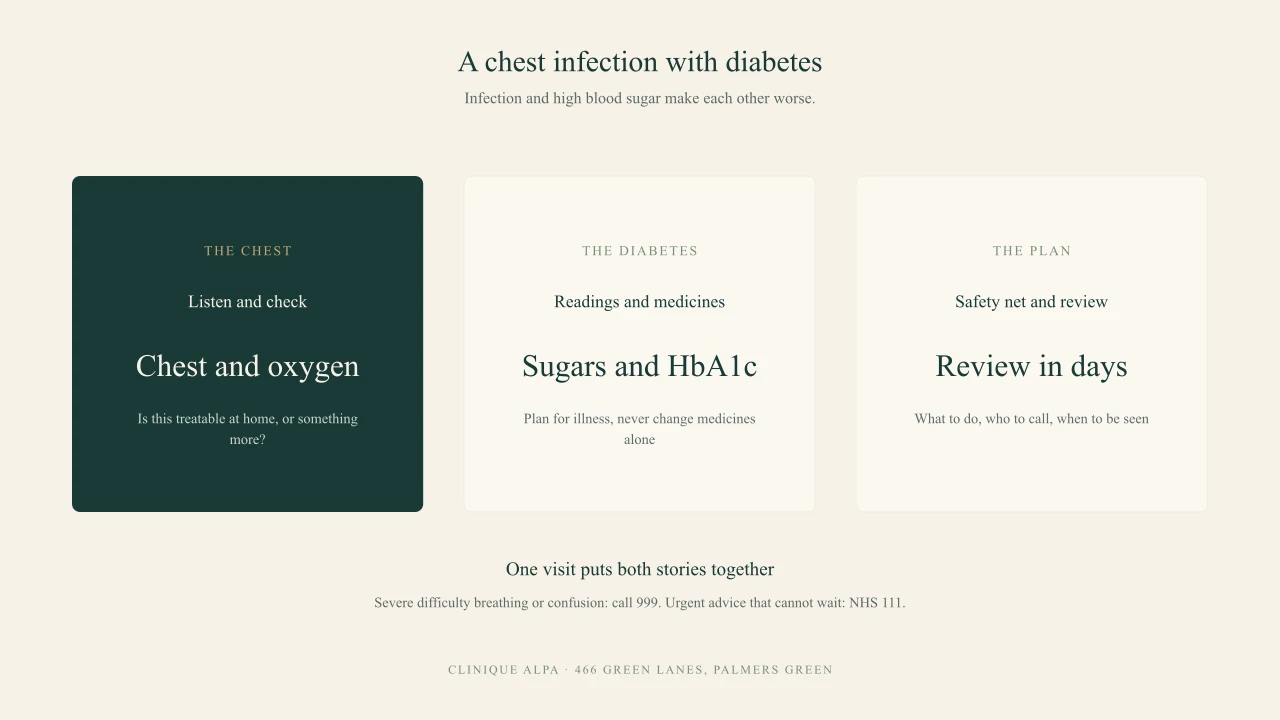
The cough has gone on long enough that the usual remedies have stopped being convincing. It disturbs sleep, the phlegm is darker than it was, and there is a hot and cold, wrung out feeling that is easy to put down to coughing. Alongside it, the diabetes readings have started to drift in the wrong direction, and it is not obvious which problem is driving the other.
Chest infection diabetes is a pairing I take seriously, because each one makes the other harder to settle. The good news is that the extra checks are straightforward, and most of the work is in doing them early.
Chest pain, signs of a stroke, severe breathlessness, heavy bleeding, a severe allergic reaction or symptoms of sepsis need 999 or A&E immediately. For urgent advice that cannot wait, call NHS 111.
Why do infection and high blood sugar make each other worse?
Being unwell is one of the recognised reasons for blood sugar to rise, and the NHS lists it first among the causes of high blood sugar, with stress, being less active and certain medicines such as steroids. Infection also makes the body resist insulin, so the readings climb even if you are eating less.
The reverse also happens. When blood sugar stays high, the body deals with germs less well, and a chest infection takes longer to clear. That is why the NHS includes people with diabetes among those at higher risk from a chest infection, and why it advises seeing a GP rather than waiting it out if you are in that group.
Can diabetes cause chest infections?
Diabetes does not cause them directly, but it makes them more likely to become troublesome. The chest is only one of the places affected: skin, urine and feet are others. What matters in practice is that a lung infection in someone with diabetes deserves a lower threshold for review, and a clear plan for sugar levels while it lasts.
The same applies to both type 2 and type 1 diabetes. In type 1, the added concern is ketones, which can build up when the body is short of insulin during illness, so the sick day advice from your diabetes team matters most.
What I look at in clinic
When this comes up in consultation, people often have two partial stories that have never been put together: the chest story, told to one clinician, and the diabetes story, told to another. I start by joining them.
On the chest side: how long the cough has lasted, the colour of the phlegm, fever and sweats, wheeze, pain on breathing, and whether anything has been coughed up with blood. I listen to the chest, check the oxygen level with a pulse oximeter, take the pulse and temperature, and look at how hard you are working to breathe. That tells me whether this looks like a chest infection that can be treated at home, or whether there are signs of pneumonia that need a different level of care. The NHS says antibiotics only help bacterial infections, so I explain why I am or am not suggesting them.
On the diabetes side: what your readings and your latest HbA1c show, whether sugars have risen since the cough began, whether you are drinking and eating enough, and which diabetes medicines you take. Some medicines need a second look when you are dehydrated or not eating, and I never ask anyone to stop or change a diabetes medicine without agreeing it with them, and where appropriate with their diabetes team. If any treatment for the chest could push sugars up, we plan for that before it does.
Then I look at the other things that can ride along. Tiredness and weight loss can be diabetes out of control or something else. Chest pain that is worse on breathing can be the lining of the lung, and chest pain that is not is a different question. If a chest X ray is needed because the picture is unclear or the cough has dragged on, I explain why. Blood tests, including HbA1c, kidney function and a blood count, can be arranged through the clinic's testing service.
Finally, a defined safety net: what readings should make you call, what to do with food and fluids, and exactly when I want to see or speak to you again. I would rather agree a review within a few days than leave it open ended.
From Dr Mitesh Parmar
With diabetes I check your sugar readings alongside the chest, since infection can push sugar up and high sugar slows recovery. I ask about thirst, vomiting and whether you can keep fluids down. Keep testing as often as your plan says. Struggling to breathe, drowsiness or persistent vomiting needs 999 or A&E.
When to come in sooner
Call 999 or go to A&E for severe difficulty breathing, a tight or heavy chest, pain spreading to the arm, back, neck or jaw, blue, grey or pale lips or skin, or sudden confusion. With high blood sugar, the NHS also advises 999 if you feel sick or are being sick, have stomach pain, are breathing faster than usual, feel drowsy or confused, have fruity smelling breath, or have high ketones in blood or urine.
Call NHS 111 or get a same day assessment if:
- the cough has lasted more than 3 weeks, or you are coughing up blood
- your sugar readings stay high, or you are very thirsty and passing a lot of urine
- you feel very unwell or are getting worse
- you are not improving 2 to 3 days after starting antibiotics
How do we approach this at Clinique Alpa?
A face to face consultation at 466 Green Lanes is 30 minutes with a named doctor and costs £100. I listen to the chest, check the oxygen level, and go through your readings and medicines in one visit. A video consultation does not suit this problem, because the chest needs examining. If you cannot travel, a home visit is from £250 on a weekday.
A referral letter, for example to your diabetes service, is written where clinically appropriate after assessment and is included in the consultation fee. With your consent, a summary goes to your NHS GP so that everyone has the same picture. For chest infections in general, see when treatment helps, and for asthma alongside a chest infection, the next article in this series.
Common questions
Can diabetes cause chest infections?
It makes them more likely to be troublesome and slower to clear, rather than causing them. People with diabetes are listed by the NHS as being at higher risk.
Does a chest infection raise blood sugar?
Yes, being unwell is a recognised cause of high blood sugar. Check your readings more often and follow your diabetes team's sick day advice.
Is chest congestion with diabetes always an infection?
No. Congestion can follow a cold, an allergy or a heart or lung problem, which is why it is worth having it listened to rather than assumed.
More in this series: chest infection with another condition
- A chest infection when you have asthma
- Chest infection and heart failure in older adults
- A chest infection when immunosuppressed
Drafted with AI assistance, clinically reviewed by Dr Mitesh Parmar, MBBS MRCGP, Principal GP and Clinical Director at Clinique Alpa, 466 Green Lanes, Palmers Green, London N13 5PA. This article is general information, not personal medical advice. In an emergency call 999. For NHS advice call 111 or visit nhs.uk.