
People with asthma usually know their own chest. They know the tightness that comes with a cold, the wheeze that needs the reliever twice a day for a week, and the point at which it stops behaving like their usual asthma. When that point arrives, the question is whether this is the asthma, an infection sitting on top of it, or both.
Chest infection asthma is the combination I see most often when someone has waited out a cold that did not go away. Often it is a mixture of the two, and the plan has to cover both.
Chest pain, signs of a stroke, severe breathlessness, heavy bleeding, a severe allergic reaction or symptoms of sepsis need 999 or A&E immediately. For urgent advice that cannot wait, call NHS 111.
How do you tell a chest infection from an asthma flare?
They overlap, and that is the difficulty. The NHS describes the usual signs of a chest infection as a chesty cough, sometimes with green or yellow mucus, wheezing and shortness of breath, chest pain or discomfort, a high temperature, aching muscles and tiredness. Usual asthma symptoms are wheezing, coughing, shortness of breath and chest tightness.
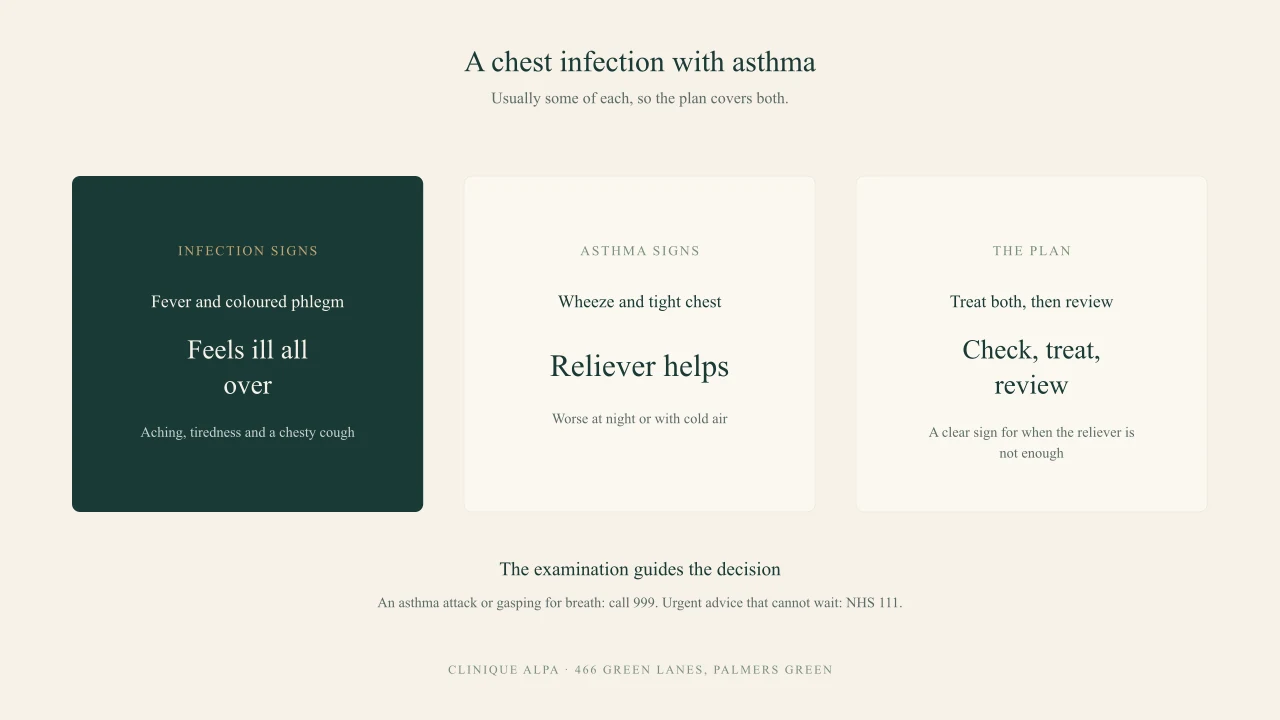
A few features lean one way. Fever, aching, coloured phlegm and feeling ill all over suggest infection. Wheeze, a tight chest, a dry cough that is worse at night or with cold air, and a reliever that helps suggest asthma. Often there is no clean line, because the NHS notes that viruses such as flu can make asthma symptoms worse. An infection can also set off a flare in an airway that is already sensitive.
Why do chest infection and asthma symptoms need treating together?
Because treating one and ignoring the other leaves you half better. An infection settled with antibiotics, if one is needed at all, can leave an inflamed airway that goes on wheezing for weeks. Asthma settled with a reliever alone can leave an infection that was never dealt with. The NHS is clear that antibiotics work only for bacterial infections, not viral ones, so I decide whether they are needed by examining the chest, not by the length of the cough.
What I look at in clinic
When this comes up in consultation, people often arrive with a history of previous chest infections, an asthma plan they have half followed, and a reliever they are using more than they would like. I start with how the last few days have gone.
What has changed from your usual: how often the reliever is used, whether it works and for how long, night waking, a limit on talking or walking, and the colour of the phlegm. Whether the regular preventer is being used the way it was intended, because it is very common for a daily preventer to be used less often than intended or only when symptoms flare, and a flare often follows. Whether technique is right, which is quick to check if you bring the device.
Then the examination. I listen to the chest for the sound of an open, whistling airway or the crackle that points to infection, check the oxygen level with a pulse oximeter and the breathing rate, and look at how comfortable you are while you talk. If there is any sign of a more serious infection, I will say so plainly, and the plan changes.
If a short course of treatment for the airways, an antibiotic, or both is appropriate, I explain what each is for and how long it will take to work. Things I always cover: the sign that the reliever is no longer enough, and what to do if it stops helping. Where the chest still sounds abnormal after the infection has cleared, a chest X ray or a breathing test is the next step.
I also review the triggers around the flare. A viral infection is one. Smoke, cold air, dust, pollen and exercise are others. Flu vaccination is advised by the NHS for people with asthma, and I would rather talk about prevention while you are better than during the next flare.
From Dr Mitesh Parmar
I check how well controlled your asthma was before this started, and how often you use the reliever. Then I listen carefully and measure oxygen and peak flow. A tight chest, a reliever that no longer helps, or trouble speaking in full sentences needs 999, not a wait and see.
When to come in sooner
Call 999 if you are having an asthma attack: severe symptoms with difficulty breathing. The NHS says to sit up, stay calm, use the reliever as your plan or the guidance says, and call 999 if you feel worse at any time, if there is no improvement after the maximum reliever dose, or if you have no inhaler. Do not drive yourself to A&E.
Also call 999 for gasping, being unable to get words out, a tight or heavy chest, or blue, pale or grey lips or skin. Call NHS 111 or get seen quickly if:
- you need the reliever more often, or it is not working as it usually does
- the cough has lasted more than 3 weeks, or you cough up blood
- you have a fever with breathlessness, or you are waking at night with symptoms
- you have recovered from an attack: the NHS advises an urgent appointment within 2 days, even if you feel well
How do we approach this at Clinique Alpa?
A face to face consultation at 466 Green Lanes is 30 minutes with a named doctor and costs £100. We can check the oxygen level on site, and medical oxygen is available at the clinic if it were ever needed while urgent transfer is arranged. A video consultation does not suit this problem, because the chest needs listening to.
The consultation covers the chest, the asthma plan and any treatment, with a clear review date. A referral letter is written where clinically appropriate after assessment and is included in the consultation fee, and with your consent a summary goes to your NHS GP. I have also written about an asthma related chest infection and same day care, and about chest infection with diabetes.
Common questions
What does a chest infection feel like with asthma?
Often like a worse than usual bout of asthma, with a chesty cough, coloured phlegm, fever and aching. If you feel ill all over, not just tight, infection is likely.
Do I need antibiotics for a chest infection with asthma?
Not always. Many infections are viral, and antibiotics do not help those, so the examination of the chest guides the decision.
Can a chest infection trigger an asthma attack?
Yes. Viral infections are a recognised trigger, so a reliever that stops working during a chest infection is a reason to act promptly.
More in this series: chest infection with another condition
- A chest infection when you have diabetes
- Chest infection and heart failure in older adults
- A chest infection when immunosuppressed
Drafted with AI assistance, clinically reviewed by Dr Mitesh Parmar, MBBS MRCGP, Principal GP and Clinical Director at Clinique Alpa, 466 Green Lanes, Palmers Green, London N13 5PA. This article is general information, not personal medical advice. In an emergency call 999. For NHS advice call 111 or visit nhs.uk.