
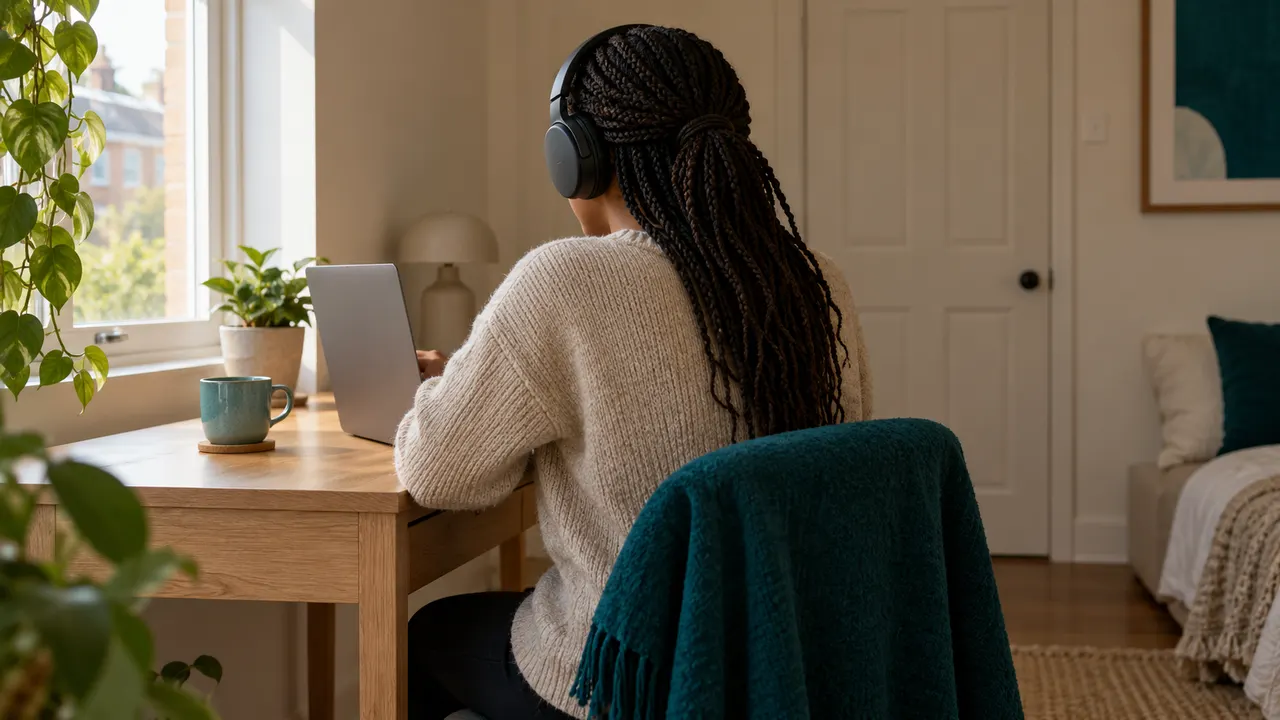
Some people choose video because getting to a clinic is the hardest part of their week. Others join from a parked car outside work, with half an hour of lunch and a door that locks. For a lot of people with anxiety, the waiting room is the obstacle rather than the conversation. Taking it away is sometimes what makes a first appointment happen at all.
So the real question is whether a screen is enough. Often it is. Sometimes the video consultation anxiety nudges you towards is exactly the right first step, and sometimes it is the anxiety doing the booking. Both are worth knowing about before you choose.
If you are at immediate risk of harming yourself or someone else, call 999 or go to A&E. For urgent mental health help, call NHS 111 and choose the mental health option, or call Samaritans free on 116 123, any hour.
What can a video consultation cover for anxiety and low mood?
Most of an assessment for anxiety or low mood is conversation, and conversation travels well to a screen. Whether I see someone in clinic or a colleague sees them by video, the story comes first, in order: when it started, what was happening in life at the time, and what has changed since. Then the detail. How sleep has changed, whether appetite and weight have shifted, whether concentration holds, whether anything still gives pleasure.
With low mood, I am listening for the shape of the day. Whether mornings are worst, whether friends have quietly dropped away, whether small tasks have become large ones. Early waking, losing interest in things that used to matter and a sense that the future has narrowed tell me more than the word depressed does. I also ask what has already been tried, from talking therapy to exercise to time off work, and what got in the way.
Anxiety is a physical experience as much as a mental one, so I ask about the body too: a racing heart, a tight chest, breathlessness, a churning stomach, tingling hands, waking in a sweat. I ask about caffeine, alcohol and anything else used to take the edge off, because each of those can keep anxiety going. And I ask plainly about thoughts of self harm, because it matters and because people are rarely asked directly.
The second layer usually sits in life rather than in symptoms: work that has become unmanageable, money, a relationship, caring for someone, grief, a health scare in the family. These come out more easily when people feel at ease, and for some, being in their own home is what makes that possible.
A camera shows a good deal as well. The pace of speech, how much eye contact is comfortable, whether attention drifts, the pause before a difficult answer. It shows the room too, including whether someone keeps glancing at the door because the space is not as private as they hoped.
What a screen cannot do is examine. A doctor cannot take a reliable pulse or blood pressure, listen to the heart, feel the thyroid, check properly for a tremor or weigh you. That matters, because several physical problems can feel exactly like anxiety: an overactive thyroid, heart rhythm problems, anaemia, low blood sugar and too much caffeine among them. Where those need ruling out, the right next step is an examination and sometimes blood tests, not another conversation.
What you can leave a video consultation with is an assessment, a plan, practical steps for the weeks ahead and an honest view of what should happen next. Treatment options are discussed with you, but a video consultation is an assessment by a doctor, not a promise of any particular treatment.
Video can also be a sensible way to check in once a plan has started: whether sleep has shifted, whether the steps agreed were realistic, whether anything new has surfaced. Whichever route you choose, I would usually suggest looking again within 2 to 4 weeks rather than waiting to see.
When is it better to come into the clinic?
Video works well when the problem can be described and talked through. Come in to be seen face to face instead if:
- anxiety comes with physical symptoms that need examining, such as palpitations, dizziness, fainting or new breathlessness
- you have lost weight without trying, or you have noticed a new tremor
- anxiety or low mood has appeared for the first time later in life, or alongside other new symptoms
- blood tests are likely to be needed
- you cannot find a space where you can speak freely without being overheard
- you have been unwell for a long time, nothing has shifted, and the whole picture needs a fresh look
Chest pain, or palpitations with fainting, need 999 or A&E rather than an appointment. Thoughts of harming yourself need the crisis lines above, not a booked slot later in the week.
A clinic appointment at 466 Green Lanes is 30 minutes for £100. You can see me there; my special interest is psychological medicine. If leaving the house is itself the problem and you need examining, a home visit is from £250 on a weekday, with travel priced by postcode.
How do you get the most from a video appointment?
A little preparation makes 30 minutes go further.
- choose a room where you will not be overheard, and use headphones if others are at home
- charge the device and check your connection beforehand
- have photo identification ready
- keep a list of anything you take regularly and any allergies
- write down the 3 things you most want to leave with
If talking is hard, reading from notes is perfectly acceptable. Many people with anxiety find that writing things down the night before takes the pressure off the conversation itself. If anxiety is the main problem and you want to know how we approach it more widely, my piece on private anxiety treatment in London covers that.
How do video consultations work at Clinique Alpa?
You choose a 30 minute time, book and pay online, and the link arrives in your confirmation email. The fee is £79.99. Video consultations are currently with Dr Alpa J. Morawala, and they suit problems that do not need an examination. If you need to be examined, the doctor will say so plainly, and a clinic appointment or a home visit can be arranged instead.
With your consent, a summary goes to your NHS GP so that your care joins up. This is private care alongside the NHS, never a replacement for it. The fee is also set out on our video consultation fees page.
Written by Dr Mitesh Parmar, MBBS MRCGP, Principal GP and Clinical Director at Clinique Alpa, 466 Green Lanes, Palmers Green, London N13 5PA. This article is general information, not personal medical advice. In an emergency call 999. For NHS advice call 111 or visit nhs.uk.