
Someone else usually notices first. A few marks on the legs, some of them around the waist, with no memory of a knock and often no pain. Some are flat, some darker than the skin around them, and a few seem to fade when pressed. Then there is the question that follows: where did they come from, and does it mean something is wrong with the blood.
Unexplained bruising is a symptom that is usually harmless and occasionally important, and the way to tell the difference is a set of specific questions, a careful look at the skin and, when the story calls for it, blood tests. That is what this article describes.
Chest pain, signs of a stroke, severe breathlessness, heavy bleeding, a severe allergic reaction or symptoms of sepsis need 999 or A&E immediately. For urgent advice that cannot wait, call NHS 111.
Is unexplained bruising serious?
Most bruises have a cause that is forgotten: a knock on furniture, a bag strap, a new exercise routine, or skin that has become thinner and more fragile. Some medicines make bruising more likely. But marks that appear without any recollection of injury, that keep appearing, that are large, or that come with other symptoms deserve a proper assessment.
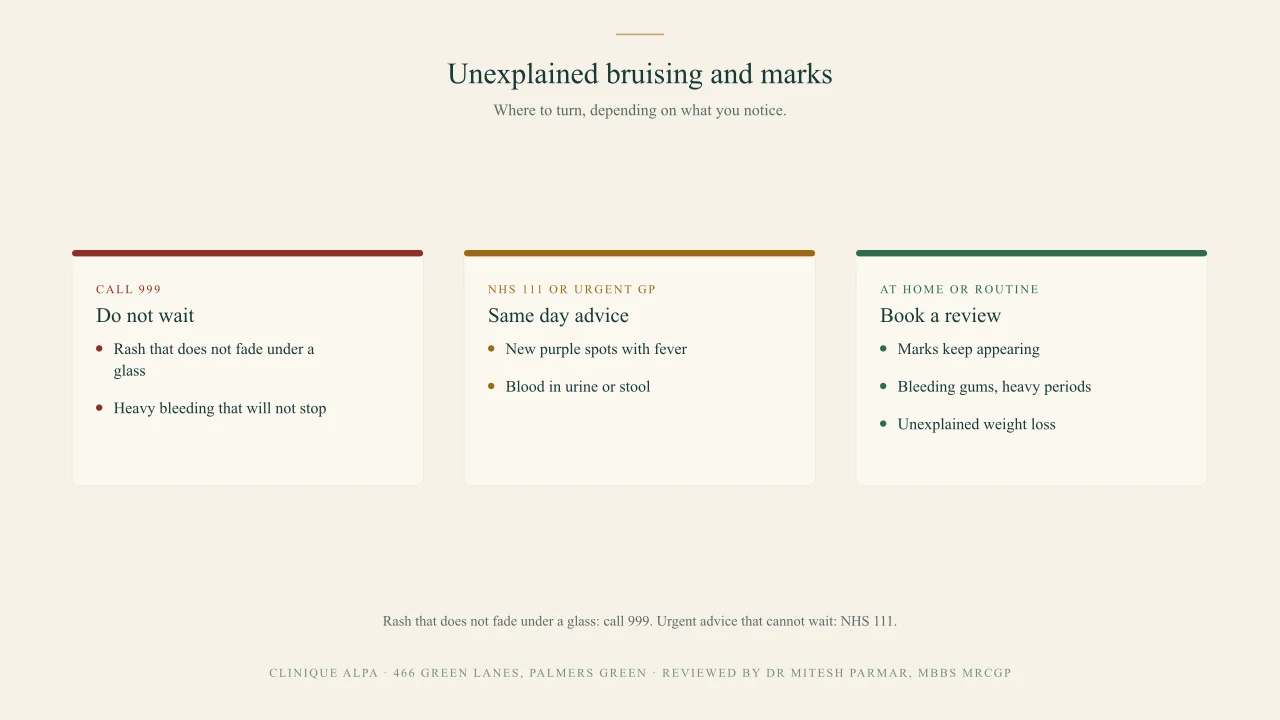
The thing that matters first is whether a mark is a bruise or a rash. A rash of tiny red or purple spots that do not fade under pressure is different from a flat bruise. The NHS gives a simple check for this, the glass test: press the side of a clear glass firmly against the marks. If the spots stay visible through the glass, the rash has not faded, and the NHS says that anyone with a rash that does not fade when pressed needs emergency help. On brown or black skin this can be harder to see, and the NHS advises checking paler areas such as the palms and soles of the feet.
What I look at in clinic
I start by asking about the marks. Where they are, when each appeared, whether any hurt, itched or burned, whether they come and go, and whether they fade on pressing. Single sided or on both sides. Any link to a knock, a bath, tight clothing or a new activity. Whether anyone else in the family bruises easily.
Then the whole of the person, because the answer to an unexplained mark is often somewhere else. Bleeding from the gums or nose, heavy periods, blood in the urine or stool, black stools. Fevers, night sweats, tiredness, a sore throat, joint pain or swelling, weight change, a recent infection. Pain with breathing or pain that wakes someone from sleep, which I always take seriously. Medicines, including pain relief and supplements, alcohol, diet and exercise.
That conversation matters because a few different groups of conditions can lie behind skin marks. They include conditions of the blood cells, problems with clotting, inflammation of the small blood vessels in the skin, reactions to medicines, and conditions of the immune system. The NHS describes vasculitis, inflammation of blood vessels, as capable of causing a rash that looks like small bruises or reddish purple spots, sometimes with joint pain, tummy pain or blood in the urine. Most unexplained marks turn out to be none of these, but these are the things the questions exist to exclude.
Then I examine. I look at the skin all over, including the legs, the waist, the arms and the mouth. I press on the marks to see whether they fade. I feel the abdomen and the neck, armpits and groin for enlarged glands, and look at the joints. I check pulse, blood pressure and temperature and, where the story suggests it, oxygen level, because pain with breathing is a symptom that needs its own look.
If the marks are non blanching, widespread or new alongside other symptoms, I move quickly to blood tests and often to a same week review. If they fade on pressing, are not painful and have a plausible explanation, I may agree on watchful waiting with a clear date to look again, and a list of signs that should bring you in sooner.
From Dr Mitesh Parmar
Timing, family history, easy nosebleeds, bleeding gums and any new treatment all matter, including over-the-counter pain relief and supplements. I check whether marks fade on pressure, since that separates bruises from other spots. A blood count and clotting tests are often the first step. Spots that do not fade, with fever or feeling very unwell, need A&E.
Which blood tests are used for unexplained bruising?
The tests depend on the story, which is why I ask the questions first. The NHS describes the full blood count as a test that measures the number of blood cells, to check for blood conditions such as iron deficiency anaemia. It is the usual first step when marks or bruising have no explanation, because blood cells including platelets are involved in clotting. Depending on the history, a doctor may add tests of how well the blood clots, tests of the liver and kidneys, tests for inflammation and, where the symptoms suggest an immune cause, tests for markers of immune conditions. Not everyone needs all of these.
The NHS also says results usually come back within a few weeks, sometimes sooner, and that a clinician should explain your results and the next steps. At the clinic, results are explained to you in a consultation, and I would explain what a normal result does and does not rule out. You can read how that works in blood test results explained, and our testing services page sets out what we offer. Prices are listed on the blood test prices page.
For a related page on recurring marks, see recurrent purple skin lesions.
When should you come in sooner?
Call 999 or go to A&E for a rash that does not fade under a glass, particularly with a high temperature, drowsiness, severe headache or feeling very unwell. Call 999 for heavy bleeding that will not stop. Ask for urgent advice from NHS 111 or an urgent GP appointment for new purple spots with a high temperature, or with blood in the urine or stool. Arrange a prompt appointment if marks keep appearing without a cause, if you are bruising and bleeding from the gums or nose, if you have heavy periods, joint pain or swelling, pain with breathing that wakes you, or unexplained tiredness or weight loss. Do not stop a regular medicine without speaking to a doctor.
How do we approach this at Clinique Alpa?
You see a doctor for 30 minutes at 466 Green Lanes. A clinic consultation is £100. We take a detailed history, examine the skin and decide which tests, if any, would change the plan. Blood can be taken at the clinic, and we explain the results to you and agree what happens next. With your consent, a summary goes to your NHS GP.
Common questions
Why do I have unexplained bruising on my legs?
Often from small knocks you do not remember, but marks that keep appearing, or that do not fade when pressed, need a doctor to look and sometimes a blood test.
What should I do about unexplained bruising and itching on legs?
Itching with marks can come from several skin conditions, so have the skin examined. Urgent advice is needed if the marks come with a high temperature or feeling very unwell.
Which blood test is used first for unexplained bruising?
Usually a full blood count, which checks your blood cells. A doctor may add other tests based on your symptoms.
Sources: NHS: blood tests and NHS: vasculitis and NHS: meningitis and the glass test.
Drafted with AI assistance, clinically reviewed by Dr Mitesh Parmar, MBBS MRCGP, Principal GP and Clinical Director at Clinique Alpa, 466 Green Lanes, Palmers Green, London N13 5PA. This article is general information, not personal medical advice. In an emergency call 999. For NHS advice call 111 or visit nhs.uk.