
The alarm goes off three times. A teenager always tired is easy to wave away as a teenager being a teenager, until the marks slip, the weekends disappear into bed and the school phones to ask what is going on. By then, parents have usually tried an earlier bedtime, a firmer phone rule and a lecture, and none of it has made a difference.
The question is whether this is sleep, mood, something in the blood or something else, and how to find out without a pile of unnecessary tests. This page explains what a doctor checks, and what evidence can help if exams or coursework have been affected.
Chest pain, signs of a stroke, severe breathlessness, heavy bleeding, a severe allergic reaction or symptoms of sepsis need 999 or A&E immediately. For urgent advice that cannot wait, call NHS 111.
When is a teenager always tired a medical problem?
The NHS advises seeing a GP if you have felt tired for a few weeks and do not know why, if tiredness affects daily life, or if it comes with other symptoms such as weight loss or mood changes. That holds for teenagers. Growing bodies do need more sleep, and the teenage body clock shifts later, so some tiredness is normal. What is not normal is exhaustion that persists despite enough sleep, tiredness that keeps a young person out of school, or tiredness with other symptoms.
Signs that tell me to look harder:
- Tiredness that has lasted for weeks and is getting worse.
- Feeling dizzy, faint or cold, or looking pale.
- Weight loss, or a change in appetite or thirst.
- Persistent stomach pain, nausea or vomiting.
- Low mood, anxiety, or a loss of interest in things that used to matter.
- Heavy snoring, or gasping and choking noises during sleep.
- Missing school or exams because of how they feel.
What causes a teenager to feel tired all the time?
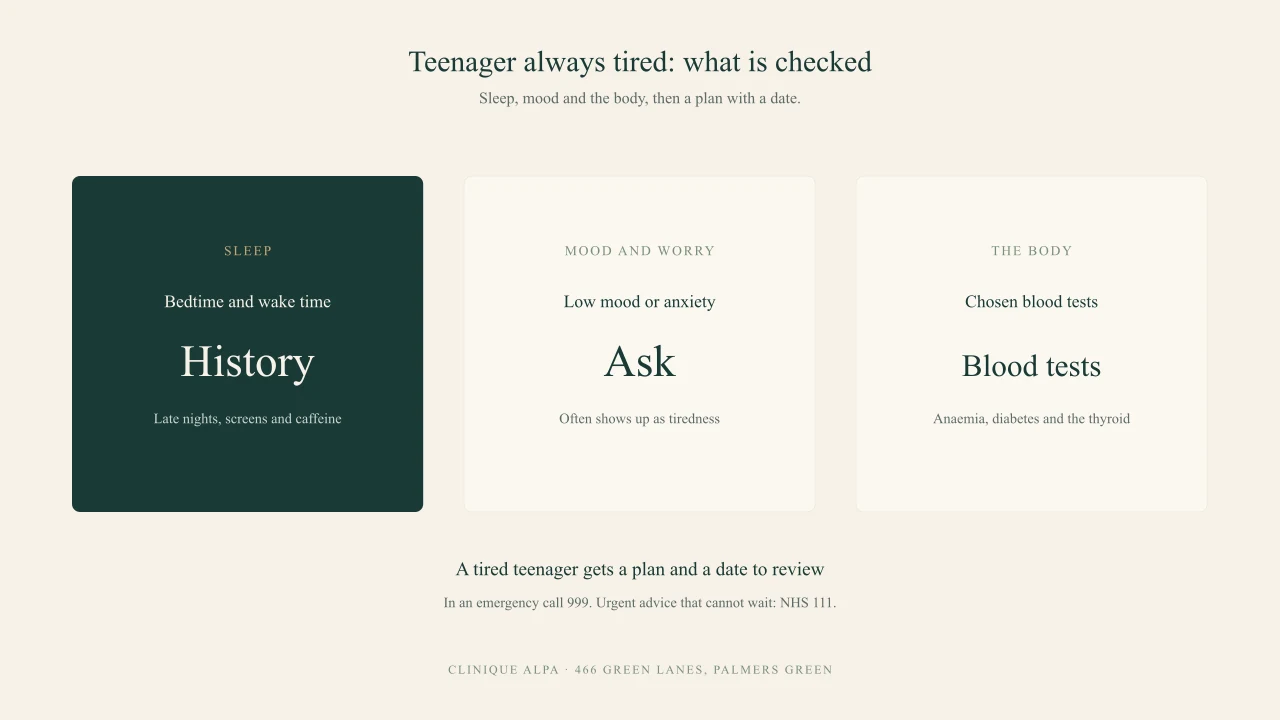
The NHS lists poor sleep, an unhealthy lifestyle, stress and depression, hormonal changes including puberty, and illnesses such as glandular fever as common causes. It also lists conditions that can sit behind tiredness: sleep apnoea, iron deficiency anaemia, diabetes, an overactive thyroid and ME/CFS. In teenagers I think in four groups.
- Sleep. Late nights, an irregular schedule, screens, caffeine, and a body clock that has drifted so far that getting up for school feels like jet lag.
- Mood and worry. Anxiety and low mood both drain energy, and in young people tiredness is often the complaint rather than sadness.
- The body. Low iron, which can follow heavy periods or a restricted diet, thyroid problems, diabetes, a recent viral illness, or less commonly something that needs specialist input.
- Life. Pressure from exams, friendships, caring responsibilities, a job, a change at home.
What does a doctor check in a tired teenager?
What I look at in clinic starts with the story told by the teenager, because they usually know more than they first say. When do they go to bed, and when do they fall asleep? When do they wake, and what happens on days off? Is sleep broken? Do they feel better after a lie in? What is a normal day: school, food, movement, caffeine, phone use at night? I ask about periods, appetite, weight, headaches, dizziness, stomach upset, snoring and mood. I ask what they are worried about, and whether anything has changed.
Then the examination. Pulse and blood pressure sitting and standing where relevant, colour, weight and height against what I would expect, the throat and glands, the thyroid, the heart and chest, the tummy. A teenager who looks pale, or whose heart races on standing, takes me in a different direction from one who looks well but is worn out by worry.
Blood tests are chosen by the story, not ordered in bulk. The NHS says a GP may check for anaemia, diabetes or an overactive thyroid, and for a tired teenager that is usually where I start, with other tests added if the history points that way. I explain what each test is for and what the result would change, and I would rather do three well chosen tests than thirty. Results are explained with the teenager in the room, in plain words, and normal results are information too. They tell us to look elsewhere, often at sleep and mood.
If there is no physical cause, we turn to sleep and mood honestly. A steady wake time, daylight in the morning, less caffeine, screens away in the hour before bed (the NHS recommends this), and a plan for returning to school gradually. If worry or low mood is the driver, the plan includes that. I review within a few weeks, because a tired teenager gets a plan with a date attached.
From Dr Mitesh Parmar
I talk with the teenager as well as the parent, and often alone for part of the visit. I ask about sleep, screens, mood, periods, diet and friends. Blood tests are useful but rarely tell the whole story. Low mood or talk of self harm needs prompt help: NHS 111, or 999 if urgent.
What evidence can support exam arrangements?
When tiredness or illness has affected exams, the school or college exams officer usually makes the application to the exam board, and the board decides. The medical evidence is one piece of that. It helps most when it is specific: what was found, when, how it affects concentration, stamina or attendance, and whether the problem is ongoing.
What I can do, where clinically appropriate after assessment, is record what I found, which tests were done and what the plan is, in a one to two page letter. A one to two page letter, for example for a university, is £250. Records you already hold, such as results, hospital letters and a diary of symptoms and missed days, are often as useful as a new letter. I cannot write a letter to a required conclusion or promise that a school, exam board or university will accept it. It is an independent clinical opinion. See medical letters for how this works, and a GP letter for university if it is a university matter.
When should you come in sooner?
Call 999 if a teenager collapses, has chest pain, or is struggling to breathe. Call NHS 111 or ask for an urgent appointment if they are faint, confused, vomiting repeatedly and cannot keep fluids down, have a high temperature and seem very unwell, or have become very thirsty and passing urine much more than usual. If low mood is part of the picture and a young person talks about harming themselves, see anxiety and depression in teenagers and call 111, choosing the mental health option, or 999 if there is immediate danger.
For adults with the same problem, our fatigue guide and tired all the time blood tests go through the tests in more detail.
Common questions
Why is my teenager always tired and dizzy?
Dizziness with tiredness can come from low iron, not drinking enough, or a pulse that races on standing. It is worth a check, and call 111 or 999 if they faint or collapse.
Why is my teenager always tired and cold?
Feeling cold and tired can point to low iron or a thyroid problem, among other causes. A GP can check this with a simple blood test.
How long is too long for a teenager feeling tired all the time?
The NHS advises seeing a GP if tiredness has lasted a few weeks and the cause is not clear, or if it affects daily life.
How do we help at Clinique Alpa?
Call 020 8882 8088 or book online. A 30 minute clinic consultation at 466 Green Lanes is £100 and a parent or guardian is present throughout. Tests and letters are arranged where clinically appropriate after assessment, and with your consent a summary goes to your NHS GP.
Drafted with AI assistance, clinically reviewed by Dr Mitesh Parmar, MBBS MRCGP, Principal GP and Clinical Director at Clinique Alpa, 466 Green Lanes, Palmers Green, London N13 5PA. This article is general information, not personal medical advice. In an emergency call 999. For NHS advice call 111 or visit nhs.uk.