
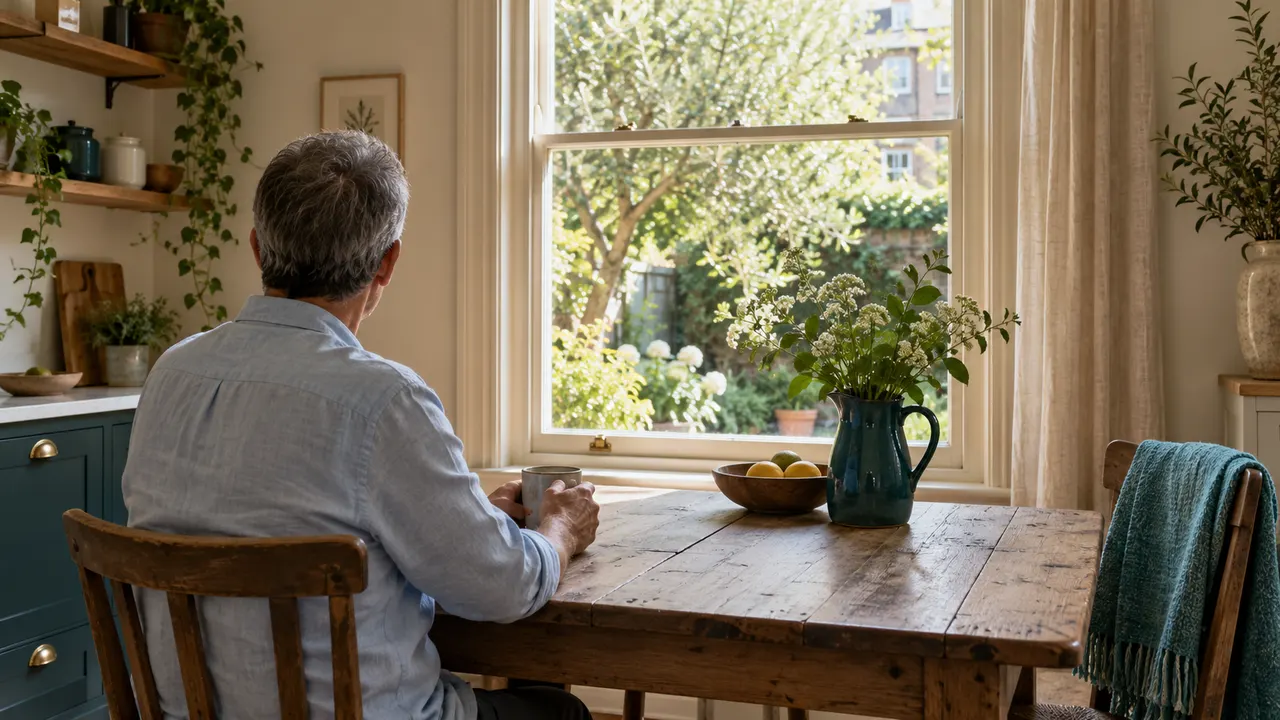
Most people who book about low mood have already waited longer than they meant to. They put it down to work, or the dark evenings, or a bad patch that would pass by the end of the month. The month ends and the flatness is still there first thing in the morning, before the day has had a chance to cause it. What finally brings them in is not doubt that something is wrong, but doubt that it is the kind of wrong a doctor can help with.
People who go looking for a low mood private GP are rarely asking for a label. The question underneath is plainer. Is feeling low for weeks an illness, a reasonable response to a hard stretch of life, or something physical wearing a psychological face, and is it worth half an hour of a doctor's time to find out? It is worth it. The honest answer to the first part is often a mixture, and the mixture is what decides the plan.
If you are at immediate risk of harming yourself or someone else, call 999 or go to A&E. For urgent mental health help, call NHS 111 and choose the mental health option, or call Samaritans free on 116 123, any hour.
What happens at a low mood private GP appointment?
What I look at in clinic is the pattern, not the single bad day. Psychological medicine is my special interest, and the most useful thing I can offer in 30 minutes is a careful history taken without hurry.
When it started, and what it follows
I ask when you last felt like yourself, and what was happening around then. A loss, a move, a change at work, a new baby, an illness, a relationship ending. Sometimes there is nothing, and that is worth knowing too. Then I ask whether the low mood follows you everywhere or lifts in certain places: at weekends, on holiday, with particular people. Mood that lifts away from one setting points one way; mood that comes on holiday with you points another.
What has happened to enjoyment
The piece most people miss is that sadness is not always the main feature. Many people describe flatness instead. The things that used to matter, the football or the friends, no longer land. Loss of interest and enjoyment matters as much as low mood itself, and people rarely volunteer it, because it does not feel like a symptom. It feels like getting older, or getting busy.
Sleep, appetite and energy
I ask about sleep in detail, because "badly" can mean several different things. Lying awake with a busy mind is common with worry. Waking at 4 or 5 in the morning and being unable to get back to sleep is a different pattern, and it often travels with depression. I ask about appetite and weight, energy through the day, concentration, and whether ordinary decisions have started to feel heavy. Guilt and a sense of being a burden are common, and often the hardest part to admit.
The physical layer
Low mood is sometimes the first sign of something physical. An underactive thyroid, low iron, low vitamin D or B12, blood sugar that has drifted, the months after a viral illness, perimenopause and disturbed breathing at night can all show up as tiredness and flatness before anything else appears. Anything you already take, prescribed or bought, belongs in this picture too. I examine where it is relevant, and if blood tests would help, I say which ones and why. Treating a thyroid problem as a mood problem helps nobody.
How you have been coping
I ask about alcohol, and anything else used to get through the evening, for a practical reason: it changes sleep, mood and what is safe. I ask about money, caring responsibilities and work, because the second layer is often there. Financial pressure behind poor sleep. The exhaustion of looking after a parent behind what looks like depression.
Safety, asked plainly
I ask everyone with low mood whether they have had thoughts of not wanting to be here, or of harming themselves. Asking does not put the idea there. For many people it is a relief that someone finally said it out loud. The answer shapes how soon I want to see you again, and what we agree before you leave.
Then a plan, in plain words
At the end I tell you what I think is going on, how sure I am, and what I suggest. Sometimes that is watchful waiting with practical changes and a review in 2 to 3 weeks. Sometimes it is talking therapy, and I explain the NHS and private routes and how to start. Sometimes it is a conversation about treatment options, discussed with you, with time to weigh them. If a referral is the right step, the referral letter is included in the consultation fee, written where clinically appropriate after assessment. And sometimes the honest sentence is that I do not know yet, so let us look again in 2 weeks with the blood results in hand.
When should you book sooner rather than later?
Most low mood can be looked at in a routine appointment. A few things mean days, not weeks:
- Thoughts of suicide or self harm that are becoming more frequent, more detailed or harder to put aside. If the risk is immediate, use the crisis routes above.
- Not eating or drinking enough, or losing weight without trying.
- Being unable to work, look after yourself or care for someone who depends on you.
- Low mood in pregnancy or in the year after having a baby.
- Spells of feeling unusually high, driven or sleepless that alternate with the lows.
- Hearing or seeing things others do not, or beliefs that the people close to you find hard to follow.
What should you bring to the appointment?
Bring a list of anything you take regularly, including supplements, and any blood results from the past year. A few lines on sleep and mood over the last 2 weeks beat trying to remember everything on the day. If it helps to have someone with you, bring them. If anxiety is as much a part of this as low mood, my piece on anxiety treatment in London covers that side. If work is the obvious pressure, I have written separately about how a GP tells burnout from depression.
How does Clinique Alpa approach low mood?
You see me, in clinic at 466 Green Lanes in Palmers Green, for 30 minutes. The fee is £100 and you know it before you book. That time is the point. A history of low mood needs room, and so does the conversation about what to do next.
If coming in feels like too much, video is another way to start. A video consultation is 30 minutes, £79.99, booked and paid online with the link emailed to you, and currently with Dr Alpa J. Morawala. Video suits problems that do not need an examination; if the physical side needs checking, coming into clinic is the better start. There is more on our video consultations page.
If time off work is needed, a fit note can be provided where clinically appropriate after assessment, and I have written about that in more detail in sick notes for mental health. This is private care alongside the NHS, not a replacement for your NHS GP. With your consent, I send your NHS GP a summary so that your care joins up.
Written by Dr Mitesh Parmar, MBBS MRCGP, Principal GP and Clinical Director at Clinique Alpa, 466 Green Lanes, Palmers Green, London N13 5PA. This article is general information, not personal medical advice. In an emergency call 999. For NHS advice call 111 or visit nhs.uk.