
The result came through the NHS App on a weekday evening, without comment. Most of the numbers meant nothing in particular, but one line read eGFR 58 and had a flag beside it. A first search explained that eGFR is about the kidneys. A second produced the words chronic kidney disease, stage 3. Nobody had mentioned kidneys before.
A kidney function blood test is one of the most often requested tests in general practice, and one of the most often misread at home. A single flagged figure is where the reading starts, not where it ends. Here is what the numbers measure, why one low result is treated with caution and what a repeat test is for.
Chest pain, signs of a stroke, severe breathlessness, heavy bleeding, a severe allergic reaction or symptoms of sepsis need 999 or A&E immediately. For urgent advice that cannot wait, call NHS 111.
What does a kidney function blood test measure?
Two lines on the report do most of the work.
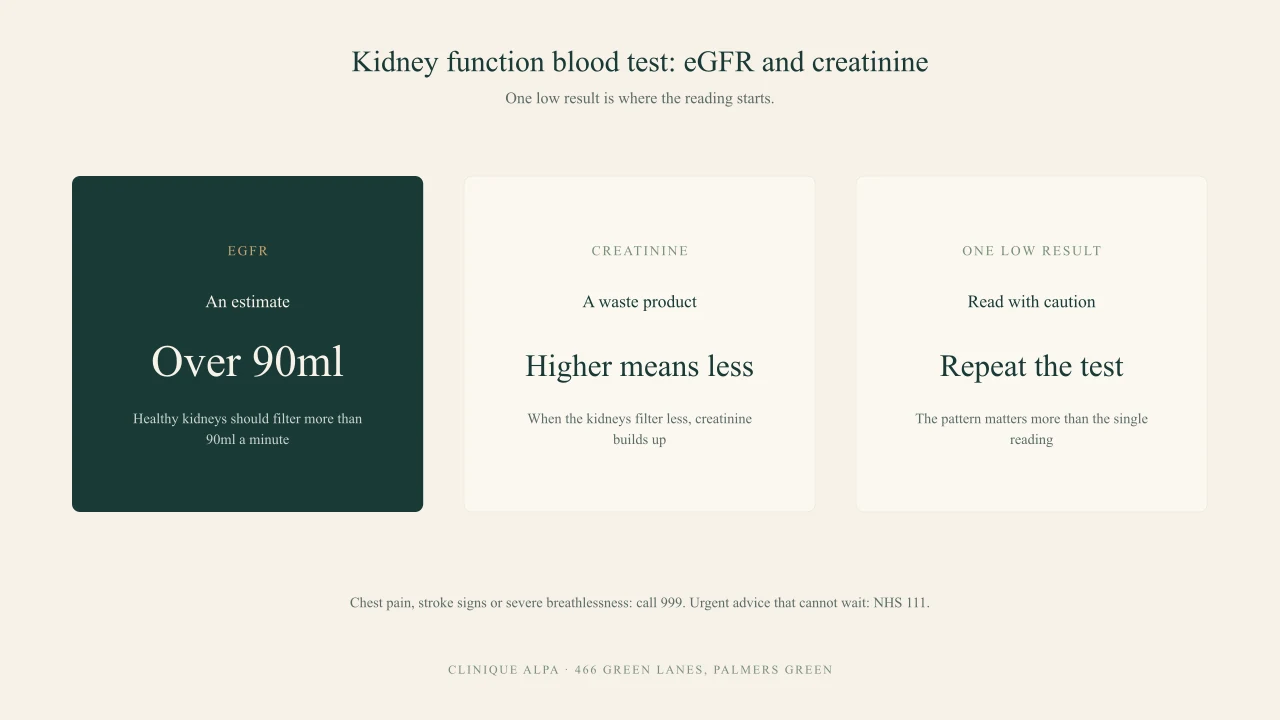
Creatinine is a waste product that the kidneys clear from the blood. When the kidneys filter less, creatinine builds up, so a higher figure suggests less filtering.
eGFR stands for estimated glomerular filtration rate. It is not measured directly. The laboratory calculates it from your creatinine together with your age, body size and sex, to estimate how much blood the kidneys filter each minute. The e at the front is the important part: it is an estimate.
The NHS page on diagnosing kidney disease says healthy kidneys should be able to filter more than 90ml a minute. It then sets out the bands doctors use:
- 60 to 89: counted as kidney disease only if other tests show signs of kidney damage.
- 45 to 59 and 30 to 44: the two halves of stage 3.
- 15 to 29: stage 4.
- Below 15: stage 5, where the kidneys have lost almost all of their function.
The first band is the one that surprises people. A figure in the 60s or 70s with a normal urine test is not, by that definition, kidney disease. The report often also lists urea, sodium and potassium, which are read alongside.
What do I look at when one result comes back low?
What I look at in clinic, before anything else, is the earlier results. The pattern matters more than the single reading. An eGFR that has sat at the same level for 5 years is a description of you. The same figure reached after a steady fall over 12 months is a different matter, and a sharp drop over days or weeks is different again. If you have old results, from the NHS App, a workplace medical or another country, bring them.
What was happening on the day. Creatinine moves with circumstances. Not drinking much, a bout of vomiting or diarrhoea, an infection or a recent hard training session can all nudge it upwards for a while. So can a large meat meal shortly before the sample.
Your build. Creatinine comes from muscle. Someone with a lot of muscle tends to run a higher creatinine with perfectly healthy kidneys, and the calculation will underestimate them. Someone slight or frail can look better on paper than they are. The formula knows your age and sex. It has never seen you.
Medicines. Some medicines affect the kidneys when taken long term, including anti inflammatory painkillers bought over the counter. I ask for a full list, with supplements and protein powders. Please do not stop a medicine you have been given because of something you read on a report; bring the question instead.
The conditions that strain kidneys. High blood pressure and diabetes lead the list, followed by heart disease, kidney stones, an enlarged prostate and a family history of kidney disease. The NHS notes that kidney disease is more common in people of Black or South Asian origin, and that it is often linked with getting older.
The examination. Blood pressure, measured properly and more than once. Ankles, for swelling. Weight.
The urine. This is the piece most people miss. The blood result is half of the assessment. The other half is a urine test for a protein called albumin, reported as the albumin to creatinine ratio, or ACR, together with a check for blood. Kidneys that leak protein are telling you something that the eGFR does not, and the NHS uses the two results together to describe the stage.
The repeat. The word chronic means long lasting, and one sample cannot show that. So a first low result is repeated after an interval, on a day when you are well and have been drinking normally. Often the figure has recovered, and what looked like a diagnosis was a dry afternoon. If it is still reduced, we know it is persistent, and the conversation changes from "is this real" to "how do we look after it".
That second conversation is usually calmer than people fear. The NHS says most people with chronic kidney disease are able to control it with medicine and regular check ups, and that it goes on to kidney failure in around 2 in 100 people who have it. For most people with a mildly reduced result, the plan is about blood pressure, blood sugar and the heart, because even mild kidney disease raises the risk of heart and circulation problems. It is rarely about dialysis.
From Dr Mitesh Parmar
A single flagged eGFR is not a diagnosis. I ask about recent illness, hard exercise, new tablets and how much you drank, then usually repeat the test, often with a urine check as well. What matters is the pattern over time, not one line on one day.
When does a kidney result need attention sooner?
A sudden loss of kidney function is called acute kidney injury, and it can be serious. Ask for an urgent appointment or get help from NHS 111 if:
- You are passing much less urine than usual, especially while unwell with vomiting, diarrhoea or a fever.
- Your ankles, feet or legs have become swollen.
- You are breathless, particularly when lying flat.
- You are newly confused, drowsy or very thirsty.
- There is blood in your urine.
- You have been told a result has fallen sharply since the last one.
How are kidney tests arranged at Clinique Alpa?
If you already have a result and want it read in context, a clinic consultation is 30 minutes with a doctor at 466 Green Lanes for £100. If a repeat is needed, the blood is taken at the clinic. The biochemistry profile on our list covers kidney markers along with liver, bone, lipids and glucose. It is described on private blood tests, with the price on blood test prices, and listed prices include taking the sample. For a test that is not listed, such as a urine albumin check, call the clinic to ask about availability and the fee before you come.
Results are reviewed by a doctor, and the clinic confirms when to expect them. With your consent, a summary goes to your NHS GP. That matters here more than for most tests, because kidney results are followed over years and your NHS record is where the trend should live. For the other lines on the page, see how to read a blood test report.
Drafted with AI assistance, clinically reviewed by Dr Mitesh Parmar, MBBS MRCGP, Principal GP and Clinical Director at Clinique Alpa, 466 Green Lanes, Palmers Green, London N13 5PA. This article is general information, not personal medical advice. In an emergency call 999. For NHS advice call 111 or visit nhs.uk.