
The first days after a fall are usually clear. There is a bruise, a limp, a trip to hospital, a scan and the relief of being told nothing is broken. Then the weeks go by, the bruise fades, and the hip still hurts when you get out of a chair, turn over in bed or walk further than the end of the road.
Hip pain after a fall that outlasts a normal scan is a question I am asked regularly. It is reasonable to feel confused by it: the picture was reassuring, and yet the hip is not better.
Chest pain, signs of a stroke, severe breathlessness, heavy bleeding, a severe allergic reaction or symptoms of sepsis need 999 or A&E immediately. For urgent advice that cannot wait, call NHS 111.
What should you do about hip pain weeks after a fall?
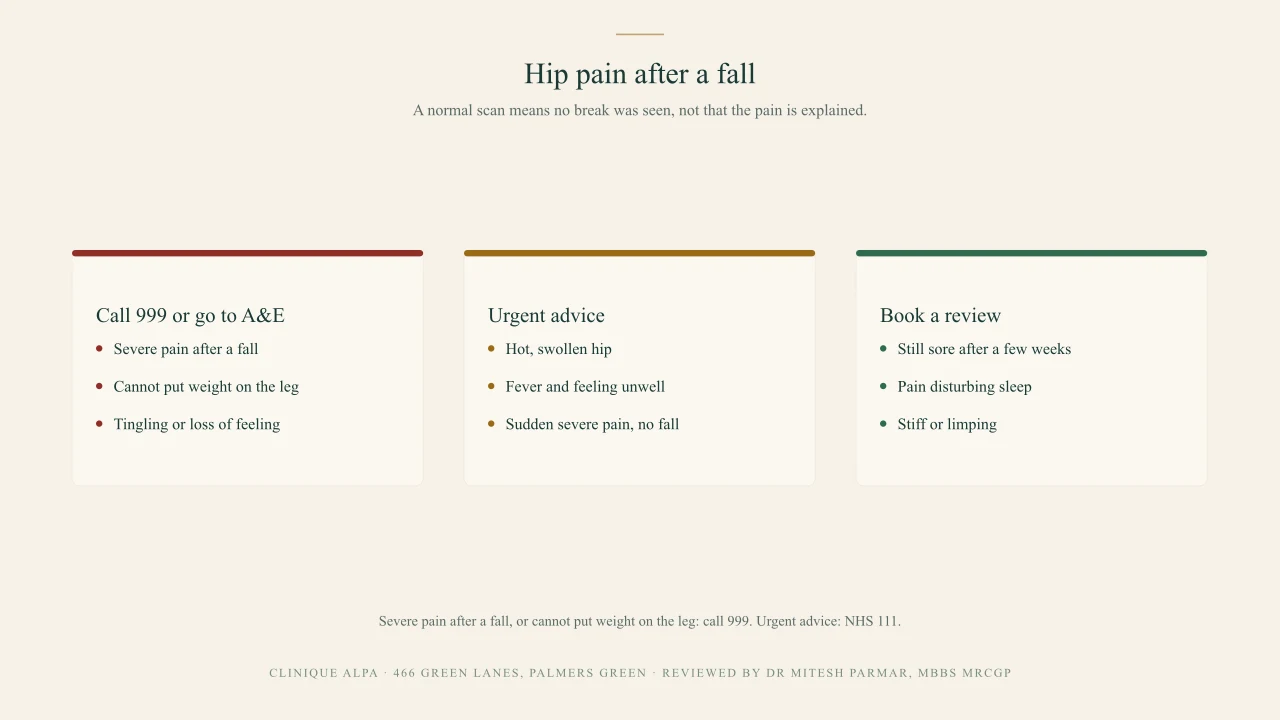
Start with the route for the first hours, because it matters. The NHS says to call 999 or go to A&E for severe hip pain after a fall or injury, if you cannot walk or put weight on the leg, or if there is tingling or loss of feeling in the hip or leg after an injury. Do not drive yourself.
If that has been done and you are weeks on with pain that is not settling, the NHS advice changes: see a GP if hip pain interferes with daily activities or sleep, is getting worse or keeps returning, or has not improved after 2 weeks of home treatment. Hip pain weeks after a fall is exactly that situation.
Why can the hip still hurt when the scans are normal?
A scan answers a specific question. An X ray or CT is mainly asking whether a bone is broken, and a normal result means none was seen. It does not explain every source of pain around the hip. Deep bruising can take a long time to settle. The tendons and the fluid sacs around the joint can be strained or inflamed, and the NHS lists bursitis, sprains, strains and tendonitis among the causes of hip pain. A fall can also stir up a joint that already had wear and tear, which the NHS describes under osteoarthritis. And pain felt in the hip does not always start there: the back and the muscles of the buttock can send pain to the same place.
There is also a quieter question that is worth asking after any fall in an adult: why did the fall happen, and how strong are the bones? The NHS notes that a broken bone after a minor fall can be the first sign of osteoporosis, and that a bone density scan may be arranged. A fall is sometimes the first sign of something else, such as dizziness, poor balance, a medicine side effect or low blood levels of something the body needs. That is the second layer, and I look for it.
What I look at in clinic
When this comes up in consultation, people often bring the hospital letters, the scan reports and a list of the painkillers they have been using. I begin with the fall itself. What happened, how the person landed, what hurt first and where, and what the pain has done since. Where exactly is it: the side of the hip, the groin, the buttock, down the thigh? Is it worse on stairs, turning over, lying on that side, or at rest? Is it improving, staying the same or getting worse? The pattern tells me more than the label on the scan.
Then I ask what was not covered at the time. Did anything else hurt, such as the back, a wrist, a knee? Was there dizziness before the fall or a blackout? Do you take medicines that affect balance or blood pressure? How is the pain affecting sleep, walking and mood? Are you worried about falling again, and have you started to move less because of it? Moving less leads to stiffness and weakness, which keeps the pain going.
The examination looks at how you walk, how you stand, and how the hip moves in different directions. I check where it is tender, test the strength of the muscles around the hip and look at the back and the knee. I check the pulse, blood pressure and, if relevant, balance. If something does not fit, I say so and plan the next test.
Depending on what I find, the next step might be blood tests to look for causes of tiredness, weak bones or inflammation, a referral for an ultrasound scan, physiotherapy, or a bone density assessment. I read the existing scan reports in full, because the final sentences sometimes mention a finding that deserved follow up. I also explain what is safe to do now: gentle movement within your limits is usually better than rest, and the plan includes a date to look again, often in a few weeks.
From Dr Mitesh Parmar
A normal X ray can miss a small fracture or a soft tissue injury, so I examine the hip, the back and how you walk. I ask whether the pain is in the groin or the side, as they point to different places. Being unable to put weight on the leg needs A&E.
When should you come in sooner?
Call 999 or go to A&E for severe hip pain after a fall or injury, inability to put weight on the leg, or tingling or loss of feeling in the hip or leg after an injury. The NHS advises NHS 111 or an urgent GP appointment if you have sudden severe hip pain without a fall, a hot swollen hip, colour change in the skin around the hip, or hip pain with a high temperature and feeling unwell. Also come in sooner if:
- the pain is worse than last week
- you cannot sleep because of it
- you have had another fall, or a near miss
- you are avoiding walking because of it
How do we approach this at Clinique Alpa?
A face to face consultation at 466 Green Lanes is 30 minutes with a named doctor and costs £100. A hip needs to be examined, so a first visit in person is better than a video call. A referral letter is written where clinically appropriate after assessment and is included in the consultation fee. With your consent, a summary goes to your NHS GP. You may find our guide to sports injuries useful, and physiotherapy is often part of the plan.
Common questions
How long should hip pain last after a fall?
It varies with the injury. The NHS suggests seeing a GP if the pain has not improved after 2 weeks of home treatment.
Can the hip hurt after a fall if the X ray is normal?
Yes. The X ray mainly shows whether a bone is broken, and soft tissue, joint and referred pain can all remain.
When is hip damage after a fall an emergency?
Severe pain after a fall, inability to put weight on the leg, or tingling or loss of feeling in the hip or leg need 999 or A&E.
Drafted with AI assistance, clinically reviewed by Dr Mitesh Parmar, MBBS MRCGP, Principal GP and Clinical Director at Clinique Alpa, 466 Green Lanes, Palmers Green, London N13 5PA. This article is general information, not personal medical advice. In an emergency call 999. For NHS advice call 111 or visit nhs.uk.