
The pain often starts as something vague that gets filed under age or overwork. An ache that is hard to place, then over some weeks a burning that is worse at night and difficult to describe to anyone who has not felt it. By the time diabetic nerve pain has a name, it has usually been put up with for a long while.
What people want to know is whether burning feet and a sore back are connected to the diabetes, what can be done about the pain, and whether anything else is being missed.
Chest pain, signs of a stroke, severe breathlessness, heavy bleeding, a severe allergic reaction or symptoms of sepsis need 999 or A&E immediately. For urgent advice that cannot wait, call NHS 111.
What is diabetic nerve pain?
Over the years, high blood sugar can damage nerves. The NHS lists nerve damage and foot problems among the long term complications of diabetes, and says that pain, tingling or numbness in the body, along with problems such as constipation or diarrhoea, could be signs of nerve damage and are a reason to see a GP or diabetes nurse. The NHS page on diabetes complications sets this out.
Nerve pain does not behave like the pain of a bruise or a strain. It tends to burn, tingle, shoot or feel like pins and needles, and it can be worse at night when there is nothing else to think about.
What does diabetic nerve pain in feet and legs feel like?
The feet are often where it is noticed first. People describe burning soles, a sensitivity to bedsheets that would normally go unnoticed, patches that feel numb, and sometimes a sense of walking on something that is not there. The legs can follow. Pain and numbness can sit side by side, which surprises people: a foot can burn and still fail to feel a blister.
That is the practical reason this symptom matters beyond the discomfort. The NHS warns that diabetes can cause foot ulcers and infections, and advises seeing a GP or diabetes nurse if you have blisters or cracked skin on your feet. Looking at your feet every day, including the soles, is a sensible habit if feeling has changed.
Why is nerve pain in the back confusing?
Many people notice a deep ache or burning in the back and wonder if it is the same thing. Sometimes it is a nerve problem linked to diabetes. Often it is a back problem in its own right, or both at once, and the two can overlap in a way that is hard to untangle at home. I would rather examine than assume, because the plan differs.
What I look at in clinic
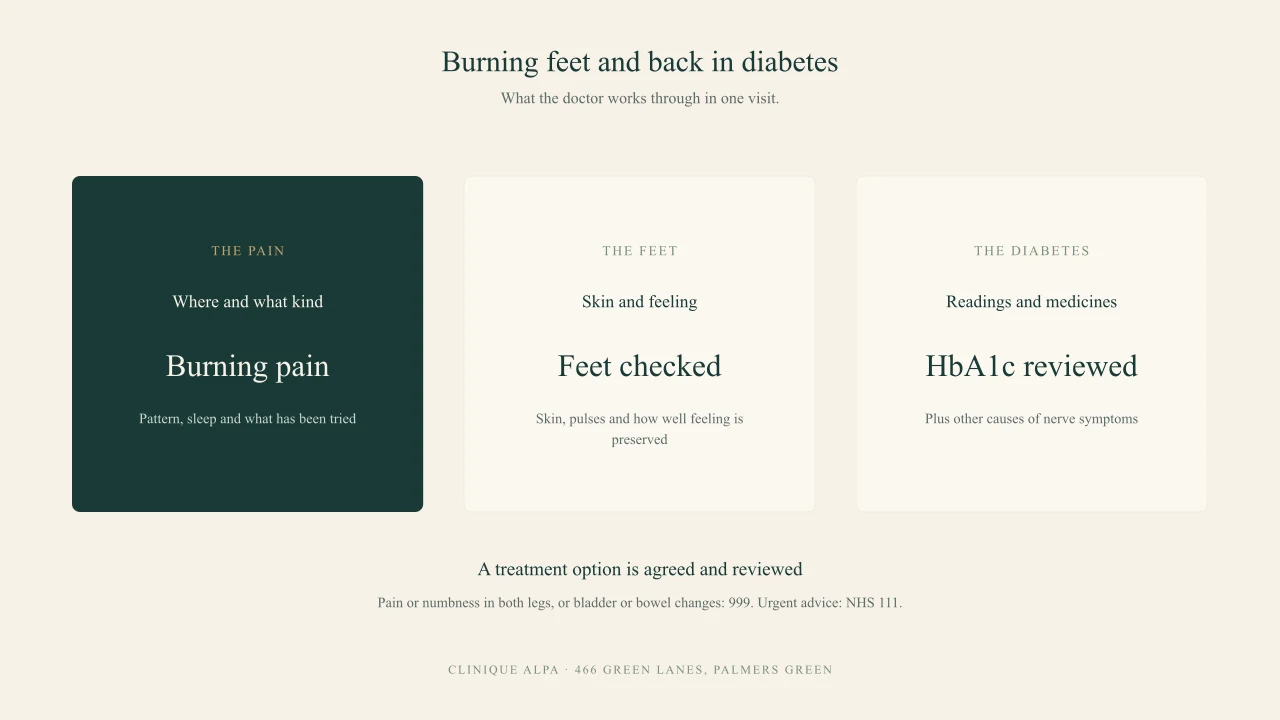
When this comes up in consultation, people often describe a pain that changed character over time, starting as one thing and becoming another. I start with the story of that change: where the pain sits, what it feels like, what makes it better or worse, how it affects sleep, and what has already been tried.
Then the diabetes. How long it has been present, recent readings, the latest HbA1c, the medicines being taken and how reliably, and any previous complications. If blood tests are due, they can be arranged through the clinic's testing service. A change in weight matters too. The NHS lists losing weight without trying as a symptom of high blood sugar, so unexplained weight loss is a reason to look again at how well the diabetes is controlled.
Then the examination. I look at the feet properly: the skin, the nails, any callus, the shape of the foot and the pulses. I test how well feeling is preserved, because numbness is more dangerous than pain. I move and examine the back and legs, check strength and reflexes, and look for signs that point to the spine rather than the nerves of the feet. That separates two stories that sound alike.
Then the other possible contributors. Low vitamin B12, an underactive thyroid, kidney problems and heavy alcohol use can all affect nerves, and they are worth ruling in or out so that nothing treatable sits unnoticed behind the diagnosis. Where B12 is low, replacement can be given at the clinic alongside looking for the cause.
Finally, how the pain is affecting life. Burning pain at night wears sleep down, and poor sleep and pain feed low mood. I ask about it plainly, and I ask about the other diabetes checks, such as eye screening and foot checks, since the same cause can affect more than one part of the body.
From Dr Mitesh Parmar
I look at the feet themselves: skin, pulses, sensation and any sore. Burning pain can hide the fact that feeling has been lost, which is the real risk. I also look at your recent sugar control and tablets. A foot that is red, hot, broken down or smelly needs to be seen urgently.
What is the diabetic nerve pain treatment?
Treatment has two parts: easing the pain, and working on the cause. For the cause, steadier blood sugar over time is the foundation, which is why I review diabetes medicines and readings with you. I never change a diabetes medicine without agreeing it with you and, where appropriate, with your diabetes team.
For the pain itself, there are treatment options aimed at nerve pain specifically, and they are not the same as ordinary pain relief. Which one is suitable depends on your other conditions, your other medicines and what side effects you can tolerate. That is a conversation, not a standard answer. We talk through the benefits and the downsides of each option, agree a first step, and agree when to review how it is working, usually within a few weeks, because a treatment that is not helping should be changed rather than endured.
What helps with diabetic nerve pain relief at home?
Foot checks every day, comfortable footwear, and telling someone promptly about any blister or crack in the skin. The NHS also says that managing blood glucose, eating a balanced diet, exercising and not smoking can lower the risk of complications. If pain is stopping you from sleeping or moving, say so; it is a reason to review the plan rather than a reason to cope.
When to come in sooner
The NHS advises calling 999 or going to A&E immediately if back pain comes with pain, tingling, weakness or numbness in both legs, a loss of feeling around the genitals or anus, changes in bladder or bowel control such as difficulty peeing, or chest pain.
Ask for an urgent GP appointment or call NHS 111 if back pain comes with feeling hot, cold, shivery or generally unwell, or if severe pain starts suddenly or is getting worse quickly. See a doctor soon if:
- you have a blister, a crack in the skin or a sore on your foot
- pain is stopping you sleeping or going about your day
- you have lost weight without trying to
- back pain is worse at night, or does not ease with rest
- numbness is spreading or you are less steady on your feet
How do we approach this at Clinique Alpa?
A face to face consultation at 466 Green Lanes is 30 minutes with a named doctor and costs £100. Bring your latest results, a list of your medicines and any readings you keep. If travelling hurts, a home visit is from £250 on a weekday.
A referral letter, for example to a diabetes service or a foot protection service, is written where clinically appropriate after assessment and is included in the consultation fee. With your consent, a summary goes to your NHS GP. For the wider picture, see the guide to diabetes, and for nerve pain from another cause, nerve symptoms after chemotherapy.
Common questions
What are the symptoms of diabetic nerve pain?
Burning, tingling, shooting pain or numbness, often in the feet and legs and often worse at night. The NHS lists pain, tingling or numbness as possible signs of nerve damage.
Is burning in the feet always from diabetes?
No. Other causes include vitamin deficiency, thyroid and kidney problems, and spine problems, which is why an examination and tests come before a label.
Can diabetic nerve pain be treated?
Yes, there are treatment options and they are chosen individually. Reviewing blood sugar and agreeing a plan to check progress are part of it.
Drafted with AI assistance, clinically reviewed by Dr Mitesh Parmar, MBBS MRCGP, Principal GP and Clinical Director at Clinique Alpa, 466 Green Lanes, Palmers Green, London N13 5PA. This article is general information, not personal medical advice. In an emergency call 999. For NHS advice call 111 or visit nhs.uk.