
Searching for abdominal pain weight loss is usually not a casual search. It tends to happen when the two things have arrived together and the person has noticed that trousers are looser, the scales have moved, and the tummy has become something they think about. Tiredness often comes with it. The fear behind the search is rarely stated, and I would rather name it than leave it hanging.
This article explains how a doctor approaches pain in the tummy with weight loss, a new lump, or both, and which tests follow, in what order, and why. It is not a reason to wait.
Chest pain, signs of a stroke, severe breathlessness, heavy bleeding, a severe allergic reaction or symptoms of sepsis need 999 or A&E immediately. For urgent advice that cannot wait, call NHS 111.
Should abdominal pain with weight loss be seen quickly?
Yes, it should be seen soon. NHS advice is to see a GP if you keep losing weight without changing your diet or exercise, and as soon as possible if weight loss comes with other symptoms, because an earlier diagnosis means earlier treatment. The NHS also lists tummy pain, a lump in the tummy, bloating, blood in the stool, changes in bowel habit, tiredness and breathlessness among the symptoms to have checked.
Many causes are not serious. Digestive conditions such as coeliac disease or inflammatory bowel disease, an overactive thyroid, diabetes, low mood, a heavy workload or a medicine side effect can all do this. Cancer is among the possible causes, which is why the symptoms should not be left to settle. Having these symptoms does not mean you have it.
What I look at in clinic
A consultation about this has a particular shape. I start with the weight itself. How much has changed, over what time, and was it intended? Weight that falls while you are eating normally is more concerning than weight that falls because you are cutting back. I ask whether you feel full quickly, whether food has lost its appeal, and whether swallowing has changed.
Then the pain. Where is it, what does it do after food, does it wake you, and has it changed? I ask about bowel habit in detail, because a change that is new for you matters more than a habit you have always had, and about blood, black stool, vomiting, fever, night sweats, itching and yellow skin or eyes. I ask about tiredness and breathlessness, which can point to low iron or anaemia. I ask what runs in the family, what you have already been told, and what tests have already been done, because a result from elsewhere may change what comes next.
The examination is careful and unhurried. I look at your colour, check your pulse and blood pressure, and weigh you, so we have a number to compare against. I feel the tummy for tenderness, for an enlarged liver or spleen and for any lump, and I note where it is. I check the glands in the neck, and I look at the skin and the whites of the eyes. A chaperone is available whenever a more intimate examination is needed.
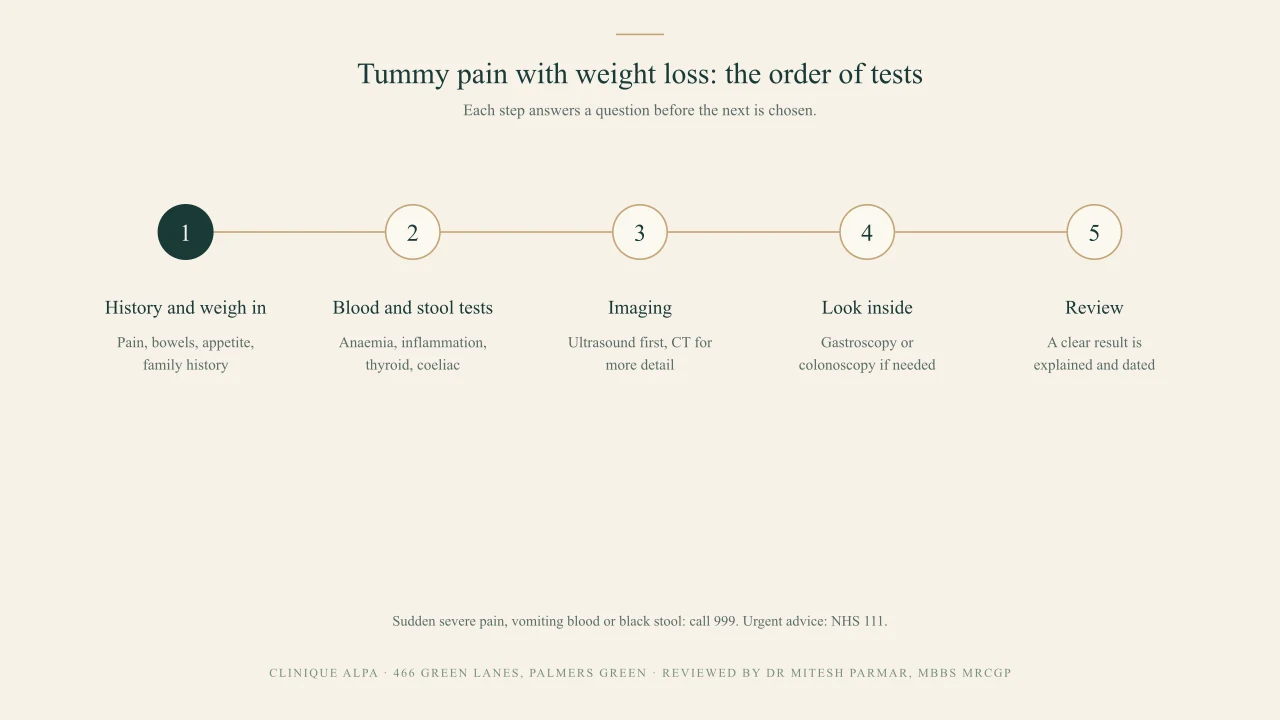
Then come the tests, which are staged rather than thrown at the problem all at once. The first stage is usually blood tests: a blood count for anaemia, markers of inflammation, kidney, liver and thyroid function, a sugar check and sometimes a test for coeliac disease. A stool test can look for blood or signs of inflammation in the bowel. These are quick and often point the way. Prices for blood tests are on the blood test prices page.
The second stage is imaging. An ultrasound is often the first scan because it uses sound waves rather than radiation, and it shows the liver, gallbladder, kidneys and other organs well. A new lump, or pain that is hard to explain, may need a CT scan, which gives more detail. Which scan I recommend depends on where the symptoms are and what the blood tests show, and ultrasound, CT and MRI can be arranged through partner clinics, as the investigations page describes.
The third stage is looking directly. A gastroscopy examines the gullet and stomach, and a colonoscopy the large bowel, with small samples taken where needed. NHS guidance lists unexplained weight loss, indigestion and stomach pain among the reasons for a gastroscopy. I explain what each involves before we decide, and I will tell you if I think a specialist should be seeing you urgently instead of us working through the stages here.
A result that is clear at one stage does not necessarily end the work. A normal ultrasound does not exclude a bowel problem, and a normal blood count does not exclude everything. What I do is explain what each test can and cannot rule out, and set a date to review. If things change before then, you come back sooner.
From Dr Mitesh Parmar
I ask whether the weight loss was intended, when it began, and whether anything has changed in your bowels, appetite or swallowing. Then I examine the tummy and arrange blood tests. Pain with persistent vomiting, black stools or a hard swollen abdomen should go straight to A&E or 999.
What should you do before the appointment?
Weigh yourself once a week on the same scales and write down the numbers. Note what you eat, when the pain comes, and how your bowels are working. Bring any results, scan reports or letters from elsewhere, and a list of your medicines. If a family member has had a bowel, stomach or other cancer, tell me, because it affects how I plan the tests.
When should you come in sooner?
Call 999 or go to A&E for sudden severe tummy pain, vomiting blood or ground coffee vomit, a lot of blood from the bottom, black sticky stool, or if you cannot pass wind or stool at all. Ask for an urgent GP appointment or call NHS 111 if your stool is black or dark red or you have bloody diarrhoea. Do not wait for a routine slot if:
- You have found a lump in the tummy.
- You have lost weight without trying and the pain is persistent.
- You are being sick repeatedly or food is sticking when you swallow.
- You look yellow, or you feel increasingly tired or breathless.
How do we approach this at Clinique Alpa?
A clinic consultation is £100 for 30 minutes with me at 466 Green Lanes. I take the history, examine you, and order the first tests that will change the plan. If a scan, a scope or a specialist is needed, I write the referral letter, included in the consultation fee, where clinically appropriate after assessment. With your consent, a summary goes to your NHS GP. If you want the wider picture first, read about unexplained weight change.
Common questions
What does abdominal pain weight loss and lack of appetite mean?
It can come from many causes, including digestive conditions and an overactive thyroid. Because it can also be serious, it should be assessed rather than watched.
What about abdominal pain weight loss and blood in stool?
Blood in the stool needs checking. Black or dark red stool, or bloody diarrhoea, needs an urgent GP appointment or NHS 111.
Which tests are used for abdominal pain weight loss and diarrhoea?
Usually blood tests and a stool test first, then a scan, and sometimes a look inside the bowel. The order depends on your symptoms.
Sources: NHS: unintentional weight loss and NHS: bowel cancer symptoms and NHS: stomach ache and NHS: gastroscopy.
Drafted with AI assistance, clinically reviewed by Dr Mitesh Parmar, MBBS MRCGP, Principal GP and Clinical Director at Clinique Alpa, 466 Green Lanes, Palmers Green, London N13 5PA. This article is general information, not personal medical advice. In an emergency call 999. For NHS advice call 111 or visit nhs.uk.