
It usually begins within hours of a meal. First the nausea, then cramping, then a night of vomiting and diarrhoea that leaves you wrung out by morning. People ring me after the worst has passed, or in the middle of it, with the same two questions: is this a stomach bug or food poisoning, and do I need to be seen?
Vomiting and diarrhoea in adults is often managed at home. The skill is knowing the times it cannot be, and noticing them early.
Chest pain, signs of a stroke, severe breathlessness, heavy bleeding, a severe allergic reaction or symptoms of sepsis need 999 or A&E immediately. For urgent advice that cannot wait, call NHS 111.
How long does vomiting and diarrhoea in adults last?
NHS advice is that vomiting usually stops within 1 or 2 days and diarrhoea within 5 to 7 days. Food poisoning, which is one of the commonest causes, usually improves within a week. Symptoms can begin a few hours to a few days after eating contaminated food, and occasionally later.
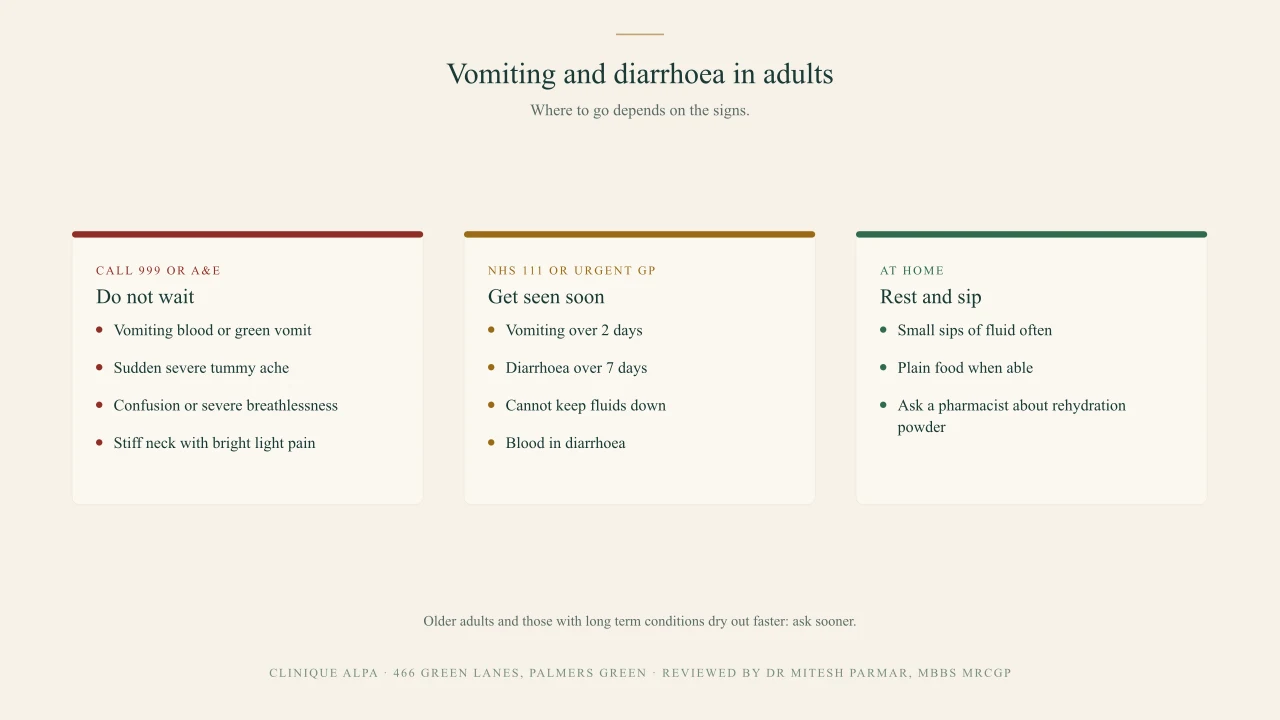
Those numbers are also the points where the advice changes. Diarrhoea beyond 7 days, or vomiting beyond 2 days, is a reason to call NHS 111 or be seen. The same goes for being unable to keep fluids down, or blood in the diarrhoea.
What I look at in clinic
When this comes up in consultation, the first thing I want to know is how long it has been going and what the rhythm is. Did it start suddenly after a particular meal, or has it been smouldering? Are others who ate the same food ill? How many times in a day are you being sick or going to the toilet, and are you able to keep any fluid down at all? A shorter, sharper illness often points to a stomach bug or something eaten. A longer, more grinding one makes me think about other causes.
Then I ask about the features that move this out of the ordinary. Is there blood in the stool, or black stool? Is there a high temperature, severe or constant tummy pain, or a stiff neck and a bad headache? Have you been abroad recently, or had a course of antibiotics, both of which change what I look for? Is the vomit green or dark?
The background changes the risk. Older adults, people with diabetes, kidney, heart or bowel conditions, a weakened immune system, and anyone on a long list of regular medicines become dehydrated faster and more dangerously. If you take medicines for blood pressure or the heart, being sick and not drinking can affect your kidneys, so I ask exactly what you have taken and what has stayed down. A medicine vomited soon after taking it may not have worked, and one that cannot be kept down may need a different plan.
I also ask about recent food: reheated rice, undercooked poultry, a meal that tasted or smelled wrong, takeaways, and stock or broth left standing. This is not about blame. It is useful for working out whether it is likely to be food poisoning and whether anyone else at home is at risk. If you are preparing food for others, or work with food, I will say when it is safe to return.
The examination tells me how dry you are. Pulse, blood pressure sitting and standing, how the skin springs back, the tongue and mouth, and the abdomen: soft and mildly tender is reassuring, while a tense or very tender tummy is not. I also check your temperature and, if you are breathless or drowsy, your oxygen level, which we can measure on site.
Many adults in this situation need no tests. If symptoms have gone on beyond the NHS time points, if there is blood, if you are unwell enough that dehydration is a worry, or if you have recently been abroad, I may suggest a stool sample and blood tests to check the kidneys and the salts in your blood. Medicines to stop the diarrhoea are not always right, because they can make some infections worse, and I explain when they are reasonable. Sometimes treatment for the sickness itself helps you drink, and I discuss that with you where it is clinically appropriate.
The plan matters as much as the examination. I give a concrete amount of fluid to aim for across the day, what to eat first, and what would make me want to see you again. Washing your hands and keeping towels separate protects the household, and the NHS advice is to stay off work until 2 days after symptoms stop.
From Dr Mitesh Parmar
Keeping fluids in matters more than finding the cause. I ask what was eaten, who else is ill, and what you take regularly, as some treatments should be paused while dehydrated, and I will advise which. Take small, frequent sips. Blood in the stool, severe belly pain, confusion or being unable to keep fluid down needs NHS 111 or A&E.
What can you do at home first?
Rest and sip fluids little and often, even if you are being sick. Eat when you can, avoiding fatty and spicy food. Avoid fruit juice and fizzy drinks, which can make diarrhoea worse. Paracetamol can ease discomfort. A pharmacist can advise on oral rehydration powder, which is worth asking about if your urine is dark and smelly or you are passing much less than usual, and especially if you are older or have other health conditions.
When should you come in sooner?
Call 999 or go to A&E if you vomit blood or something that looks like ground coffee, your vomit is green, you may have swallowed something poisonous, you have a stiff neck with pain from bright lights, a sudden severe tummy ache, blue, grey or blotchy skin, severe breathlessness, or confusion. Do not drive yourself. Call NHS 111 or ask for an urgent GP appointment if:
- Diarrhoea lasts more than 7 days or vomiting more than 2 days.
- You cannot keep fluids down.
- There is blood in the diarrhoea or bleeding from the bottom.
- Dehydration signs persist after using rehydration sachets.
How do we approach this at Clinique Alpa?
A clinic consultation is £100 for 30 minutes at 466 Green Lanes. If you are too unwell to travel, a home visit lasts 60 minutes and is from £250 on a weekday, from £325 at weekends and bank holidays and from £450 for an evening start, with travel priced by postcode and subject to availability; see home visiting. With your consent a summary goes to your NHS GP. For a wider overview, the diarrhoea and vomiting guide is a good start.
Common questions
When should I see a doctor about vomiting and diarrhea in adults?
See a doctor if you cannot keep fluids down, there is blood, or symptoms last more than 2 days for vomiting or 7 days for diarrhoea. Do so sooner if you are older or have a long term condition.
What if I have recurrent or continuous vomiting and diarrhoea?
Symptoms that keep returning, or that never really stop, need a proper review and sometimes tests. They are less likely to be a simple stomach bug.
Is sickness and diarrhoea in adults food poisoning?
Often, especially if it began within hours or days of a meal and others were ill. A stomach bug spreading through the household looks similar, and the home care is the same.
Sources: NHS: diarrhoea and vomiting and NHS: food poisoning.
Drafted with AI assistance, clinically reviewed by Dr Mitesh Parmar, MBBS MRCGP, Principal GP and Clinical Director at Clinique Alpa, 466 Green Lanes, Palmers Green, London N13 5PA. This article is general information, not personal medical advice. In an emergency call 999. For NHS advice call 111 or visit nhs.uk.