
The bed is comfortable, the evening was quiet, and mood is perfectly fine. Even so, sleep will not come, or it comes late and leaves early. By two in the morning the day is being replayed in detail and the clock is being watched. When this comes up in consultation, people are often puzzled, because everything they have read says poor sleep belongs with low mood or worry, and neither seems to apply.
Trouble sleeping at night with a steady mood is common, and the cause is often more ordinary than people expect. This page sets out the checks I make first, and when it is time to see a doctor.
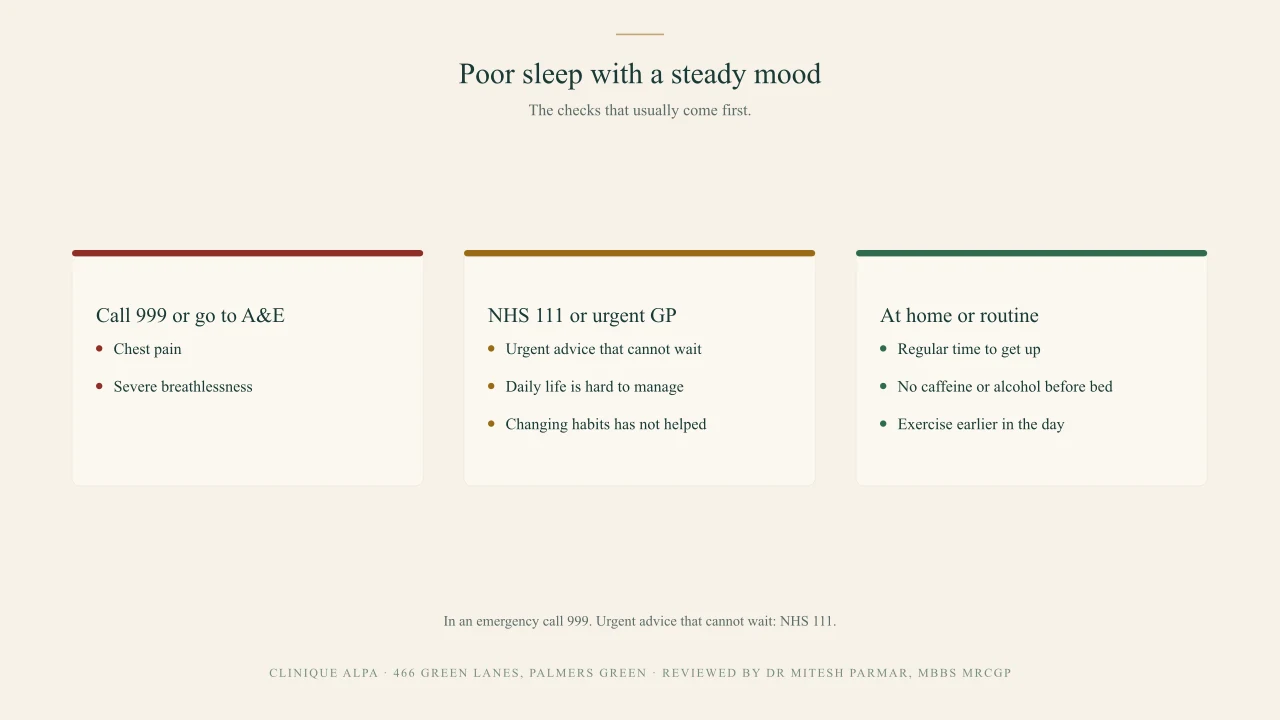
Chest pain, signs of a stroke, severe breathlessness, heavy bleeding, a severe allergic reaction or symptoms of sepsis need 999 or A&E immediately. For urgent advice that cannot wait, call NHS 111.
Why is sleep poor when mood is fine?
The NHS lists stress, anxiety and depression as common causes of insomnia, but it lists plenty more. Noise, or a room that is too hot or cold. An uncomfortable bed. Alcohol, caffeine and nicotine. Drugs. Jet lag and shift work. It adds that some health conditions and medicines can contribute, as can long term pain and sleep apnoea. So when mood is fine, the list does not run out. It simply points somewhere else.
A common pattern is that sleep is disturbed by something about the day, not the mind. The evening coffee, the late workout, the screen in bed, the wine that makes you drowsy at ten and wakes you at three. Another common pattern is that a few bad nights turn into worry about sleep itself, and the worry then keeps sleep away. The mood is fine in the day, and the bed has quietly become a place of effort.
The NHS describes insomnia as regularly struggling to fall asleep, waking several times a night, or waking early and being unable to drop off again, often with tiredness, irritability or poor concentration in the day. Insomnia lasting under 3 months is described as short term, and 3 months or more as long term.
Which lifestyle checks come first?
What I look at in clinic begins with a picture of a normal 24 hours. I ask what time you wake, what you eat and drink and when, how much caffeine you have and what time the last cup is, whether you drink alcohol in the evening, whether you smoke or vape, and what you are doing in the hour before bed. I ask where the phone is. I ask about naps.
I ask about exercise, and when. Exercise helps sleep, but the NHS advises not exercising within 4 hours of bedtime. Many people with a busy day fit it in late, and that alone can matter. I ask about the bedroom: light, noise, temperature, and whether the bed is shared with a partner or a pet who snores.
I ask about the nights themselves. Is the problem getting to sleep, staying asleep or waking early? What happens when you wake: do you lie still, check the time, get up? Do you wake with a dry mouth, a headache, or a partner who tells you that you stop breathing or snore loudly? That last group raises the question of sleep apnoea, which the NHS lists among the causes, and it needs its own assessment.
I ask about pain, and about anything else that wakes you: needing to pass urine, heartburn, restless legs, hot flushes. I ask about shift patterns and travel across time zones. I go through every medicine and supplement, including those bought from a shop, because some can interfere with sleep.
I also ask about mood, even though you have told me it is fine. I ask gently, and not to contradict you, but because anxiety and low mood can be quiet. A short mood and worry check helps me be sure, and it is better to know than to assume.
I examine and check the basics, such as pulse, blood pressure and weight, and I arrange blood tests when the history suggests a physical cause. Many people with poor sleep do not need a single test. They need a clear look at their habits and one or two changes.
Then we agree something small and specific, because small and specific is what works. I would rather you tried two changes for a few weeks, and told me how it went, than made ten and could not tell which helped.
From Dr Mitesh Parmar
Bedtime, what you do in bed, and what you drink or look at in the evening are my first questions. Habits matter more than tablets. I also check for snoring, pain, restless legs and the thyroid. A sleep diary kept for a fortnight is more useful than memory.
What actually helps?
The NHS self help advice is simple, and it is the same advice I give.
- Go to bed only when you feel drowsy, and get up at the same time every morning.
- Wind down for an hour beforehand, with a dark and quiet bedroom.
- Avoid caffeine, alcohol and nicotine for 6 hours before bed.
- Avoid screens right before sleep.
- Exercise during the day, but not within 4 hours of bedtime.
- Skip daytime naps.
The rule I find hardest for people, and most useful, is to get up if you cannot sleep and do something quiet until you feel drowsy. Lying awake in bed teaches the brain that the bed is for being awake.
If habits are not enough, the NHS says cognitive behavioural therapy is often the first option for long term insomnia, and it can be face to face or online. It describes sleeping medicines as a last resort, usually only for a few days or weeks at most, because they can cause serious side effects and dependence. Medicines from a pharmacy sold as sleep aids may help for 1 to 2 weeks at most, can cause drowsiness that affects driving, and are worth checking with a doctor first.
When should you see a doctor about trouble sleeping?
The NHS advises seeing a GP if changing your sleep habits has not helped, if you have had trouble sleeping for months, or if poor sleep is making daily life hard to manage. I would add that if you notice low mood or worry creeping in, or if loud snoring and pauses in breathing are described, it is worth coming sooner.
- Call 999 for chest pain or severe breathlessness, whatever the time.
- Call NHS 111 for urgent advice that cannot wait.
- Book a GP appointment if sleep has been poor for months, or habits have not helped.
- Book sooner if daytime tiredness is affecting driving or safety.
How do we approach this at Clinique Alpa?
Most questions about sleep can be answered without an examination, so a 30 minute video consultation is a sensible start. It is £79.99, booked and paid online, and the link is emailed to you. If the doctor needs to examine you, they will say so and arrange a clinic appointment. A clinic consultation is £100 at 466 Green Lanes. With your consent, a summary goes to your NHS GP. If stress is part of the picture, I have written about it in insomnia and sleep problems.
Common questions
What are the common causes of trouble sleeping at night?
The NHS lists stress, noise, an uncomfortable room, alcohol, caffeine, nicotine, shift work, jet lag, long term pain, sleep apnoea and some medicines.
Why can I not sleep even when tired?
Being tired does not by itself bring sleep. Caffeine, late exercise, screens, a worried mind or a body clock out of step can all keep you awake. Looking at your whole day usually shows why.
Can anxiety cause trouble sleeping at night?
Yes. Anxiety is one of the common causes the NHS lists, and the worry about sleep can itself keep you awake.
Drafted with AI assistance, clinically reviewed by Dr Mitesh Parmar, MBBS MRCGP, Principal GP and Clinical Director at Clinique Alpa, 466 Green Lanes, Palmers Green, London N13 5PA. This article is general information, not personal medical advice. In an emergency call 999. For NHS advice call 111 or visit nhs.uk.