
The medicine was supposed to calm the pain. For a while it did something, and then came the side effects: a heavy, foggy tiredness, dizziness on standing, or a sense that the nerves were more irritable rather than less. Most people in that position do the sensible thing and keep going for a bit. Then they begin to wonder whether this is what nerve pain management is meant to feel like.
It is not. Nerve pain management is a process of trial, review and adjustment, and a medicine that is not working or is causing trouble is information, not a failure. This page explains how the review works and when to ask for one.
Chest pain, signs of a stroke, severe breathlessness, heavy bleeding, a severe allergic reaction or symptoms of sepsis need 999 or A&E immediately. For urgent advice that cannot wait, call NHS 111.
Why is nerve pain managed differently from other pain?
The NHS puts it simply: nerve pain does not usually get better with common painkillers such as paracetamol and ibuprofen. That is why people are often told that ordinary pain relief is not working, and why a different group of medicines is used. Nerve pain tends to feel burning, stabbing, shooting or like electric shocks, often with numbness or tingling. It can be constant or come and go.
Causes vary. Some are in the spine, where a nerve is pinched. Some are in the long nerves to the hands and feet, for example with diabetes, with some medicines, or after certain treatments. Some have no clear cause. The medicine is only one part of management, and it works better when the cause has also been looked for.
How should a nerve pain medicine be started, and when should it be reviewed?
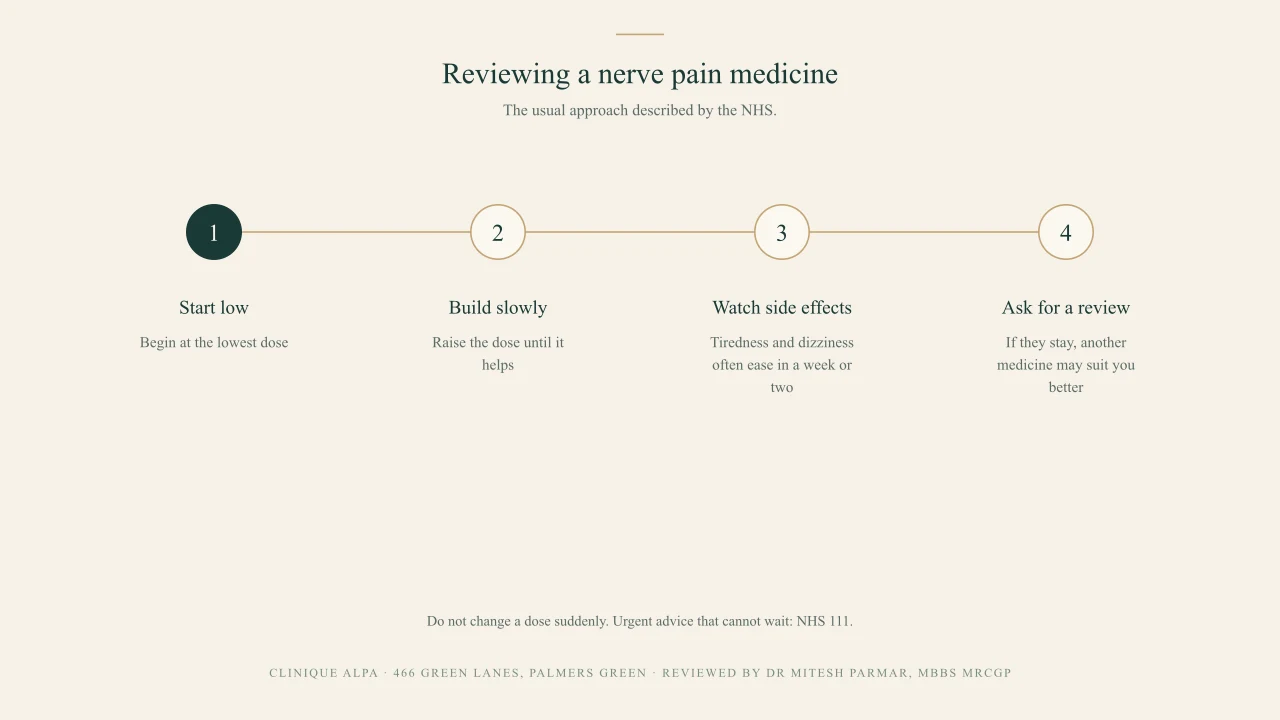
The NHS describes the usual approach. Doctors start at the lowest dose and increase it gradually until you notice an effect. Higher doses may work better but are more likely to cause side effects. If the first medicine does not help, others may. This is a trial, and a trial needs a review date, not an open ended supply.
The common side effects, according to the NHS, are tiredness, dizziness and feeling drunk. Your dose may need to be lowered if these occur. They often improve after a week or two as the body adjusts. If they continue, tell your GP, because another medicine may suit you better. You may also be more sensitive to alcohol, and you should not drive or use machinery if you feel drowsy or your vision is blurred.
That gives a practical rule for when to ask for a review. If the side effects are troublesome from the start, or have not eased after a week or two, it is time to ring. If the pain is no better at a dose that is already causing side effects, it is time to ring. If you are taking more than one medicine for pain, sleep or mood, and you are not sure what each is for, it is time to ring.
What does a doctor look at when nerve pain is not settling?
What I look at in clinic is what the pain does, what the medicine does, and what the medicine costs you. I ask what the pain is like, where it is, and what it stops you doing. I ask what you take, at what dose, at what time of day, and what you notice about an hour or two later and the following morning. People often tell me they have been taking a medicine at the wrong time for them. A medicine that makes you drowsy can fit the evening much better than the morning, and a small change in timing can alter how it feels.
I ask about the effect on daily life: sleep, concentration, driving, work, mood, balance and falls. I ask about everything else you take, including medicines for other conditions and anything bought over the counter, because some combinations add to drowsiness or dizziness. I ask about alcohol, since the NHS notes you may be more sensitive to it on these medicines.
Then I look for a cause that may still be open. Is there a pattern in the pain that points to the spine, the neck, a particular nerve, or the long nerves of the feet and hands? Examination covers strength, sensation, reflexes, balance and walking, and I look at the feet where sensation is reduced. The NHS advises seeing a GP about a cut or ulcer on the foot that is not getting better, because with reduced sensation it can become infected. Basic blood tests may be considered where they would answer a question, such as blood sugar or B12.
From there the options are practical. Adjust the dose or timing. Change to a different medicine, one change at a time, so that we know what has made the difference. Add a non medicine approach. The NHS mentions physiotherapy for strength and exercises, splints for weak ankles and walking aids. Where the cause needs a specialist opinion, I refer and explain why. I also say when I do not know yet, and give a date to look again.
One firm point: please do not stop or change a nerve pain medicine suddenly because of a side effect without speaking to a doctor or pharmacist. Ring, and we work out the safest way to change it.
From Dr Mitesh Parmar
Before changing anything I ask exactly what the side effects are, when they happen and what dose you really take. Stopping suddenly can cause problems of its own, so please do not stop alone. I also check for causes such as diabetes, B12 or thyroid. Weakness, numbness in the groin or bladder changes needs A&E.
When does nerve pain need more than a medicine review?
Some features should not wait for a review. Call 999 or go to A&E if back or leg nerve pain comes with numbness or weakness in both legs, numbness around the genitals or anus, or new problems passing urine or controlling your bowels. Seek prompt advice for a foot wound that is not healing, new weakness, or loss of balance. A nerve pain article is no substitute for assessment of these.
If your nerve symptoms followed cancer treatment, there is a separate page on peripheral neuropathy after chemotherapy, and the general guide to persistent pain covers living with pain that does not go away.
Common questions
Who is the right doctor for nerve pain management?
A GP can start, adjust and review the usual medicines and look for the cause. A specialist opinion is added where the cause is unclear, the pain is severe, or several medicines have not helped.
Is there a nerve pain management specialist at the clinic?
Our doctors are GPs and doctors, not pain specialists. We review the plan, look for causes and refer where a specialist is needed.
How long should I wait before asking for a review?
If side effects have not eased after a week or two, or the pain is no better at the dose you are on, ask for a review. Do not wait for it to get worse.
How do we help at Clinique Alpa?
You can book online or call. A clinic consultation at 466 Green Lanes is 30 minutes with a doctor and costs £100. The other fees are on appointments and fees. Please bring all your medicines, or photographs of the boxes. With your consent we send a summary to your NHS GP, so that one person is not changing doses without the other knowing.
Drafted with AI assistance, clinically reviewed by Dr Mitesh Parmar, MBBS MRCGP, Principal GP and Clinical Director at Clinique Alpa, 466 Green Lanes, Palmers Green, London N13 5PA. This article is general information, not personal medical advice. In an emergency call 999. For NHS advice call 111 or visit nhs.uk.