
The report arrives and the sentence that stands out is the one with the measurements in it. Fibroids pelvic pain has been the reason for the scan, and now there is a small growth described in millimetres, perhaps a cyst on an ovary as well, and a line saying nothing more is needed. People read it three or four times, then look up the words, then wonder whether the pain they have had is explained or not.
The questions that follow are practical. Does a fibroid of this kind cause pain? Does a cyst matter? And what does either of them mean for having a baby? This is the second of three pieces: the first covers pain that never settles, the third covers when a specialist opinion is the next step.
Chest pain, signs of a stroke, severe breathlessness, heavy bleeding, a severe allergic reaction or symptoms of sepsis need 999 or A&E immediately. For urgent advice that cannot wait, call NHS 111.
Do fibroids cause pelvic pain?
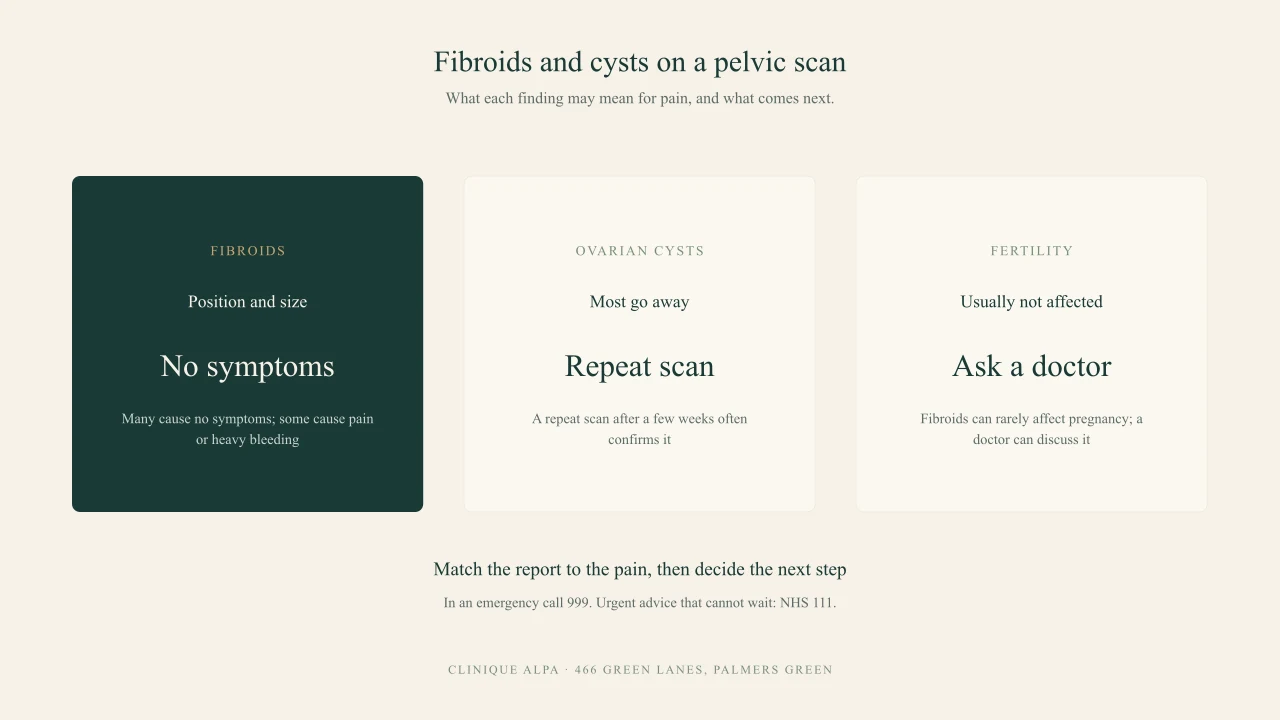
They can, but not always. The NHS describes fibroids as common, non cancerous growths in or around the womb, and says they often cause no symptoms at all. When they do, the list includes heavy or painful periods, tummy or lower back pain, passing urine more often, bloating, pain during sex and, sometimes, difficulty getting pregnant.
That list matters because many women have a fibroid found by accident on a scan done for another reason. A small one in the wall of the womb may be a bystander. When this comes up in consultation, I try to stop the report becoming the explanation by default. If the fibroid is small and the pain is constant, tender and sits somewhere else, I keep looking.
What does a scan report say about fibroids and cysts?
The NHS says an ultrasound shows how many fibroids there are, where they sit and how big they are. A report will usually give the size of the womb, the lining, each ovary, and whether there is any free fluid. A few terms recur:
- Position. A fibroid in the muscle wall, on the outer surface or inside the cavity behaves differently, and the position often matters more than the size.
- The lining. A normal thickness for the point in the cycle is reassuring; a focal lesion needs a closer look.
- Ovarian cysts. Most are part of the normal cycle. The NHS says most ovarian cysts go away in a few months without treatment, and a repeat scan after a few weeks is often used to confirm that.
- Tenderness on scanning. The person doing the scan often notes it. It is a clue, not a diagnosis.
What does a doctor look at when a scan shows a fibroid?
What I look at in clinic is how well the report and the person fit together. I ask about the pain: constant or cyclical, where it sits, what it does to walking, sleep and work, whether it has changed. I ask about bleeding, bowel and bladder, and whether anything hurts during sex. Then I examine the tummy for tenderness or a mass, and, with a chaperone if needed, a pelvic examination where it is appropriate.
Next is the bit that is easy to miss: blood. The NHS notes that heavy bleeding from fibroids can lead to iron deficiency anaemia. A full blood count and iron levels often explain tiredness that has been put down to being busy. If a scan has shown a cyst, I look at whether it fits the symptoms, and whether it needs repeating rather than simply being left.
I also ask what the person wants. Some want the pain controlled and no more. Some are planning a pregnancy, and for them the scan findings, their position and their size shape a different conversation from the one for someone who has completed a family. The NHS says fibroids can rarely cause infertility or miscarriage and that some treatments affect the ability to have children, so it is worth saying so before any treatment is chosen.
From Dr Mitesh Parmar
I read the report against the symptoms. A small fibroid does not always cause pain, so I ask about periods, bowels, bladder and pain with sex. Sometimes the finding on the scan is real but not the explanation. Sudden severe pain, fainting or heavy bleeding means A&E, not waiting for a review.
Do fibroids and cysts affect fertility?
The honest answer is: sometimes, and less often than people fear. The NHS says fibroids can rarely cause infertility or miscarriage, and that ovarian cysts usually do not affect fertility. A small fibroid in the muscle wall is a different matter from one pressing into the cavity of the womb. Cysts that return, or that sit alongside tenderness in both ovaries, are the ones I want to think about more carefully, because endometriosis can behave in this way.
People often ask this question in the context of a new relationship, or after years of putting it off. I do not pretend a scan can answer it. It can tell us what is there. A fertility opinion is a separate conversation, usually with a gynaecologist, and one I would encourage sooner rather than later if there are other reasons for concern.
When should you come in sooner?
Call 999 if the pain is severe and getting worse, if you feel faint, or if there is heavy bleeding, shoulder tip pain or trouble breathing. The NHS advises an urgent GP appointment or a call to NHS 111 for sudden, severe pelvic pain, or tummy pain with nausea or vomiting, which can be a cyst rupturing or twisting.
Book a routine appointment if pain is stopping you doing what you normally do, if bleeding is heavy or between periods, or if painkillers are no longer helping. Our guide to fibroids and the page on pelvic pain assessment give more background.
Common questions
Can fibroids cause pelvic pain and pressure?
Yes, larger fibroids can press on the bladder and bowel and cause pressure, bloating and passing urine more often. Small ones often cause no pain at all.
Do fibroids cause lower pelvic pain between periods?
They can, but other causes such as cysts, endometriosis and bowel problems are also common. A scan and an examination help sort these out.
Does a cyst on the ovary always need treatment?
No. The NHS says most go away on their own, and a repeat scan is often used to check. Treatment is considered when a cyst is large or causing symptoms.
How do we help at Clinique Alpa?
Call 020 8882 8088 or book online. A 30 minute clinic consultation at 466 Green Lanes is £100. I review your scan, examine, check blood counts and iron where relevant, explain which findings matter, and, where clinically appropriate after assessment, arrange a referral to gynaecology. With your consent, a summary goes to your NHS GP.
More in this series: period pain and pelvic pain
Drafted with AI assistance, clinically reviewed by Dr Mitesh Parmar, MBBS MRCGP, Principal GP and Clinical Director at Clinique Alpa, 466 Green Lanes, Palmers Green, London N13 5PA. This article is general information, not personal medical advice. In an emergency call 999. For NHS advice call 111 or visit nhs.uk.