
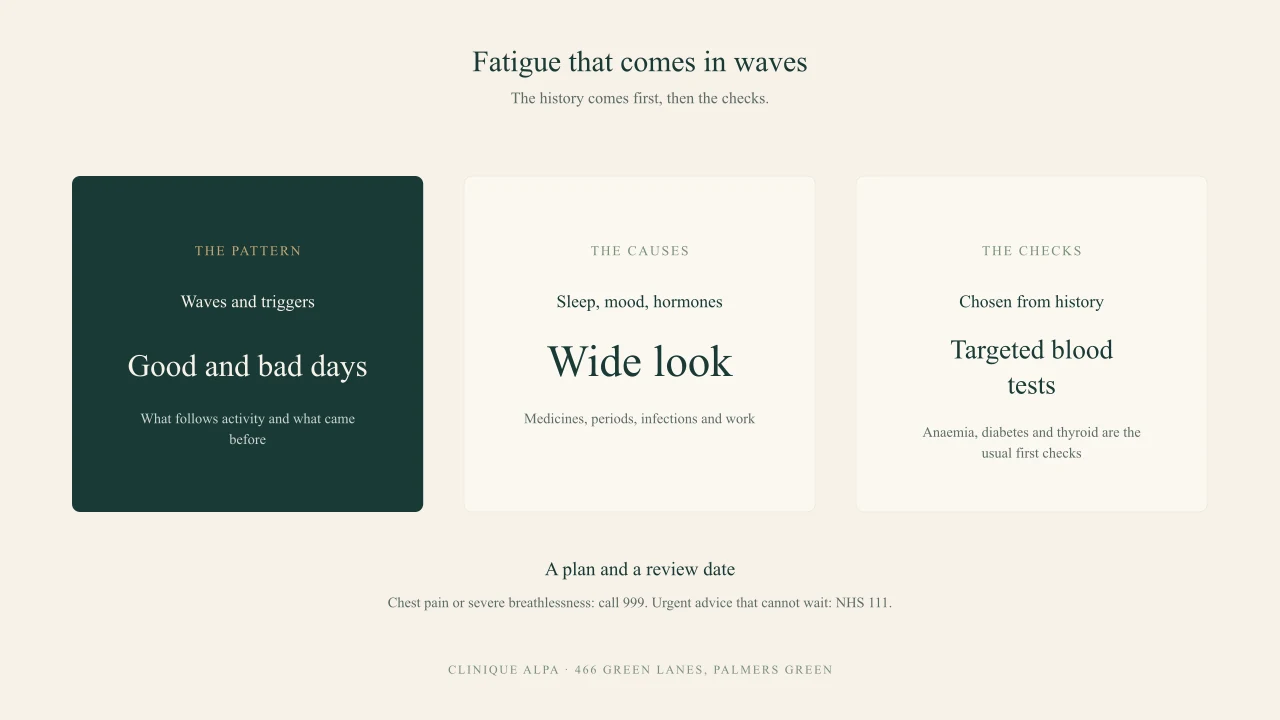
The good weeks are the trap. Energy returns, plans are made, and then a stretch arrives when getting dressed feels like effort and the afternoon disappears. Fatigue lasting months that comes in waves is hard to explain to anyone else and, after a while, hard to trust in yourself.
The question is not usually which single test will explain it. It is whether anything treatable is sitting behind it, and what pattern the waves follow, because the pattern is often the most useful clue.
Chest pain, signs of a stroke, severe breathlessness, heavy bleeding, a severe allergic reaction or symptoms of sepsis need 999 or A&E immediately. For urgent advice that cannot wait, call NHS 111.
What causes long lasting fatigue?
The honest answer is that many things can, which is why one blood test rarely settles it. The NHS lists poor sleep, an unhealthy lifestyle, stress, depression and life events, hormonal changes, some medicines and treatments, and illnesses such as glandular fever and COVID-19. It also names specific conditions that can lie behind it: sleep apnoea, iron deficiency anaemia, diabetes, an overactive thyroid and ME/CFS. The NHS page on tiredness and fatigue sets these out.
Can glandular fever (mono) cause fatigue lasting months?
It can. The NHS says glandular fever usually improves within 2 to 4 weeks, but lists long term tiredness that may last for several months as a possible complication. If an illness of that kind preceded the tiredness, I want to hear about it, even if it seemed minor at the time. A viral illness that was never quite shaken off is one of the common starting points, and the NHS guide to glandular fever covers what to expect.
Why have I been so tired for weeks?
The NHS advises seeing a GP if you have been tired for a few weeks and do not know why, if tiredness is affecting daily life, or if it comes with weight loss, mood changes, or if you have been told you make gasping, snorting or choking noises in your sleep. It also advises against self diagnosing. The reason is that the possible causes overlap, and the sensible next step is to separate them in an orderly way.
What I look at in clinic
When this comes up in consultation, people often have a clear sense of the waves but not of what sets them off. So I begin with the history, and I give it time, because it does more work than any test.
I map the pattern. How the tiredness began, whether it started after an illness or a change in life, how long the good stretches last, and what the bad ones are like. I ask what happens after activity. The NHS describes post exertional malaise, symptoms getting worse after physical or mental activity, as one of the four main features of ME/CFS, so a day or two of being wiped out after an ordinary effort is something I note carefully.
Then sleep. How long it takes to fall asleep, whether it is broken, whether there are afternoon naps, snoring, or pauses in breathing noticed by a partner. Then mood and stress, because low mood and fatigue feed each other, and I ask about both directly. Then hormones and periods, because heavy periods are a common route to low iron, and the NHS lists hormonal changes in puberty, pregnancy and menopause as causes of tiredness. Then medicines and supplements, alcohol, caffeine, and work patterns, since each can quietly change how restorative a night is.
Then a physical examination: pulse, blood pressure, colour, the glands and the neck, weight compared with the past. I am looking for something that shifts the picture.
Only then do the tests, chosen from the history rather than ordered in bulk. The NHS says blood tests may check for anaemia, diabetes or an overactive thyroid, and I add further checks where the story points to them. A normal result is information, not a dismissal; it narrows the field. For ME/CFS, the NHS says there is no specific test and diagnosis is based on symptoms and on ruling out other conditions. If the cause remains unclear, referral to a specialist is a reasonable next step, and the NHS page on ME/CFS describes this.
The last part is practical. A plan for activity that avoids the cycle of overdoing it on a good day and paying for it on the next, reasonable adjustments to talk to an employer about, and a date to review. I would rather agree a review in a few weeks than leave it open ended.
From Dr Mitesh Parmar
I ask you to keep a simple diary of good and bad days, with sleep, activity and what came before. Patterns appear that memory misses. I then choose blood tests and ask about mood, periods and past infections. Be honest about what you have stopped doing, because that shows the real impact.
Can fatigue last for days, and when is it more than that?
Yes. A few days of heavy tiredness after a poor run of sleep or a viral illness is common and usually settles. Once it runs to a few weeks, the NHS advice above applies, and once it runs to months, a structured look is worth having, because that is the stage at which patterns, rather than single causes, become visible.
When to come in sooner
Chest pain, severe breathlessness or signs of a stroke need 999 or A&E. Ask for an urgent appointment or call NHS 111 if you become much more unwell or are getting worse quickly. Come in sooner than planned if:
- tiredness comes with weight loss you cannot explain
- your mood is changing, or you feel low most days
- you have been told you stop breathing or gasp in your sleep
- you notice new swollen glands, or a high temperature that keeps returning
- you are struggling to work, care for others or get through the day
If low mood includes thoughts of harming yourself, call 999 if you are in immediate danger. For urgent mental health help call NHS 111 and choose the mental health option, or call Samaritans free on 116 123, any hour.
How do we approach this at Clinique Alpa?
The first conversation is mostly history, which is why a video consultation with Dr Alpa J. Morawala at £79.99 for 30 minutes works for many people. A face to face consultation at 466 Green Lanes is 30 minutes with a named doctor and costs £100. It is the better choice if you would like an examination and blood tests arranged in the same visit. Blood tests are priced separately and the prices are published, so you see the cost before agreeing.
A referral letter is written where clinically appropriate after assessment and is included in the consultation fee. With your consent, a summary goes to your NHS GP. If you are mainly wondering about a blood test panel, I have written about tired all the time and blood tests, and you can read more in the fatigue guide.
Common questions
What causes long lasting fatigue?
Sleep problems, stress and low mood, infections, hormonal change and conditions such as anaemia, diabetes and thyroid problems. The cause is usually found by combining the history with a few well chosen tests.
Is extreme fatigue always ME/CFS?
No. ME/CFS is diagnosed by its pattern and by ruling out other conditions, so other causes are looked for first.
Can fatigue come and go in waves?
Yes, and the NHS notes that ME/CFS symptoms can fluctuate. The waves themselves give useful clues, so keep a short note of good and bad days before you come.
Drafted with AI assistance, clinically reviewed by Dr Mitesh Parmar, MBBS MRCGP, Principal GP and Clinical Director at Clinique Alpa, 466 Green Lanes, Palmers Green, London N13 5PA. This article is general information, not personal medical advice. In an emergency call 999. For NHS advice call 111 or visit nhs.uk.